Discover
The identity of the nation
Turkmenistan is one of the most closed countries in the world. After independence from the Soviet Union in 1991, the new government adopted a policy called “permanent neutrality,” which in practice isolated the country from the rest of the world. Traveling, gathering information, and even communicating with foreigners are closely monitored by the state. This isolation also affects religious life: any expression of faith outside what is officially approved is treated with suspicion.
The vast majority of the population is ethnically Turkmen and practices Islam in a cultural way, often mixed with ancient traditions of ancestor veneration and pilgrimages to the tombs of spiritual leaders called ovliya (local saints). This blend of beliefs, known as folk Islam, is part of tribal and family identity, which makes converting to another faith seen almost as a betrayal of one’s own people.
Christians in Turkmenistan are few, and most are descendants of Russians and Armenians who arrived during the Soviet period, connected to historic Orthodox churches. Among the Turkmen people themselves, fewer than one in a thousand identify as Christian in any form, and the number of evangelicals is practically invisible in the statistics. Those who come from a Muslim family and decide to follow Jesus risk being rejected by relatives and losing the support of the community, something essential for social survival in the country.
Despite the difficult situation, the entire Bible has already been translated into Turkmen, published in 2016, a milestone after decades of quiet work. This means the Turkmen people can now read the Word of God in their own language, even though access to these copies is limited and risky. Praying for this people, forgotten by the world for so long, is a real way to accompany what God has already begun to do there, even in silence.
The contrast between the country’s wealth in natural gas, one of the largest reserves in the world, and the white marble buildings of the capital, Ashgabat, on one side, and the simple life of most of the population, on the other, shows a people seeking security and identity in symbols of grandeur. For those who pray for Turkmenistan, the invitation is to look beyond the showcase built by the state and remember that a people of rich culture, poetry, hospitality, and quiet resilience lives there, still waiting to fully know the God who already loves them.
- Antiquity Territory crossed by the Silk Road, with cities like Merv, one of the largest metropolises of the medieval Islamic world
- 7th-8th centuries Arrival of Islam brought by the Arabs, gradually absorbed by Turkmen tribes and mixed with local traditions
- 11th-13th centuries Rule of the Seljuk and later Mongol empires; near-total destruction of Merv in 1221
- 1881 Annexation of the region by the Russian Empire after the Battle of Geok Tepe
- 1924 Creation of the Turkmen Soviet Socialist Republic
- 1948 A powerful earthquake destroys almost all of Ashgabat; death toll estimates range from tens of thousands to over 100,000, since the Soviet government hid the real number at the time
- 1991 Independence from the Soviet Union, declared on October 27
- 2006 Death of the country's first president, who had built a strong personality cult and an almost sacred book, the Ruhnama
- 2016 Publication of the complete Bible in the Turkmen language, after decades of translation work
- Today The country maintains a policy of permanent neutrality and tight state control over civic and religious life
-
TurkmenOfficial and majority language, belongs to the Turkic language family, now written in the Latin alphabet
-
RussianStill widely used in urban areas, in trade, and among older generations, a legacy of the Soviet period
-
UzbekSpoken by the Uzbek minority, concentrated in the east of the country
-
KazakhSpoken by a Kazakh community in the north, near the border with Kazakhstan
-
Baloch and KurdishLanguages of small ethnic groups scattered across the country, with roots in Iran and Afghanistan
Turkmenistan lies in Central Asia, with the Caspian Sea to the west and the Amu Darya River marking part of the border with Uzbekistan to the northeast. Nearly 70% of the territory is covered by the Karakum Desert (meaning "black sand" in Turkmen), one of the largest sandy deserts in the world. To the south, the Kopet Dag mountain range forms a natural border with Iran. Despite its vast territory, most of the population lives in oases and cities built around the few available water sources.
Major cities
- AshgabatCapital covered in white marble, known for its monumental buildings and architectural records
- TurkmenabatSecond largest city in the country, an agricultural hub on the banks of the Amu Darya River, in the east
- MaryHistoric city near the ruins of Merv, an ancient Silk Road metropolis
- DashoguzMain city of the north, in a cotton-farming region near the desert
Climate and temperature
Plov
Rice cooked with pieces of mutton or beef, carrots, and onion; the country's most traditional dish
Manty
Steamed dumplings filled with ground meat and onion, served with yogurt
Chorek
Flatbread baked in a clay oven called a tamdyr, always offered first to the visitor
Dograma
A dish made of pieces of dried bread mixed with shredded meat and hot broth, prepared for special occasions
Gutap
Thin, crescent-shaped pastry filled with meat, pumpkin, or greens and fried on a griddle
Green tea
A drink served at almost every meal, a symbol of hospitality in Turkmen culture
Understand
Culture and spirituality
2a · The culture
Turkmen carpets
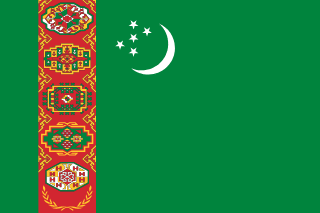
Hand-woven with patterns called guls, which identify the tribe of origin; one of them even appears on the national flag
Akhal-Teke horse
Horse breed native to Turkmenistan, famous for its metallic sheen and a symbol of national pride
Tea and bread hospitality
Offering green tea and bread to a visitor is considered an almost sacred duty in local culture
Poetry of Magtymguly
The verses of the 18th-century poet are still repeated today as proverbs, almost like sacred text
Ruins of Merv
Ancient Silk Road city, now a World Heritage site, a witness to a past of intense cultural exchange
- Photographing official buildings Can cause serious problems with the police, since the country treats this as a security matter
- Criticizing the government or national symbols Taken as a serious offense, with consequences for both speaker and listener
- Talking about faith with strangers Religious conversations can expose both the visitor and the Turkmen person to state surveillance
- Wearing short or revealing clothing Culturally frowned upon, especially outside the capital
2b · The field
Areas of spiritual battle and cultural captivity to cover in prayer. Tap each point to understand:
Books and images of former presidents were treated almost like sacred texts, occupying a place that belongs only to God
Constant control over people's lives creates a climate of fear that stifles any expression of faith
Pilgrimages to the tombs of local saints (ovliya) seeking health and blessings are still common, even among practicing Muslims
Faith is so bound to family and tribal identity that changing religion is seen as betraying one's own people
Constant surveillance makes even Christians hide their faith from neighbors and close relatives
The policy of neutrality and closure to the world feeds the idea that the country needs nothing from outside, not even the gospel
The marble and gold buildings of the capital hide the simple life of most of the population
Beliefs in protection against the evil eye and the use of traditional healers are still part of daily life
Christian materials are treated as dangerous "extremist" propaganda, making access to the Word difficult
The emphasis on the historic glory of the Turkmen people can become a substitute for the true identity found only in God
In Turkmenistan, following Jesus outside the historic churches accepted by the state brings constant surveillance and real risk. The country ranks 35th on the World Watch List of the organization Open Doors, and the main sources of pressure are the government’s near-total control over people’s lives, the strength of traditional Islam tied to tribe and family, and pressure from clans themselves against anyone who changes religion.
Registering a new church is practically impossible, and evangelical groups are often treated by the authorities as “extremists.” Even the Russian and Armenian Orthodox churches, which have existed in the country for generations, are closely monitored during services. Owning and distributing Christian material, such as Bibles, is viewed as suspicious and can be confiscated.
Those who come from a Muslim family and decide to follow Jesus face the greatest risk: rejection by their own family, pressure to return to Islam, and, in some reported cases, even forced marriages to pull young women away from the Christian faith. Despite the harshness of the situation, no violent attack against Christians was reported in the past year, showing that persecution in Turkmenistan happens more through silent, constant control than through open violence.
The persecution score runs from 0 to 100: the higher it is, the greater the pressure on Christians.
Turkmenistan has 28 ethnic groups, and 20 of them (71.4% of the total) are still considered unreached by the gospel, together making up 95.2% of the country's population. The largest group is the Turkmen people themselves, with nearly 5.9 million people, of whom fewer than 1 in every 1,000 identify as Christian in any form. Other peoples, such as Uzbeks, Kazakhs, Balochs, and Kurds, also predominantly follow Islam and have very little contact with the gospel. The country's few Christians, mostly Russians and Armenians, arrived during the Soviet period and maintain historic churches, but there is almost no Christian witness among peoples of Turkmen and Central Asian origin.
- 7.1M Unreached 95,2%
- 9K Minimally reached 0,1%
- 217K Superficially reached 2,9%
- 136K Partially reached 1,8%
- 0 Significantly reached 0%
- 20 Unreached 71,4%
- 2 Minimally reached 7,1%
- 3 Superficially reached 10,7%
- 3 Partially reached 10,7%
- 0 Significantly reached 0%
Source of people group data: Joshua Project (joshuaproject.net). Estimates, may vary.
Lezgin Frontier
Aimaq Frontier
Ossetians Frontier
Azeri do norte
Tabasaran Frontier
Tártaro
Western Baloch Frontier
Source: Joshua Project. Estimates, may vary.
Pray
Intercede for this nation
Every nation carries a redemptive purpose. Marks that seem woven into the identity God desires to restore:
Go
Practical details for those who want to go
Local time
Cost of living
Price well above the regional average, according to Numbeo
Cost by city
Reference values (source: Numbeo). Confirm before traveling.
Practical points for those who go
- Avoid photographing official buildings, airports, or uniformed personnel; this can cause serious problems.
- The manat exchange rate is complicated: there is an official rate and a very different parallel market rate.
- Internet access is filtered and monitored; many foreign networks tend to be blocked.
- Prefer modest and discreet clothing, especially outside the capital.
- Avoid political comments or criticism of the government in public conversations.
- Accepting the tea and bread offered by hosts is an important sign of respect for local hospitality.
Send and sustain
Not everyone goes, everyone takes part
Not everyone goes. Everyone takes part.
Behind every worker among these peoples stands a network of people who pray without ceasing, care for the family left behind, and faithfully sustain the work. Sending is mission too.
Start with your church: introduce this nation, adopt it in ongoing prayer, and walk alongside those God is raising up to go.