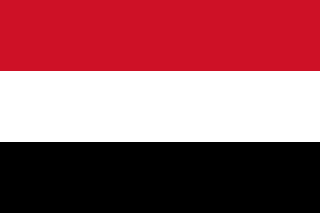
Discover
The identity of the nation
Yemen occupies the southern tip of the Arabian Peninsula, between the Red Sea and the Arabian Sea, and carries a history as old as the Bible itself: tradition places the kingdom of Sheba here, whose queen, according to the Old Testament, visited King Solomon bearing spices and gold. For centuries, this land was a route for the incense and myrrh trade between Africa, Asia and the Mediterranean, and it was once called «Arabia Felix» for the fertility of its valleys and highlands.
Today, that same country faces one of the world’s largest humanitarian crises. Since 2014, a civil war has divided Yemen between an internationally recognized government based in the south and a rebel authority (the Houthi movement) that controls the historic capital, Sanaa, and much of the north. Millions of people have been displaced from their homes, the economy has shrunk by half, and much of the population depends on humanitarian aid just to eat. Even so, the Yemeni people keep alive a culture rich in poetry, hospitality and strong family ties, which endure even as everything around them falls apart.
Spiritually, Yemen is one of the least reached countries by the gospel in the world. Nearly the entire population identifies as Muslim, split between a Sunni majority (the largest branch of Islam) and a strong Zaidi Shia minority concentrated in the north. Native Christians make up a minimal fraction of the population, most of them converts who must live out their faith in secret, hidden even from their own families. Leaving Islam is seen not as a personal choice but as betrayal of tribe and nation, something that can cost a job, freedom, or even life.
Even so, the Christian faith once flourished in this land in a distant past: Christian communities existed in southern Arabia before the arrival of Islam in the seventh century. That past is a reminder that the gospel has already been there, and can flourish again. Today that recovery happens mainly through radio, the internet and the quiet testimony of a few Yemeni Christians who risk everything to follow Christ.
Praying for Yemen means praying for a people who carry, at the same time, a millennia-old heritage and a deep wound opened by war. It means asking that, amid hunger, displacement and fear, God would raise up a courageous Yemeni church, small as it may be, and that whole families, tribes and villages would come to know the One who is the true peace this country so deeply seeks.
- Antiquity The kingdom of Sheba flourishes in southern Arabia; biblical tradition links the region to the queen who visited King Solomon.
- 1st century BC to 6th century AD Himyarite kingdoms dominate the region; Christian communities arise in southern Arabia before Islam.
- 7th century Islam arrives in Yemen shortly after emerging in Mecca and becomes the dominant faith to this day.
- 16th to 20th centuries Parts of the territory fall under Ottoman rule, while the British occupy the port of Aden in the south.
- 1918 North Yemen wins independence from Ottoman rule.
- 1967 South Yemen becomes independent from British rule, forming a separate state.
- 1990 North Yemen and South Yemen unify, forming the Republic of Yemen.
- 2011 Popular protests lead to the departure of the president who had ruled the country for more than three decades.
- 2014 to 2015 Houthi rebels seize the capital, Sanaa, starting the civil war that continues to this day.
- Today The country remains divided between an internationally recognized government and a de facto Houthi authority, amid one of the world's largest humanitarian crises.
-
Modern Standard ArabicOfficial language, used in government, education and media across the country.
-
Yemeni ArabicSet of Arabic dialects spoken day to day, with variations between Sanaa, the south and the east of the country.
-
MehriSouth Arabian language, unrelated to Arabic, spoken by about 50,000 people in Al Mahrah province, in the east.
-
SoqotriLanguage native to the island of Socotra, with several local dialects, spoken by about 57,000 people.
Yemen sits at the southwestern tip of the Arabian Peninsula, bordering Saudi Arabia to the north and Oman to the east, with the Red Sea to the west and the Gulf of Aden and the Arabian Sea to the south. The terrain is quite varied: hot, humid coastal plains, a mountainous central highland where the capital, Sanaa, sits at over 2,000 meters of altitude, and the Rub' al Khali desert (the "Empty Quarter," one of the largest sand expanses in the world) in the east and northeast of the country. In the Indian Ocean, about 380 km from the coast, lies the Socotra archipelago, isolated for millions of years and therefore home to plants and animals found nowhere else on the planet, such as the dragon's blood tree, with its umbrella-shaped canopy.
Major cities
- SanaaThe country's constitutional capital, the highest and most populous, with a historic center declared a UNESCO World Heritage Site for its decorated mud-brick towers.
- AdenHistoric port in the south, provisional seat of the internationally recognized government since the start of the civil war.
- TaizThe third-largest city, in the mountainous southwest, one of the hardest hit by fighting in the civil war.
- Al HudaydahThe main port on the Red Sea, essential for the entry of food and humanitarian aid into the country.
- MukallaThe largest city in Hadramaut province, in the east, with a strong tradition of maritime trade.
- SocotraIsolated archipelago in the Indian Ocean, famous for its unique natural life and increasingly visited by tourists.
Climate and temperature
Saltah
National dish: a meat stew (the maraq) seasoned with a fenugreek paste whipped until frothy, served with flatbread.
Mandi
Fragrant rice with lamb or chicken, slow-cooked in a clay oven buried in the ground, which gives it a characteristic smoky flavor.
Fahsa
Spicy shredded meat stew, seasoned with sahawiq, a chili, tomato and garlic sauce.
Lahoh
Thin, spongy bread, similar to a pancake, used to accompany almost every dish and to dip into stews.
Bint al-Sahn
Traditional sweet made of layers of buttery dough, drizzled with honey, served on special occasions.
Qishr
Hot drink made from coffee husks and spices such as ginger and cardamom, instead of the coffee bean itself.
Understand
Culture and spirituality
2a · The culture
Kingdom of Sheba
Land linked, according to tradition, to the biblical queen who visited Solomon; ruins such as the Marib Dam and the Awwam temples still tell this ancient story.
Old City of Sanaa
Historic district of multi-story buildings made of mud and stone, decorated with white geometric patterns, recognized by UNESCO.
The jambiya
Curved dagger worn at the waist by Yemeni men, a traditional symbol of identity and manhood, not a weapon for everyday use.
Qat
A plant whose leaf is chewed in the afternoon by much of the population; qat-chewing gatherings are an important moment for conversation and business.
Oral poetry
Recited and sung poetry is one of the most valued forms of cultural expression, even used to settle disputes between tribes.
Socotra
Isolated island in the Indian Ocean with plants unique in the world, such as the dragon's blood tree, and a culture distinct from the rest of the country.
- Photographing government buildings, military posts or checkpoints Can be mistaken for espionage, especially in a war-torn area.
- Using the left hand to eat, greet or hand over objects Considered improper; local custom uses the right hand for this.
- Wearing short or tight clothing, for both men and women Goes against the conservative modesty standards of Yemeni society.
- Talking about politics or the sides of the conflict The topic is sensitive and can put both the visitor and whoever they are speaking with at risk.
- Insisting on photographing women Many families consider this a serious lack of respect.
- Bluntly refusing an invitation to chew qat Can be read as contempt for an important social custom; a polite "no" is best.
2b · The field
Areas of spiritual battle and cultural captivity to cover in prayer. Tap each point to understand:
Islamic faith is intertwined with loyalty to the tribe, making conversion seen as betrayal of family and lineage.
Conflicts between families and tribes drag on for generations, fueling cycles of violence.
Much of the afternoon and of family income is spent chewing the leaves of qat, a stimulant plant, pulling people away from work and family.
Beliefs in spirits and protective amulets still guide everyday decisions in many families.
Fear of shaming the family outweighs the pursuit of truth, which shuts down conversations about faith.
Years of conflict have created the sense that nothing can change and that suffering is simply life's natural fate.
Women have little freedom to decide over their own lives, including spiritually.
Leaving Islam is seen as betrayal of the nation and can be punished even by death.
Armed groups grow rich through smuggling and diverting humanitarian aid, deepening inequality.
Rituals for healing and protection against the evil eye remain strong alongside official religious practice.
Yemen is among the most dangerous places in the world for anyone who decides to follow Christ, ranking third on Open Doors’ list of countries where Christians suffer the most persecution. Conversion from Islam to Christianity is not recognized by law, and apostasy (abandoning the Islamic faith) can be punished by death.
Most of the population, about 80%, lives in areas controlled by Houthi rebels in the northwest of the country, where surveillance is intense and any suspicion of conversion can lead to imprisonment, torture or death. Entire families may feel dishonored upon discovering that a relative has left Islam, and in many cases it is the relatives themselves who report or threaten the convert.
Almost no foreign Christians remain in the country: most fled because of the danger, and churches that existed before the war have been closed, looted or destroyed. The small Yemeni church of today is made up mostly of converts who must gather in secret, often alone with God, with no visible community around them.
Since the beginning of 2026, the number of arrests of Christians has been rising, a sign that pressure on the small Yemeni church keeps increasing even amid the wider war that has already lasted more than a decade.
The persecution score runs from 0 to 100: the higher it is, the greater the pressure on Christians.
Yemen is one of the least reached countries by the gospel in the world: practically the entire population, about 42.5 million people, belongs to peoples considered unreached by the Joshua Project. The Yemeni Arab groups, which make up the vast majority of the population, have fewer than 0.1% Christians. The country is also home to the Socotri people, on the isolated island of Socotra, and the Muhamasheen (also called Akhdam), a historically marginalized group and one of the poorest in the country.
- 41.2M Unreached 99,7%
- 30K Minimally reached 0,1%
- 73K Superficially reached 0,2%
- 6K Partially reached 0%
- 13K Significantly reached 0%
- 20 Unreached 71,4%
- 1 Minimally reached 3,6%
- 5 Superficially reached 17,9%
- 1 Partially reached 3,6%
- 1 Significantly reached 3,6%
Source of people group data: Joshua Project (joshuaproject.net). Estimates, may vary.
Sudanese Arab Frontier
Árabe catarense
Somali Frontier
Árabe Egípcio Muçulmano
Akhdam arabizado negro Frontier
Árabe hadrami Frontier
Árabe Iraquiano
Source: Joshua Project. Estimates, may vary.
Pray
Intercede for this nation
Every nation carries a redemptive purpose. Marks that seem woven into the identity God desires to restore:
Go
Practical details for those who want to go
Local time
Cost of living
Numbeo, 2025; much cheaper than in Aden
Cost by city
Reference values (source: Numbeo). Confirm before traveling.
Practical points for those who go
- Modest clothing is essential: arms, shoulders and legs covered, for both men and women.
- Afternoons are usually devoted to qat: meetings and business often pause during this time.
- The country effectively has two parallel currencies: one exchange rate in government areas and a very different one in Houthi areas.
- Avoid photographing government buildings, military sites or checkpoints.
- Subjects about the war and politics call for caution and discretion in conversation.
- The right hand is used for eating, greeting and handing over objects; the left is considered improper.
Send and sustain
Not everyone goes, everyone takes part
Not everyone goes. Everyone takes part.
Behind every worker among these peoples stands a network of people who pray without ceasing, care for the family left behind, and faithfully sustain the work. Sending is mission too.
Start with your church: introduce this nation, adopt it in ongoing prayer, and walk alongside those God is raising up to go.