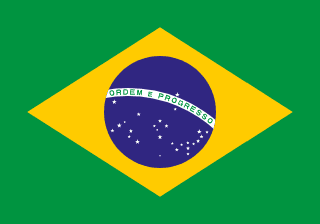
Discover
The identity of the nation
Brazil is the largest country in South America and home to one of the largest Christian populations in the world. Faith arrived with Portuguese colonization in the sixteenth century, and for centuries Catholicism was the dominant religion. In recent decades, evangelical growth has transformed the religious landscape, and today the country combines a strong Christian presence with deep social contrasts.
It is, at the same time, a great field of need and one of the largest missionary sending forces in Latin America. Isolated indigenous peoples, urban outskirts, riverside communities, and Amazon border regions remain outreach challenges, while thousands of Brazilian missionaries are sent to other nations.
Religious diversity is growing: alongside Catholics and evangelicals, there is a strong presence of Spiritism, Afro-Brazilian religions, and a growing number of people with no religion. This scenario makes discipleship and clarity of the gospel as urgent as evangelism itself.
Pressure on Christians is low, with broad religious freedom. The greatest challenge is not persecution, but the blending of religions, shallow faith, and reaching peoples who still have no church in their own territory and language.
Social inequality, urban violence, and the vulnerability of children and youth in the outskirts open doors for the church to serve, welcome, and proclaim hope. Brazil has the potential to impact the world if its church matures in depth as much as in size.
- Before colonization, millions of indigenous people from hundreds of peoples and languages inhabited the territory.
- 1500 Arrival of the Portuguese; Catholicism becomes the dominant faith.
- 1549 The Jesuits begin missionary and educational work.
- 16th-19th centuries More than 4 million enslaved Africans are brought to Brazil, shaping its culture.
- 1822 Independence from Portugal.
- 1824 The first constitution begins to tolerate Protestant worship, though restricted.
- 1888 Abolition of slavery.
- 1889 Proclamation of the Republic and separation of Church and State.
- 1910-1911 The Pentecostal movement arrives and spreads rapidly across the country.
- 20th century Brazil begins sending missionaries abroad on a growing scale.
- 21st century Evangelical explosion; Brazil becomes one of the largest missionary sending hubs in the world.
- Today A majority-Christian country, facing challenges of inequality, religious blending, and still-unreached peoples.
-
Portugueseofficial, spoken by about 99% of the population
-
Indigenous languagesmore than 270 languages, many endangered
-
German and Italian (dialects)immigrant communities in the South
-
LibrasBrazilian Sign Language, officially recognized
Brazil is the largest country in South America and the fifth largest in the world, with biomes ranging from the Amazon Rainforest to the Pantanal wetlands, from the Cerrado savanna to the Atlantic Forest, along a coastline of more than 7,000 km.
Major cities
- São PauloLargest city, economic hub
- Rio de JaneiroPostcard city, tourism
- BrasíliaFederal capital
- SalvadorAfro-Brazilian culture
- ManausGateway to the Amazon
- Belo HorizonteSoutheast hub
Climate and temperature
Feijoada
Black bean stew with meats, the country's signature dish.
Arroz e feijão
The everyday duo, the foundation of the Brazilian lunch.
Pão de queijo
A Minas Gerais treat made of tapioca starch and cheese.
Açaí
Amazonian fruit served chilled, energizing.
Coxinha
Fried, chicken-filled snack, a bar-food classic.
Brigadeiro
Chocolate and condensed milk sweet, a must at every party.
Churrasco
Meats grilled over charcoal, a tradition of gatherings and of the South.
Moqueca
Fish stew with coconut milk and palm oil, a Bahian and Espírito Santo heritage.
Understand
Culture and spirituality
2a · The culture
Warmth and personal connection
Brazilians value personal contact, affection, and closeness. Relationships come before tasks.
Family and community
Family is the center of social life, and community ties are strong, especially in the outskirts and the countryside.
Religiosity and blended faiths
Faith permeates public life, yet coexists with a strong blending of religions across diverse traditions.
Hospitality
Welcoming others is part of the national identity; foreigners are received with generosity.
Social contrasts
Deep inequality, from urban abundance to hardship in the outskirts and remote regions.
Regional diversity
A continent-sized country: each region has a very distinct culture, accent, and reality.
- Treating Brazil as small or uniform It is a continent with enormous regional diversity.
- Being cold or overly formal Closeness and warmth are valued.
- Making negative comparisons with your own country Cultural pride runs deep.
- Bringing up politics or football aggressively These are passionate, polarizing topics.
- Refusing food or coffee offered to you Accepting is a sign of respect and friendship.
- Treating poverty with pity or superiority Dignity and partnership matter more than charity handouts.
2b · The field
Areas of spiritual battle and cultural captivity to cover in prayer. Tap each point to understand:
The Christian faith blends with Spiritism, Afro-Brazilian religions, and folk beliefs, diluting the gospel.
The search for power and protection through spiritual practices draws people away from Christ.
The normalized "jeitinho" (finding a way around the rules) and dishonesty erode trust and justice.
A social chasm leaves millions on the margins and hardens hearts.
Crime, fear, and the normalization of violence mark the daily lives of many.
The eroticization and trivialization of sex wound families and human dignity.
The race for status and consumption occupies in the heart the place that belongs to God.
Alcohol, drugs, and gambling enslave people and destroy homes.
Rivalries, partisanship, and disputes weaken the church and the nation.
A sense of abandonment and lack of future imprison entire communities.
Native peoples remain forgotten, without full access to the gospel or to their rights.
Fame, football, and screens become objects of devotion and escape from reality.
Brazil has broad religious freedom, and Christianity is the majority faith, so persecution is low. Even so, there are localized tensions: leaders threatened by organized crime in some outskirts, conflicts in territories controlled by drug trafficking, and pressure on Christians of indigenous background or those who leave Afro-Brazilian religions.
The central challenge is less about persecution and more about healthy discipleship, religious syncretism, and reaching peoples who still have no church.
The persecution score runs from 0 to 100: the higher it is, the greater the pressure on Christians.
Brazil is home to 54 unreached people groups, 33 of which are classified as frontier people groups, the most isolated from the gospel. The vast majority are indigenous ethnic groups from the Amazon and the backlands, many living in hard-to-reach lands and speaking languages with no Bible translation. There are also communities of migrant origin, such as Jewish and Turkish groups, still little reached. Each of these peoples represents an entire culture still waiting to fully know the message of Christ in its own language.
- 769K Unreached 0.4%
- 135K Minimally reached 0.1%
- 7.3M Superficially reached 3.4%
- 3.4M Partially reached 1.6%
- 200.6M Significantly reached 94.5%
- 54 Unreached 16.7%
- 90 Minimally reached 27.9%
- 22 Superficially reached 6.8%
- 78 Partially reached 24.1%
- 79 Significantly reached 24.5%
Source of people group data: Joshua Project (joshuaproject.net). Estimates, may vary.
Zo’é Frontier
Waiapi
Karuazu Frontier
Turiwara Frontier
Fulnio
Katuena
Trumai
Source: Joshua Project. Estimates, may vary.
Source: Joshua Project and Progress.Bible. Estimates, may vary.
Portuguese Official
Kanamari
Kraho
Waimiri-Atroari
Hupde
Pará Gavião
Cinta Larga
Pray
Intercede for this nation
Send and sustain
Not everyone goes, everyone takes part
Not everyone goes. Everyone takes part.
Behind every worker among these peoples stands a network of people who pray without ceasing, care for the family left behind, and faithfully sustain the work. Sending is mission too.
Start with your church: introduce this nation, adopt it in ongoing prayer, and walk alongside those God is raising up to go.
Go
Practical details for those who want to go
Local time
Cost of living
varies widely by region
Cost by city
Reference values (source: Numbeo). Confirm before traveling.
Practical points for those who go
- Be ready to explain why you're there: clarity and simplicity open doors.
- Learn Portuguese: English is rarely spoken outside major centers.
- Pay attention to safety in big cities; avoid showing off valuables.
- Pix and cards are widely used; carry some cash as well.
- Distances are vast: the country has continental dimensions.
- The warmth of the welcome is genuine; accept invitations to meals.
- Punctuality is flexible in social settings.
- WhatsApp is the main communication channel.
- Watch out for water, sun, and mosquitoes in tropical regions.
- Download offline maps for rural and remote areas.