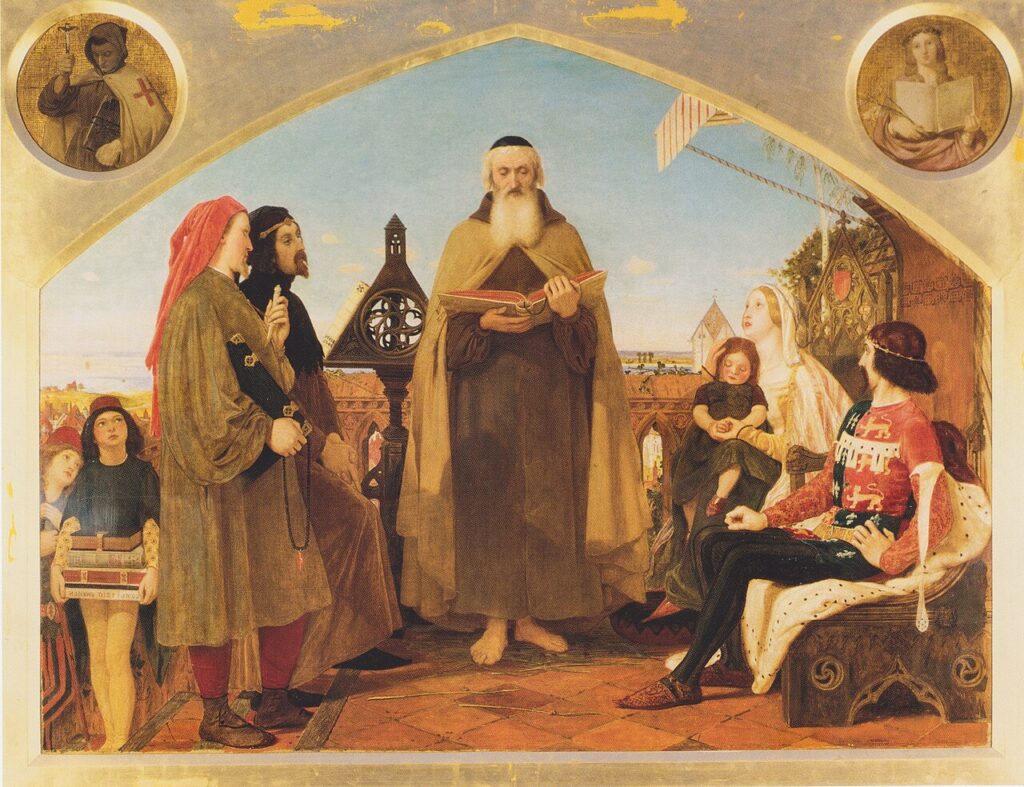
Translating the Bible means expressing in another language what the biblical texts communicate in the languages in which they were written. The aim is for every people to understand God’s Word clearly, without first having to learn another people’s language. This calls for faithfulness to the text and attention to how people actually speak and understand.
For evangelical Christians, the Bible’s authority comes from God, who inspired its authors. A translation should serve that Word by conveying its meaning with care. Translating Scripture therefore involves study, revision, and accountability to God and to readers.
A message communicated in human languages
The Old Testament was written mainly in Hebrew, with some portions in Aramaic. The New Testament was written in Greek, in the form widely used in the world of its earliest readers. The very formation of the Bible shows that God communicated his truth through human languages in specific historical settings.
At Pentecost, when the Holy Spirit came upon the disciples, people from different places heard about God’s mighty works in their own languages (Acts 2:1-11). This event does not describe a written translation project. It does, however, show that linguistic diversity does not prevent people from understanding God’s message.
Paul also stresses the importance of using understandable words when the church gathers (1 Corinthians 14:9). His teaching helps explain why translation matters: hearing sounds or repeating unfamiliar words is not the same as understanding a message. Communication must enable listeners to grasp what is being said.
A task spanning centuries
Before Jesus was born, books of the Hebrew Scriptures had already been translated into Greek. This translation became known as the Septuagint, a name recalling the seventy translators mentioned in tradition, and gave Greek-speaking Jews access to Scripture. It was also important to the earliest Christians as they proclaimed the gospel in places where Greek was spoken.
In the late fourth century, Jerônimo translated and revised the Bible in Latin, the common language of the Roman Empire. This work became known as the Vulgate, meaning the common version. Over the centuries, translations appeared in many other languages. This history brought together people from different Christian traditions who shared a desire to make Scripture accessible.
In the seventeenth century, João Ferreira de Almeida began translating the Bible into Portuguese, and his name remains associated with versions used by many evangelical churches. The ongoing work of revision and new translation also reminds us that languages change and that readers in different eras need to understand the text.
Faithfulness takes more than replacing words
A careful translation begins with studying the texts in their original languages. Translators examine words, sentences, context, and literary forms such as poetry and narrative. They also consult manuscripts, ancient handwritten copies, to assess differences in wording and provide a sound basis for their decisions.
Translating word for word does not always convey the meaning accurately. A natural Hebrew expression may become obscure if its structure is mechanically reproduced in English. Yet making a text easier to read does not justify adding ideas or removing difficult teachings. Clarity must go hand in hand with faithfulness.
Some translations seek to preserve the structure of the original sentences more closely; others focus more on conveying their meaning in everyday language. These choices help explain differences between versions. A trustworthy translation should be judged by how accurately it communicates the text, rather than simply by whether it sounds old or modern.
Understanding that leads to faith and daily obedience
Access to the Bible allows people to learn the story of salvation, examine the teaching they receive, and learn to follow Jesus. Paul connects faith with hearing the message about Christ. Translation helps people encounter that message, though the transformation of the heart depends on God’s work.
“Consequently, faith comes from hearing the message, and the message is heard through the word about Christ.”
Romans 10:17
Publishing a Bible, however, does not complete the task of making it accessible. Some communities need support in learning to read, and some people learn primarily by listening. Scripture recordings and sign language translations help remove practical barriers, always with the same commitment to communicating the biblical content faithfully.
The church also needs to teach people to read each passage in its context. In Nehemiah 8:8, the reading of the Law is accompanied by explanation so that the people can understand. Translation, teaching, and learning go together: having the text available is essential, but understanding its message requires attention and growth.
Scripture and prayer for the nations
Jesus commanded his followers to make disciples of all nations and teach them to obey his commands (Matthew 28:19-20). Translating the Bible contributes to this mission. It enables communities to know Scripture in their own language and to prepare people who can teach it to future generations.
Unreached peoples are ethnic groups whose local Christian community, if one exists, is still too small to bring the gospel to the whole group without outside help. Not every barrier is linguistic, but the lack of Scripture in a language people understand can hinder access to the message. Praying for these peoples includes asking for well-prepared translators, the involvement of local speakers, and churches that teach the Bible faithfully.