Concepts
Generosity: giving to God’s work
What the Bible teaches about giving: the example of the widow and the Macedonian churches, the role of tithes and offerings, and how generosity supports mission among the nations.

In the Bible, generosity means joyfully giving what we have, whether money, time, or possessions, because everything comes from God and he cares for those in need. Those who give in this way imitate God himself, who gave his Son. Giving is not about settling a debt with God, but responding to what he has already done for us.
The Bible does not treat generosity as a subject for the wealthy alone. It speaks of poor people who gave and rich people who did not, and shows that what matters is the heart.
Everything comes from God
In the Old Testament, the first part of the Bible, the people of Israel were taught to give back to God a portion of what they received. This portion was called a tithe, a word meaning “a tenth.” Leviticus 27:30 says that a tithe of the land belongs to the Lord. It was a way of acknowledging that the harvest came from God’s hand, and it also supported the priests and helped the poor (Numbers 18:21; Deuteronomy 14:28-29).
Today, many evangelical churches teach tithing as a starting point for giving. Others emphasize that the New Testament speaks more about giving generously and freely than about a fixed percentage. In both cases, the principle is the same: plan your giving, rather than giving only when there is something left over.
Giving joyfully, not out of obligation
Paul wrote to the church in Corinth, in Greece, about a collection to help Christians in need. He did not issue a command or set an amount. He wrote:
“Each of you should give what you have decided in your heart to give, not reluctantly or under compulsion, for God loves a cheerful giver.”
2 Corinthians 9:7
An offering, then, is a personal decision, made thoughtfully and willingly. God does not want money given in anger or fear. Jesus also taught people to give without seeking attention, so that even the left hand does not know what the right hand is doing (Matthew 6:3-4).
Examples we can learn from
Jesus saw a poor widow put two small coins into the temple treasury. He said that she had given more than all the others, because they gave out of their surplus, but she gave all she had to live on (Luke 21:1-4). For God, the value of an offering is measured by sacrifice and love, as well as by the amount.
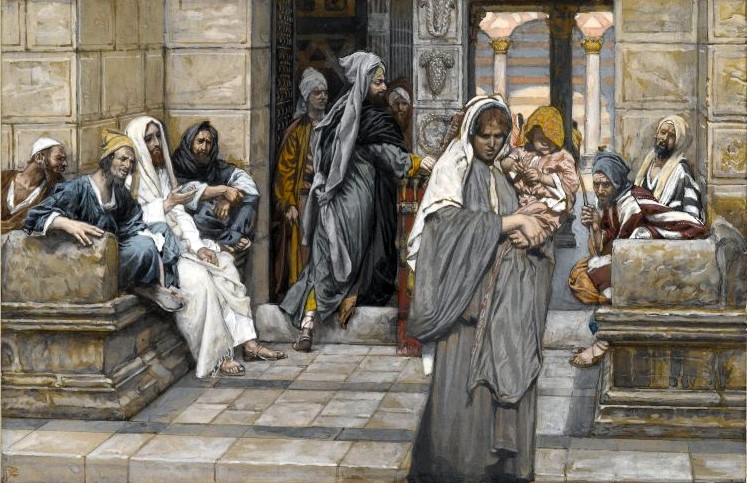
The churches of Macedonia, a region in northern Greece, offer another example. Paul says that even in extreme poverty, they gave generously, beyond what they could afford, and pleaded for the privilege of taking part in helping others (2 Corinthians 8:1-5). The first Christians in Jerusalem shared what they had so that no one among them was in need (Acts 4:32-35).
Generosity toward the poor
The Bible often connects giving to God with helping the poor. Proverbs 19:17 says that whoever is kind to the poor lends to the Lord, and God will repay that debt. Paul reminded the leaders of the church in Ephesus of a saying of Jesus that does not appear in the written Gospels but that he had preserved: there is greater happiness in giving than in receiving (Acts 20:35).
Giving changes the giver. Those who learn to open their hands become less attached to money and more attentive to others.
Generosity also goes beyond money. It includes time, attention, food on the table, and an open door to welcome those in need. Paul asked the Christians in Rome to share what they had with fellow believers in need and to practice hospitality (Romans 12:13). In the Bible, giving is a way of life, as well as a Sunday offering.
Generosity and the nations
From the beginning, generosity has supported mission. The Christians in Philippi, a city in Macedonia, sent help to Paul more than once while he was proclaiming the gospel elsewhere (Philippians 4:15-16). When the church in Antioch learned that there would be a famine in Judea, its members decided to send help to the believers there, each according to their ability (Acts 11:29-30).
The same is true today. Many peoples have yet to hear the gospel clearly, and reaching them requires both people who go and people who support those who go. Those who cannot go can give, and those who give take part in what God is doing among the nations. Ask God to show you how you can give, joyfully and without rushing, so that peoples who have never heard of Jesus may come to know his love.
 Concepts Ask the Lord of the harvest: praying for workers for the mission
 Concepts How to pray for authorities and government leaders
 Concepts How to Pray the Lord’s Prayer for the Nations