The Protestant Reformation was a movement to renew the church in the sixteenth century that gave rise to several Protestant traditions. Its leaders maintained that the Bible is the highest authority for faith and that salvation is a gift from God, received through faith in Jesus Christ. Their stated aim was to correct teachings and practices in light of Scripture.
The Reformation did not create the gospel or mark the beginning of Christianity. The reformers believed they were recovering truths proclaimed by Jesus and the apostles. To understand its significance, we need to consider both that message and its historical setting, which involved religious convictions, political struggles, and profound changes in European society.
How the Reformation began
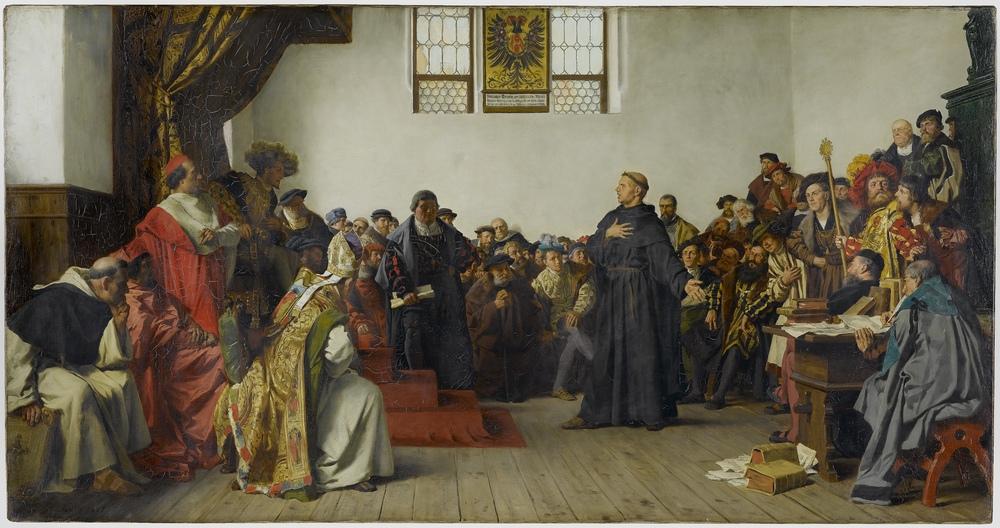
Even before the sixteenth century, Christians had been calling for changes in the life and teaching of the Western church. In this setting, Martinho Lutero, a monk and theology professor in Germany, became a central figure. In 1517, he presented his 95 Theses, statements intended for debate that challenged, in particular, the preaching and use of indulgences.
In Catholic teaching, an indulgence is a reduction, granted by the church, of the punishment that remains after a sin has been forgiven. In practice, promoting indulgences in connection with financial contributions encouraged abuses and could give people the impression that spiritual benefits could be bought. Lutero challenged this exploitation of people’s consciences and stressed repentance and trust in God’s mercy.
The debate broadened to include questions about the pope’s authority, the church’s teaching, and how sinners are accepted by God. The printing press helped spread the reformers’ writings. Other leaders, such as Ulrico Zuínglio and João Calvino, took part in reform movements in Swiss cities, though their proposals differed.
Salvation is received through faith
One central question concerned justification, the act by which God declares righteous a sinner who believes in Christ. The reformers taught that this acceptance rests on the work of Jesus, his death and resurrection. It cannot be bought or earned by accumulating religious merit. Catholics and Protestants agree that salvation is God’s gift, but differ on how faith and works relate to justification.
“For it is by grace you have been saved, through faith, and this is not from yourselves, it is the gift of God, not by works, so that no one can boast.”
Ephesians 2:8-9
Grace is God’s favor that we do not deserve; faith means trusting in Christ and what he has done to save us. This does not make obedience optional. Immediately after describing salvation as a gift, Paul explains that we were created in Christ to do good works, as Ephesians 2:10 teaches. Good works are the fruit of the salvation we have received, not its price.
The principles summed up in the five solas
The convictions of the Reformation are often summarized in five Latin expressions known as the five solas, which use words meaning only or alone. This summary of five phrases took shape later, in the twentieth century, bringing together key emphases of the movement. It was not a manifesto signed by the reformers, but it helps explain how these convictions fit together.
- Scripture alone: the Bible is the final authority for evaluating doctrines and practices. Teachers and traditions have value, but remain subject to God’s Word.
- Grace alone: salvation flows from God’s goodness, not from any debt he owes to deserving people.
- Faith alone: we receive justification by trusting in Christ, without adding our works as a basis for acceptance before God.
- Christ alone: Jesus is the mediator, the one who brings us to God, and his work is sufficient to save, as 1 Timothy 2:5-6 teaches.
- Glory to God alone: praise for salvation belongs to God. The Christian life should express gratitude and service, without exalting leaders as though faith belonged to them.
A legacy that calls for discernment
The Reformation encouraged Bible translation and reading in the languages people spoke, along with preaching and instruction in local congregations. It also emphasized the priesthood of all believers, meaning that everyone who belongs to Christ has access to God and is called to serve him. This does not do away with the church’s ministries of teaching and pastoral care.
The movement also led to divisions and was caught up in conflicts and episodes of intolerance. Its leaders were fallible people, and their actions must be examined in light of the gospel they proclaimed. Catholics also pursued reforms within their own tradition. Telling this history honestly requires acknowledging both contributions and sins, without caricaturing other Christian communities.
Protestants developed different understandings of baptism, the Lord’s Supper, and church organization. These differences remain among evangelicals and need not be hidden. The heritage of the Reformation calls every congregation to listen humbly to Scripture, nurture love, and correct practices that contradict Christ’s teaching.
The Reformation and the gospel among the nations
Lutero translated the New Testament into German, published in 1522, so that people could read the Bible in their own language. Access to the Bible in language people understand has a practical implication for mission: people in every culture need to hear the message of Jesus. The command to make disciples of all nations in Matthew 28:18-20 does not belong to a single European tradition. It directs the church to share the gospel and teach obedience to Christ among all peoples.
Unreached peoples are ethnic groups whose local Christian community, if one exists, is still too small to bring the gospel to the whole group without outside help. Let us pray for careful Bible translation, clear teaching, and well-prepared local leaders. Salvation by grace also teaches us to serve these peoples humbly, respecting their dignity and avoiding any confusion between Christian faith and the imposition of foreign customs.