Christian holidays
What Is Advent
Advent prepares Christians for Christmas and recalls the promise of Jesus' return. Explore its origins, its four Sundays and the meaning of the Advent wreath.

Advent is a season of preparation for Christmas observed by various Christian churches. In the best-known Western tradition, it covers the four Sundays before Christmas and brings together two kinds of waiting: the celebration of Jesus’ birth, his first coming, and the hope of his return. Its name comes from the Latin adventus, meaning arrival or coming.
In churches and homes, this preparation may include Bible readings, prayers, songs and lighting the candles of an Advent wreath. It is a time to reflect on the meaning of Christ’s coming and how to live while waiting for him. Customs vary among Catholics, Anglicans, Lutherans and other churches. To see how this observance fits into the Christian calendar, read about the most important Christian festivals.
How the Advent season began
The observance is rooted in the biblical accounts and in Christian hope. Luke describes Jesus’ birth in Bethlehem, where Mary placed the child in a manger, a container used to feed animals (Luke 2:1-20). The expectation of his return appears in Jesus’ teaching about remaining watchful, even without knowing the day of his coming (Mark 13:32-37).
An annual period of preparation developed later in church history. The Church of England places the emergence of Advent in the fourth and fifth centuries and records early forms of preparation lasting forty days, similar to Lent, the season before Easter. The pattern of four Sundays developed later, eventually becoming the familiar practice in many Western churches.
The candle wreath has a much more recent history. In 1839, Johann Hinrich Wichern placed a wooden wheel with candles in a home for children and young people in Hamburg, Germany. A new candle was lit each day to show how long remained until Christmas. Evergreen branches and a smaller version with four candles, one for each Sunday, came later.
The meaning of remembering and waiting
As they prepare for Christmas, Christians remember the incarnation, the belief that the Son of God became human in Jesus. The child of Bethlehem is recognized as the Savior, and his birth is part of the story that includes his life, death and resurrection. Preparation therefore involves learning who Jesus is and what his coming means for faith.
The second kind of waiting looks to the future: Christians believe Jesus will return. During Advent, this hope is accompanied by the call to watchfulness, which means living with attention to God and to one’s own actions. Jesus’ teaching does not provide a date for calculating his return; it invites his disciples to remain ready. One statement sums up this call:
“Be on guard! Be alert! You do not know when that time will come.”
Mark 13:33, NIV
This preparation takes shape in prayer, repentance and care for others. For those who observe the season, acknowledging a wrong attitude, seeking reconciliation and sharing with someone in need are ways to respond to the message of Advent. Joy in Christ’s coming thus goes hand in hand with an honest examination of one’s own life.
The Sundays, the wreath and preparation at home
To find the beginning of Western Advent, count back four Sundays from December 25. The first of these opens the season, which continues until Christmas Eve. Because Christmas can fall on different days of the week, the length varies: speaking of four weeks is a customary way to describe a season organized around four Sundays.
Advent also begins the liturgical year in various churches, meaning the calendar that organizes their celebrations and Bible readings. In Catholic practice, the first Sundays emphasize watchfulness and Christ’s return. As Christmas approaches, the readings focus more on the events surrounding Jesus’ birth, with particular attention to Mary and John the Baptist.
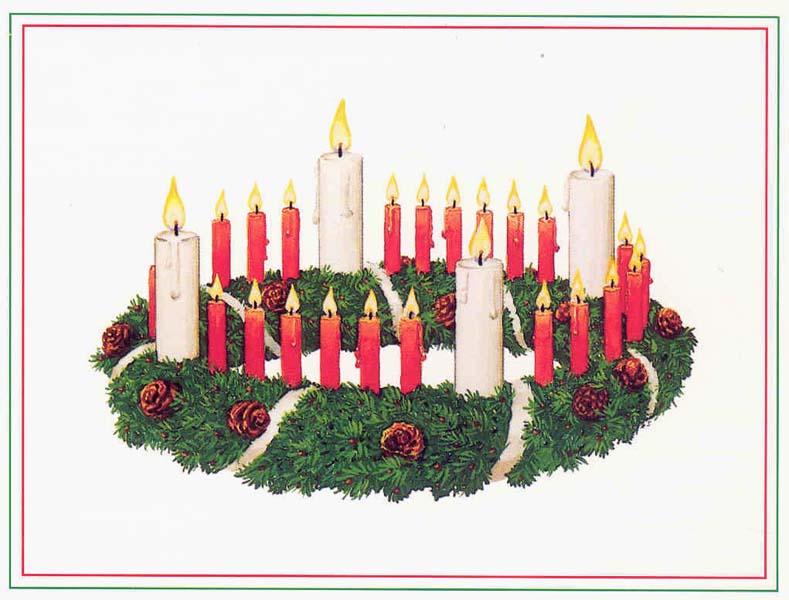
The Advent wreath usually consists of evergreen branches arranged in a circle and four candles. On the first Sunday, one candle is lit; on the second, two; on the third, three; and on the fourth, all four. This growing light marks the approach of Christmas. The circle can recall eternity, and the candlelight points to Jesus and the hope of his coming.
The colors depend on the tradition. One Catholic custom uses three purple candles and one rose candle, lit on the third Sunday, called Gaudete, a Latin word meaning rejoice. Purple expresses preparation and repentance; rose emphasizes joy. Some wreaths have white or red candles, while some Lutheran communities use blue as a sign of hope.
The themes associated with each candle also vary. Some communities follow hope, peace, joy and love; one Anglican approach recalls the ancestors of the faith, the prophets, John the Baptist and Mary. These sequences help organize prayers, but do not form a rule shared by everyone. Some wreaths also have a central candle, lit at Christmas to represent Christ.
At home, a family can gather around the wreath, read a Bible passage, sing and pray. Children can take part in the reading and discuss the meaning of Jesus’ birth. This practice allows preparation to continue during the week, alongside participation in church services or Mass.
Another custom is the Advent calendar, generally prepared for the first of December through December 24. Each day, the calendar offers a little window or a small package containing a picture, a sweet treat or a surprise. This countdown usually follows fixed dates and may begin on a different day from the church’s first Sunday of Advent.
In Orthodox churches of the Byzantine tradition, preparation for Christmas follows a different pattern. The Nativity Fast lasts forty days, from November 15 to December 24 in the calendar followed by the community. It combines prayer, help for the poor and dietary restrictions, such as avoiding meat and dairy products. The rules vary, and the preparation seeks to direct attention toward God and others.
Food therefore plays different roles depending on the community. While Orthodox preparation includes abstaining from certain foods, German families make cookies and sweets for the season, often with children taking part. These are local customs that accompany the wait for Christmas; understanding their meaning requires considering the family’s and church’s traditions.
Where Advent is part of everyday life
In Brazil, Advent is part of the Catholic calendar and is also observed in Lutheran communities. These churches’ guidance includes the wreath, times of prayer and family Bible reading. A person may therefore encounter the same sequence of Sundays in different settings, each with its own music, colors and ways of celebrating.
In Germany, preparation also appears in everyday city life, with Christmas markets, lights, calendars and seasonal food. These markets offer crafts, gifts and foods such as gingerbread cookies and sweet breads. The public presence of these customs mingles with religious preparation, but visiting a market or opening a calendar does not, in itself, indicate a practice of faith.
In England, the Anglican calendar includes Advent and guidance for using the wreath in worship. In the United States, Lutheran churches also offer guidance for observing the season in the community and at home. What connects these practices is preparation for Christ’s coming; the symbols and details depend on each church’s history.
Waiting for Christ and remembering the nations
Christian hope is connected with proclaiming the gospel to all peoples. When speaking about future events, Jesus also taught that the gospel would be preached to all nations (Mark 13:10). Advent offers an opportunity to include in prayer people who do not yet know this message and communities seeking to share their faith.
A family can choose an unreached people group, a group with little access to the gospel and few churches among its members, and learn its history during Advent. Using reliable information, they can pray that these people will understand Jesus’ message in their own language and that local Christians will have wisdom when discussing faith.
Building relationships can also begin with someone who celebrates differently from us. Listening to what a candle, a song or a period of fasting means helps us get to know the person before drawing conclusions about their beliefs. Sharing a reading about Jesus’ birth and making room for questions can turn Christmas preparation into a respectful conversation about Christ.
 Christian holidays The Ten Days Between the Ascension and Pentecost
 Christian holidays The most important Christian festivals
 Christian holidays What Is Epiphany, or Three Kings’ Day