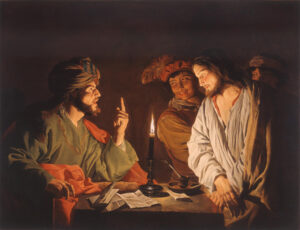
It is easy to judge from a distance those who make wrong decisions under pressure, but every leader has felt the weight of protecting something bigger than themselves, even if it means closing their eyes to the truth. Caiaphas carried that weight every day, and the way he responded to it made him one of the most tragic figures in the Bible.
Caiaphas was high priest of Israel from about AD 18 to AD 36, appointed by the Roman procurator Valerius Gratus and kept in office for almost two decades, a rare span of stability in a time of foreign rule. He was the son-in-law of Annas, the high priest before him and still an influential figure behind the scenes (John 18:13).
After Jesus raised Lazarus from the dead, Caiaphas gathered the Sanhedrin, troubled by the crowds following Jesus. Without realizing the full weight of what he was saying, he declared that it was better for one man to die for the people than for the whole nation to be destroyed (John 11:49-50). From that day on, they plotted to take his life.
On the night of the arrest, Caiaphas presided over the trial in his own palace, listening to false and contradictory witnesses (Matthew 26:59-60). When their testimony was not enough, he asked Jesus directly whether he was the Christ, the Son of God. Jesus answered that he was, and Caiaphas tore his own clothes, crying out blasphemy (Matthew 26:63-65). The verdict had already been decided before the question was even asked.
He sent Jesus to Pilate, since the Sanhedrin had no authority to execute anyone (John 18:28-31). Years later, still connected to the high priesthood, he was among the leaders who questioned Peter and John alongside Annas, trying to silence the preaching of the resurrection that he himself had helped bring about (Acts 4:5-7).
Caiaphas believed he was protecting the temple, the nation, and his own position. Without knowing it, he spoke one of the most prophetic lines in the New Testament: one man would die for the people. He meant it politically; God meant it as salvation. That is the invitation of his story: to ask whether, in protecting what seems sacred, we might be, like him, resisting the very voice of God.