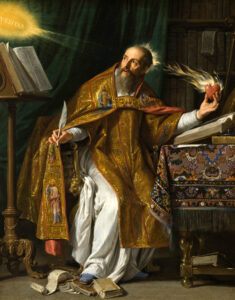
Many people live for years in routine faith, without the heart truly being touched, until something interrupts that routine and leads them to ask whether they truly believe. This is what happened to a German court counselor who experienced what he called a visitation of God.
Caspar Schwenckfeld was born around 1489 in Ossig, in Lower Silesia, a region that today belongs to Poland, into a family of minor nobility. He studied in Cologne and later at the University of Frankfurt an der Oder, an education that prepared him to serve as a counselor to the dukes of Liegnitz.
Around 1518, already influential at court, Schwenckfeld devoted himself to the study of Scripture and the writings of Luther, which affected him deeply. In 1522, he convinced Duke Frederick II to support the Reformation in Silesia, becoming one of the first to bring it to the region.
His closeness to Luther, however, did not last. Schwenckfeld came to understand that the believer receives the body of Christ in a spiritual manner, not through a physical presence in the bread and wine. In December 1525 he presented this position to Luther, who firmly rejected it, ending the relationship between the two men.
In 1526, he proposed temporarily suspending the public celebration of the Lord’s Supper and baptism until believers lived in a way more consistent with the gospel. The idea generated years of controversy and isolated him from both Catholics and Lutherans.
In 1529, to keep his duke from facing reprisals, Schwenckfeld voluntarily exiled himself from Silesia. He spent the following three decades living as a wanderer through southern Germany, hosted by friends, sustaining through letters a network of believers that he never organized into a formal church.
His most extensive work, the Great Confession on the Glory of Christ, from 1541, set out the doctrine of the heavenly flesh of Christ, the core of his mature theology. The idea was considered strange even by other reformers, coming close to denying the full humanity of Christ, and the Schmalkaldic League went so far as to condemn it and pronounce anathema against his writings in 1540, isolating him even further and forcing him to live under pseudonyms. He died in Ulm on December 10, 1561, surrounded by friends.
His refusal to found a church did not keep his followers, the Schwenkfelders, from preserving his vision for generations, until they migrated to Pennsylvania in 1734 in search of the religious freedom that Europe denied them. Schwenckfeld’s story reminds us that sincere conviction, even when unpopular, controversial on central points of the Christian faith, and without institutional support, can span centuries and form communities of faith far from where it was born.