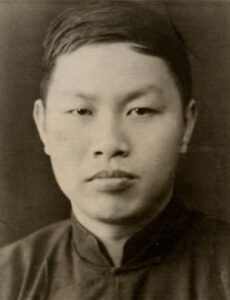
Few preachers reached the pulpit by so unlikely a path as David Martyn Lloyd-Jones. Born in Cardiff, Wales, in 1899, he seemed destined for a brilliant medical career in London as assistant to the king’s physician, not for a lifetime devoted to sermons.
Between 1923 and 1924, still a young and prestigious doctor, he underwent a personal conversion that completely changed his plans. Watching patients healed in body but lost within, he concluded that the deepest sickness in those lives was spiritual, not physical, and that only the gospel could address it.
In 1927 he left medicine, married Bethan Phillips, and took on a small pastorate in Sandfields, Aberavon, Wales, among workers from the local steelworks. Eleven years later, he moved to Westminster Chapel in London, where he would preach for nearly three decades.
There, Lloyd-Jones revived a style of preaching that seemed to be disappearing: long sermons, expounded chapter by chapter, with no concessions to the popular entertainment that dominated other pulpits. Crowds spent years listening to the same biblical letter being explained, verse after verse, week after week.
His exposition of Romans, preached on Friday evenings between 1955 and 1968, amounted to 366 sermons on a single letter, the longest and most detailed series of his entire pastoral life. Ephesians received similar treatment on Sundays between 1954 and 1962, later published in eight volumes that became a standard reference.
In 1966, a public address urging evangelicals to leave theologically liberal denominations set him on a collision course with John Stott, who publicly disagreed with him on the same platform. The episode divided British evangelicalism for decades, is regarded by many historians as a misjudgment that fractured alliances then being built, and is still remembered with regret today.
As a close adviser to the newly founded Banner of Truth Trust, he helped return long-forgotten Puritan works to evangelical readers. He retired from Westminster Chapel in 1968, shortly after surgery, but continued writing and revising sermons for publication until the end of his life.
He died in Ealing, London, in 1981, on Saint David’s Day. Today, thousands of his recorded sermons continue to shape pastors who learned from him that expounding the Bible with seriousness and passion remains the central task of any pulpit, in any nation.