1813–1873

Missionary · Explorer

David Livingstone

Summary
Scottish missionary and explorer who devoted thirty years to the African interior, mapping regions unknown to Europeans and denouncing the slave trade. His life opened the way for later generations of missionaries on the African continent.
Who they were
Biography

Few names evoke the image of the missionary turned explorer as much as David Livingstone. A boy who worked fourteen hours a day in a cotton mill in Scotland, he became the best known face of Christian presence in nineteenth century Africa, remembered for both achievements and failures that history has not let us forget.

Born in 1813 in Blantyre, Scotland, the son of a traveling tea seller, Livingstone began working at age ten in a cotton mill and studied at night. He trained in medicine in Glasgow and, in 1840, left for Africa under the London Missionary Society, determined to serve as a medical missionary.

He settled at the Kuruman mission, where he met Mary Moffat, daughter of missionary Robert Moffat, whom he married in 1845. Sechele, a local chief, became his only direct convert; years later, when Sechele resumed practices such as polygamy for a time, Livingstone saw it as a setback, though history recognizes Sechele as a remarkable evangelist who went on leading worship and spreading the Christian faith among the Bakwena and neighboring peoples.

Livingstone soon traded the settled work of the mission for exploration, convinced that opening routes into the interior also served the gospel. He crossed the Kalahari Desert to Lake Ngami in 1849 and, in 1855, sighted the waterfalls he named Victoria, which made him famous in England.

Fame brought the Zambezi Expedition, between 1858 and 1864, funded by the British government. The venture was marked by technical errors, such as overestimating the river’s navigability, and by serious conflicts within the team: Livingstone dismissed the artist Thomas Baines on a charge of theft that later records consider unjust, based on accounts from his brother Charles. His wife Mary, who had spent years apart from him and, during that time, had come to struggle with drinking, was reunited with him on the expedition and died of malaria in 1862; the couple’s own children would later complain of having spent little time with their father. Many, at the time, considered the expedition a failure.

Even so, Livingstone insisted on one last journey, in search of the source of the Nile, and spent years isolated in the African interior. Ill, without resources, and dealing with desertions among his porters, he came to depend on the support and hospitality of Arab slave traders, such as Tippu Tip, to survive, a contradiction that coexisted with his declared fight against the slave trade. In 1871, he was found by journalist Henry Morton Stanley, an episode that became famous for the greeting “Dr. Livingstone, I presume?”

He died in 1873, kneeling in prayer, in a village in present-day Zambia. His African companions, Chuma and Susi, carried his body for months to the coast; his heart was buried beneath a tree, and his body was laid to rest at Westminster Abbey, in London.

His reports on the slave trade in East Africa, even though the numbers he presented have been questioned by historians as exaggerated, weighed on the signing of the treaty that closed the Zanzibar slave markets, weeks after his death. Livingstone left behind fewer direct converts than maps and causes, but his example of perseverance and practical compassion continues to inspire Christian mission to this day.
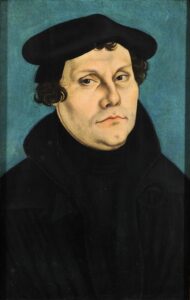
“I go back to Africa to try to make an open path for commerce and Christianity. Do you carry out the work that I have begun. I leave it with you.”
David Livingstone · Speech at Cambridge University, 4 December 1857
Timeline
1813

Birth in Blantyre, Scotland

Son of a working-class family, begins working in a cotton mill at age 10.

1836-1840

Training in medicine and theology

Studies in Glasgow and is accepted by the London Missionary Society.

1841

Arrival in Africa

Settles at the Kuruman mission, in present-day South Africa.

1845

Marriage to Mary Moffat

Marries the daughter of missionary Robert Moffat, at Kuruman.

1849

Crossing to Lake Ngami

Crosses the Kalahari Desert in one of the first recorded European crossings.

1855

Discovery of Victoria Falls

Becomes the first European to see the falls of the Zambezi River.

1858-1864

Zambezi Expedition

Leads a British expedition marked by technical difficulties; Mary dies of malaria in 1862.

1871

Meeting with Henry Morton Stanley

Is found by the journalist in Ujiji, having been isolated for years in the African interior.

1873

Death in Chitambo

Dies kneeling in prayer; his body is taken to England and buried at Westminster Abbey in 1874.

Works and milestones

Crossing to Lake Ngami

1849

Crosses the Kalahari Desert and reaches one of the first European sightings of the lake, earning recognition from the Royal Geographical Society.

Discovery of Victoria Falls

1855

Becomes the first European to see the falls of the Zambezi River, which he names in honor of Queen Victoria.

Missionary Travels and Researches in South Africa

1857

Best-selling book recounting his travels through the African interior, which makes him famous in England.

Zambezi Expedition

1858-1864

Expedition funded by the British government to explore the Zambezi River and its tributaries, marked by technical difficulties and the death of Mary Livingstone.

Narrative of an Expedition to the Zambesi and Its Tributaries

1865

Account of the Zambezi expedition, written together with his brother Charles Livingstone.

Search for the source of the Nile

1866-1873

Final expedition, in search of the source of the Nile River, cut short by his death before it could be completed.

The Last Journals of David Livingstone

1874

Posthumous journals compiled by missionary Horace Waller and published after his death.

Contributions
1

Mapping the African interior

His accounts and maps filled gaps in European knowledge of the geography of Central Africa, paving the way for later expeditions and mission agencies.

2

Campaign against the slave trade

His reports on the slave trade in East Africa influenced British public opinion and pressured the government, contributing to the treaty that closed the Zanzibar slave markets, signed weeks after his death.

3

Popularizing the African cause

The best-seller Missionary Travels and Researches in South Africa (1857) sparked British public interest in Africa, opening the way for new generations of missionaries and explorers.

4

Scientific records

His notes on geography, flora, fauna, and tropical diseases, such as malaria, fed scientific studies for decades.

Missionary legacy

His motto of uniting evangelism, fair trade, and the fight against slavery inspired generations of missionaries to link Christian faith with the practical development of the peoples they reached.

His readiness to press ever forward, expressed in letters to the London Missionary Society, became a symbol of pioneering spirit, still cited by frontier mission movements among unreached peoples.

He opened a geographic and symbolic path for mission agencies that went on to work in Central Africa in the decades following his death.

His emphasis on joining practical care, such as medicine and the fight against slavery, with gospel preaching remains a model for holistic mission today.

Other people