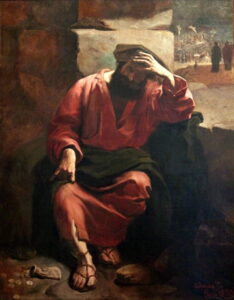
When life closes in, it is common to look elsewhere for the relief that is missing at home. That is what Elimelech did when he left Bethlehem, his homeland, in search of bread in a foreign land. The decision seemed reasonable. The outcome, however, he never lived to see.
Elimelech was an Ephrathite, a native of Bethlehem in Judah. He lived in the uncertain days of the judges, when everyone did as they saw fit and the people reaped the consequences of their unfaithfulness. A severe famine struck the land, and Elimelech, trying to protect his wife Naomi and his two sons, Mahlon and Chilion, decided to move to the country of Moab (Ruth 1:1-2).
Moab was a neighboring nation of Israel, historically hostile, and a worshiper of other gods. Even so, there the family found bread. Elimelech settled in the foreign land, and that is all Scripture records of him with certainty: a man who left Bethlehem seeking to survive.
Shortly after, without the text explaining the cause, Elimelech died in Moab (Ruth 1:3). Naomi was left a widow, alone with her two sons, in a land that was not her own. The sons married Moabite women, Orpah and Ruth, but they too died, leaving Naomi without husband or sons, which in the ancient culture was the starkest picture of helplessness.
Elimelech’s story ends in three verses, but his death is the trigger for everything that follows: Naomi’s return to Bethlehem, Ruth’s faithfulness, redemption through the hand of Boaz. His name, ‘My God is King,’ contrasts with the emptiness his death left behind, at least for a time.
Many people decide, in a moment of crisis, on what seems like the only possible way out, and then do not live to see how things are resolved. Elimelech did not see Naomi return full of hope, nor did he know that, through Ruth, his family would enter the lineage of David and, later, of the Savior himself. God keeps working even after our part in the story is over.