1910-1990

Biblical Historian · New Testament Scholar

F. F. Bruce

Summary
Scottish scholar who became the most influential evangelical biblical historian of the twentieth century. As a professor in Manchester, he defended the historical reliability of the New Testament with academic rigor, showing that faith and historical criticism could walk together.
Who they were
Biography

Frederick Fyvie Bruce was born on October 12, 1910, in Elgin, Scotland, the son of an itinerant preacher of the Plymouth Brethren. He grew up studying Greek and Latin from the age of eleven, in a home where the Bible and classical books shared the same shelf.

He graduated in Classics from the University of Aberdeen, then studied at Cambridge and the University of Vienna, where he deepened his knowledge of Indo-European philology. He never earned a formal doctorate, which would make his future academic career all the more unusual.

In 1936 he married Betty Davidson, also from a Plymouth Brethren family. In 1943 he published his first book, “The New Testament Documents: Are They Reliable?”, which would become a classic of twentieth century evangelical apologetics.

In 1947 he became the first head of the Department of Biblical History and Literature at the University of Sheffield. His 1951 commentary on Acts was the first work by an evangelical scholar in a generation to receive serious attention from the wider academy.

In 1959 he took up the Rylands Chair of Biblical Criticism and Exegesis at the University of Manchester, a post he held until his retirement in 1978. He wrote nearly 60 books and thousands of articles and reviews, among them his commentary on Paul, considered his most mature work.

Bruce refused easy labels: he did not adopt the strict defense of verbal inerrancy demanded by part of his own evangelical circle, which earned him suspicion from some more conservative quarters. He preferred to describe himself as a historian, not a theologian, and insisted that the Christian faith need not fear the critical method.

He helped establish Tyndale House in Cambridge as a center for evangelical biblical research, and edited collections that shaped generations of scholars. He died on September 11, 1990, in Buxton, England, a month before turning 80.

His greatest legacy was showing, with academic patience, that the Christian faith withstands the most rigorous historical scrutiny. To this day his books continue equipping Christians who need to defend the gospel in the face of doubt with intellectual honesty.
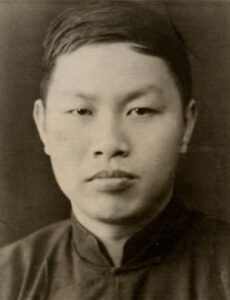
“The evidence for the writings of our New Testament is much greater than the evidence for many writings of classical authors, the authenticity of which no one dreams of questioning.”
F. F. Bruce · The New Testament Documents: Are They Reliable? (1943)
Timeline
1910

Born in Elgin, Scotland

Son of an itinerant preacher of the Plymouth Brethren.

1936

Married Betty Davidson

Also from a Plymouth Brethren family.

1943

Published The New Testament Documents: Are They Reliable?

First book, which became a classic of evangelical apologetics.

1947

Became head of department at Sheffield

First holder of the Department of Biblical History and Literature.

1951

Commentary on the Acts of the Apostles

Gains serious attention from the wider biblical academy.

1959

Rylands Chair in Manchester

Takes up the Chair of Biblical Criticism and Exegesis, held until 1978.

1977

Published Paul: Apostle of the Free Spirit

Work considered his most mature production on the apostle Paul.

1988

Published The Canon of Scripture

A study of the historical formation of the biblical canon.

1990

Died in Buxton, England

Passed away a month before turning 80.

Works and milestones

The New Testament Documents: Are They Reliable?

1943

His first book, a historical defense of the reliability of the New Testament that became a classic of evangelical apologetics.

Commentary on the Acts of the Apostles

1951

The first work by an evangelical scholar in a generation to be taken seriously by the wider biblical academy.

Head of the Department of Biblical History and Literature at Sheffield

1947

Became the first holder of the newly created department at the University of Sheffield.

Rylands Chair in Manchester

1959-1978

Took up the Rylands Chair of Biblical Criticism and Exegesis at the University of Manchester, a post held until retirement.

General editor of the New International Commentary on the New Testament

1962-1990

Led for decades one of the leading evangelical commentary series on the New Testament.

Paul: Apostle of the Free Spirit

1977

A study of the life and thought of the apostle Paul, considered his most mature work.

The Canon of Scripture

1988

A work on the historical formation of the biblical canon, published near the end of his career.

Contributions
1

Bridge between faith and academia

He demonstrated that it was possible to be a convinced evangelical and a rigorous academic at the same time, opening space for generations of evangelical scholars in secular universities.

2

Editor who shaped a generation

As general editor of the New International Commentary on the New Testament and of journals such as the Evangelical Quarterly, he shaped the standard of evangelical academic production on the New Testament.

3

Intellectual independence

He refused to adopt positions expected by part of his own evangelical circle, such as the strict defense of verbal inerrancy, which earned him suspicion from more conservative quarters but reinforced his reputation for academic honesty.

4

Training new scholars

As a professor in Manchester for nearly two decades, he formed a generation of evangelical biblical scholars who would hold chairs around the world.

5

Consolidation of Tyndale House

He helped establish in Cambridge a center for evangelical biblical research that remains active today, linking faith and the critical method.

Missionary legacy

His books defending the reliability of the New Testament remain basic material for apologists and missionaries in contexts of resistance to the gospel around the world.

Tyndale House and the Tyndale Fellowship, which he helped establish in Cambridge, continue forming evangelical biblical researchers who now serve in seminaries and mission fields in dozens of countries.

By showing that faith and historical criticism can coexist, he opened the way for Christians in secular university settings to defend the gospel with intellectual rigor, without anti-academic isolation.

His commentary on Acts and his work on Paul continue forming preachers and missionaries who study the book that narrates the missionary expansion of the early church.

Other people