1686-1758

Missionary · Founder of Nuuk

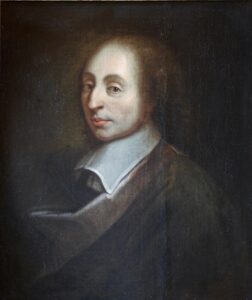
Hans Egede

Summary
Norwegian Lutheran pastor who reestablished a Christian presence in Greenland after nearly three centuries without contact with the old Norse colony. He founded the city of Nuuk in 1728 and devoted decades to evangelizing the Inuit, despite the language barrier and personal losses on the mission field.
Who they were
Biography

Few missionaries faced a calling as icy as that of Hans Egede. A pastor in a modest parish in northern Norway, he spent years developing a plan that sounded impossible: sailing to Greenland, a land that Christian Europe had nearly forgotten.

Born in 1686 in Harstad, he studied theology in Copenhagen and became a pastor in the Lofoten Islands in 1707. There, reading old Norse chronicles, he discovered that Christian settlers had established themselves in Greenland during the Middle Ages and then vanished, with no word from them for nearly three centuries.

Convinced that descendants of these settlers still lived on the island, cut off from the faith, he spent years seeking support from the king of Denmark-Norway. Only in 1721 did he set sail from Bergen with his wife, Gertrud Rask, and their children, bound for a territory that almost no European knew firsthand.

On arrival, he found no trace of the Norse descendants he was looking for, only ruins. Instead of giving up, he turned his attention to the Inuit already living in the region, gradually learning their language and customs, a slow work, with no translated Bible and no reliable interpreters.

In 1728, with the support of a royal expedition, the colony he had founded at Kangeq was moved to the site that would become Godthåb, today’s Nuuk, the capital of Greenland. Contact brought by the Europeans came, however, at a real cost: between 1733 and 1735, a smallpox epidemic carried in on supply ships killed thousands of Inuit.

The work of evangelization also had a harsher side. Records from the period show that Egede resorted to threats and punishments to combat the traditional religious practices of the Inuit, especially the role of the shamans, the angakkuit, a mark of intolerance now read as part of the broader process of Danish colonization of Greenland.

His wife, Gertrud, died in December 1735, having fallen ill while caring for the sick during the epidemic. Egede returned to Denmark the following year, leaving the work of translation and catechesis to his son, Poul Egede. In Copenhagen, he founded a seminary to train new missionaries, and in 1741 he became titular bishop of Greenland.

His memory divides opinion: in 2020, residents of Nuuk publicly debated the statue raised in his honor, a symbol of both the arrival of the gospel and the Danish colonial rule that came with it. That ambiguity is a legitimate part of his legacy, not a detail to hide.

Egede died in 1758, in Denmark, after devoting decades to a people who were not his own, in a language he had to learn from scratch. His insistence on staying, despite the losses, still inspires those who today carry the gospel to isolated places resistant to change.
Timeline
1686

Birth in Harstad

He was born in northern Norway, the son of a local public official.

1704

Studies in Copenhagen

He entered university to study theology.

1707

Pastor in Vågan

He took charge of a parish in the Lofoten Islands, in northern Norway.

1711

Proposal for a mission to Greenland

He presented the authorities with a plan to seek out the old Norse settlers and evangelize the island.

1721

Voyage to Greenland

He set sail from Bergen with his family bound for the island, founding the first mission colony at Kangeq.

1728

Founding of Godthåb (Nuuk)

With the support of a royal expedition, he moved the colony to the site that would become the capital of Greenland.

1733-1735

Smallpox epidemic

A disease brought by supply ships killed thousands of Inuit in the region.

1735

Death of Gertrud Rask

His wife died in December while caring for the sick during the epidemic; Egede returned to Denmark the following year.

1758

Death in Stubbekøbing

He died in Denmark, after years of literary work and training missionaries in Copenhagen.

Works and milestones

Petition to the king for the Greenland mission

1711

Presented the Danish-Norwegian authorities with a request to reestablish contact with the old Norse colony and evangelize its inhabitants.

Founding voyage to Greenland

1721

Set sail from Bergen with his wife, children, and a group of settlers, beginning the mission that would reestablish Christianity in the Arctic.

Founding of Godthåb (Nuuk)

1728

With the support of a royal expedition, moved the colony to the site that would become the capital of Greenland.

Seminarium Groenlandicum

1737

Founded in Copenhagen the seminary responsible for training new missionaries and catechists for Greenland after his return.

Appointment as titular bishop of Greenland

1741

Official recognition of decades of pastoral work among the Inuit.

Det gamle Grønlands nye Perlustration

1741

A work describing the geography, climate, Inuit customs, and the history of the old Norse colony in Greenland.

Catechism in Greenlandic

1747

Prepared a catechism for use in Greenland, completed after his return to Denmark, laying the groundwork for his son Poul Egede to continue the translation work.

Contributions
1

Reopening the Arctic to Christianity

After nearly three centuries without contact between Christian Scandinavia and Greenland, his mission reestablished ties that endure to this day.

2

Foundation for the Christian faith in Greenlandic

His initial efforts at catechesis among the Inuit, continued by his son Poul Egede, helped lay the foundations of Christian literature in the Greenlandic language.

3

Founding of Nuuk

The mission colony he founded in 1728 became, over time, the capital of Greenland, playing a central role in the territory's history.

4

Training new missionaries

By establishing the Seminarium Groenlandicum in Copenhagen, he ensured the work continued after his departure, training generations of catechists for the Arctic.

Missionary legacy

He is remembered as the Apostle of Greenland, a title that has endured for centuries and still marks the Christian identity of the territory.

His arrival paved the way for other mission groups in the Arctic, such as the Moravian missionaries from Herrnhut, who settled near his colony starting in 1733.

His effort to learn a language completely unknown in Europe anticipated a central principle of modern missions: knowing the language and culture of a people before proclaiming the gospel.

His story, marked by personal losses and years without visible fruit, remains a reminder that the missionary calling often demands long-term perseverance.

Other people