1771–1854

Poet · Hymn Writer · Journalist

James Montgomery

Summary
English poet and journalist, son of Moravian missionaries who died in Tobago and Barbados. Editor of the Sheffield Iris, he championed the end of the slave trade and wrote some 400 hymns, among them "Angels from the Realms of Glory" and "Hail to the Lord's Anointed," still sung today.
Who they were
Biography

Every Christmas Eve, churches around the world sing the hymn “Angels from the Realms of Glory” without knowing who wrote it. Behind it stands James Montgomery, an English poet who knew loss at a young age and turned pain, imprisonment, and indignation into verses that still echo today.

Born in 1771 in Irvine, Scotland, he was the son of a Moravian Church pastor. In 1783 his parents left as missionaries for Barbados, in the Caribbean, leaving the boy at the Moravian School in Fulneck, England, to be trained for ministry.

The separation proved final. The family went on to serve also in Tobago, where his mother died in 1790. His father died in Barbados the following year. Orphaned before he turned twenty, Montgomery would carry for the rest of his life the memory of parents who gave their own lives to missionary work.

In 1792 he moved to Sheffield and began working for a reformist newspaper run by Joseph Gales. When Gales left the country due to political persecution in 1794, Montgomery took over as editor and renamed the periodical the Sheffield Iris, which he would direct for more than three decades.

The newspaper demanded justice without mincing words, and that came at a cost. Montgomery was imprisoned twice, in 1795 and 1796, for publishing texts considered seditious, among them a poem about the fall of the Bastille and an account of a magistrate’s violence against a popular protest. Months in York Castle did not silence him.

Once free, he devoted part of his pen to the abolitionist cause. His 1809 poem “The West Indies” denounced the slave trade in verse, celebrating the abolition decreed by England two years earlier and giving literary form to the indignation of an entire Christian generation.

At the same time, he was writing hymns, some 400 over his lifetime. “Angels from the Realms of Glory” appeared at Christmas 1816; “Prayer Is the Soul’s Sincere Desire” arose from a request for a treatise on prayer; “Hail to the Lord’s Anointed” was first sung among the Moravians of Fulneck and later recited at a missionary meeting in Liverpool.

Not everything he wrote withstood the test of time. Part of his extensive poetic output drew harsh criticism even in his own day, including from the influential Edinburgh Review, and of the hundreds of hymns he composed, only a few dozen remain in use today. It is for a handful of texts, not his entire body of work, that his name lives on.

He died in Sheffield in 1854, given a public funeral paid for by the city that saw him as its moral conscience. A poet who was imprisoned for telling the truth and the son of missionaries who died in the field, he left in his hymns a call to worship, justice, and mission that has crossed borders and centuries.
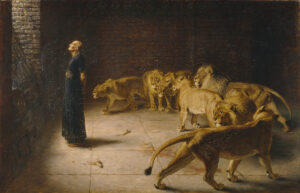
“Prayer is the soul's sincere desire, uttered or unexpressed, the motion of a hidden fire that trembles in the breast.”
James Montgomery · First verse of the hymn "Prayer Is the Soul's Sincere Desire," 1818
Timeline
1771

Born in Irvine, Scotland

Son of a Moravian Church pastor and missionary.

1783

Parents leave as missionaries for Barbados

Montgomery stays at the Moravian School in Fulneck, England.

1790-1791

Death of his parents in Tobago and Barbados

His mother dies in Tobago in 1790; his father dies in Barbados the following year, both in missionary service.

1792

Moves to Sheffield

Begins working for Joseph Gales's reformist newspaper.

1794

Takes over the newspaper, renamed the Sheffield Iris

Directs the periodical for more than three decades.

1795-1796

Imprisoned twice for sedition

Spends months in York Castle for texts published in the newspaper.

1809

Publishes "The West Indies"

A poem against the slave trade, celebrating Britain's 1807 abolition.

1816

Writes "Angels from the Realms of Glory"

A Christmas hymn published on Christmas Eve in the Sheffield Iris itself.

1854

Dies in Sheffield

Receives a public funeral and is buried in Sheffield General Cemetery.

Works and milestones

Editor of the Sheffield Iris

1794-1825

Took over the newspaper in 1794 and ran it until 1825, turning it into a voice for social reform and freedom of the press.

The West Indies

1809

A poem in four parts that denounced the slave trade, celebrating the abolition decreed by England in 1807.

The World Before the Flood

1812

A historical poem in ten cantos about the antediluvian period, one of the author's major narrative works.

Greenland

1819

A missionary poem about the Moravian work among the Inuit of Greenland, begun in 1733.

Songs of Zion

1822

A collection of hymn versions of the Psalms.

The Christian Psalmist

1825

An anthology of hymns compiled by the author, gathering his own texts and those of other hymn writers.

About 400 hymns

1771-1854

Over his lifetime he wrote hundreds of hymns, including "Angels from the Realms of Glory" and "Hail to the Lord's Anointed," still sung today.

Contributions
1

Journalism of conscience

He ran the Sheffield Iris for more than three decades, giving voice to causes of social reform and freedom of the press even while facing imprisonment for it.

2

Poetry against the slave trade

"The West Indies" (1809) united literary talent and Christian conviction to denounce slavery soon after the British Empire's abolition of the trade.

3

Hymns that crossed the centuries

He composed about 400 hymns over his lifetime; dozens remain in use in hymnals of different traditions today.

4

Public recognition of his Christian faith

He received a crown pension in recognition of his work and had a public funeral in Sheffield, a sign of the respect his Christian integrity had earned.

Missionary legacy

"Greenland" (1819) kept alive the memory of the Moravian mission among the Inuit, sparking interest in isolated peoples.

"Hail to the Lord's Anointed" was written for a missionary meeting and is still sung at commissioning services around the world.

"Angels from the Realms of Glory" carries the gospel message every Christmas, translated and sung in countless languages.

His public support for Bible societies and foreign missions, through his pen and his newspaper, helped legitimize the missionary movement in the eyes of the British public.

Other people