It is easy, in everyday life, to know the rules well and decide to take a shortcut, trusting that the outcome will be the same in the end. The life of Nadab shows what can be at stake when this kind of shortcut enters the most sacred space of faith.
Nadab was the eldest son of Aaron and Elisheba, brother of Abihu, Eleazar, and Ithamar (Exodus 6:23). A nephew of Moses, he was born in Egypt, still under the enslavement of the Hebrew people, and lived through the deliverance of the Exodus as an adult.
He was among the small group that went up Mount Sinai with Moses, Aaron, and seventy leaders of Israel, and saw, in some visible way, the presence of God without being destroyed (Exodus 24:1,9-11). Soon after, he was consecrated as a priest alongside his father and brothers, receiving sacred garments to serve before the Lord (Exodus 28:1).
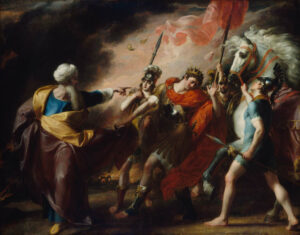
This privileged access, however, came with precise rules. God had given detailed instructions about how incense was to be offered in the tabernacle, the portable sanctuary where Israel worshiped him in the wilderness. Nadab and Abihu chose to use fire the Lord had not authorized (Leviticus 10:1).
The response was immediate. Fire came out from the presence of the Lord and consumed them, and the two died right there, before the altar they were supposed to serve (Leviticus 10:2). Aaron, their father, facing the loss of two sons in the same instant, remained silent (Leviticus 10:3).
The story is unsettling precisely because Nadab was no stranger to God. He had already seen the glory of the Lord at Sinai, already wore the garments of the priesthood, already knew firsthand what God required.
Even so, closeness in the past did not replace the obedience required in the present. God is not concerned only with the sincerity of those who approach him, but also with the way that approach takes place, and Nadab’s life asks the reader whether he is willing to worship God the way God asks.