Moabite daughter-in-law · The one who returned to Moab

Orpah

PeriodTime of the judges (~1100 BC)
Summary
Naomi's Moabite daughter-in-law and Ruth's sister-in-law, Orpah set out with her widowed mother-in-law on the road back to Bethlehem, but chose to return to Moab and to the gods of her people when given the chance to decide. The Bible does not condemn her, it simply records the contrast with Ruth's faithfulness.
Who was Orpah
Biography

Everyone has come to a fork in the road where both paths seemed equally decent, and chose the safer one. The Bible does not judge that choice in a single line, it simply records it, and leaves the reader standing at the same crossroads.

Orpah was a Moabite, from a people who were neighbors of Israel and, often, hostile toward it (Ruth 1:4). She married one of the sons of Elimelech and Naomi, a family from Bethlehem that had moved to Moab fleeing a famine in Judah (Ruth 1:1-4).

After nearly ten years, tragedy struck the household three times. Orpah’s husband died, and so did her father-in-law and brother-in-law, leaving Naomi, Orpah, and Ruth widows in a foreign land (Ruth 1:3-5).

When Naomi decided to return to Bethlehem, Orpah and Ruth set out with her on the road. Along the way, her mother-in-law stopped and urged the two of them to go back to their mothers’ homes, where they would have a better chance of rebuilding their lives (Ruth 1:6-9).

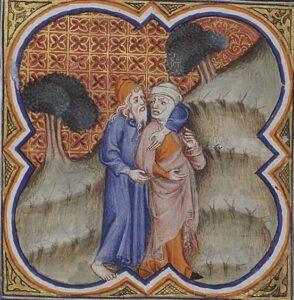
The two wept and refused. Naomi insisted again, reminding them that she was too old to give them other husbands. At this, Orpah wept once more, kissed her mother-in-law goodbye, and returned to her people, while Ruth stayed (Ruth 1:9-14).

Naomi then used Orpah’s choice as an argument before Ruth: “Look, your sister-in-law is going back to her people and her gods. Go back with her!” (Ruth 1:15). From that verse on, Orpah disappears from the narrative.

There is no curse over her name, only silence. She made the decision most people would make, to return to what she already knew, a people, a home, a familiar god. Ruth chose the rare path.

The difference between the two daughters-in-law was not in the depth of their love for Naomi, both wept and kissed her, but in what they did with that love when faced with the real cost. Orpah’s life asks the reader which road they have chosen when the faithful path demands more than the reasonable one.
Defining verses

They married Moabite women, one named Orpah and the other Ruth.

Ruth 1:4

At this they wept aloud again. Then Orpah kissed her mother-in-law goodbye, but Ruth clung to her.

Ruth 1:14

"Look," said Naomi, "your sister-in-law is going back to her people and her gods. Go back with her."

Ruth 1:15

Visions, prophecies, and deeds

Marriage to a son of Elimelech

Orpah married one of the two sons of Elimelech and Naomi, a family from Bethlehem who had taken refuge in Moab because of a famine in Judah.

Ruth 1:4

Widowhood in a foreign land

After nearly ten years of marriage, Orpah's husband died, as did her father-in-law and brother-in-law, leaving her a widow alongside Naomi and Ruth.

Ruth 1:3-5

Sets out on the road back to Bethlehem

When Naomi decided to return to Judah, Orpah and Ruth went with her, willing to leave Moab and live among their mother-in-law's people.

Ruth 1:6-7

Receives Naomi's appeal to return

Along the way, Naomi urged both daughters-in-law to return to their mothers' homes, since she had no more sons to give them as husbands.

Ruth 1:8-13

Weeps and hesitates before deciding

Orpah wept together with Ruth and, at first, resisted the idea of leaving Naomi, showing genuine affection for her mother-in-law.

Ruth 1:9-10

Kisses Naomi and returns to Moab

After weeping again, Orpah kissed her mother-in-law goodbye and returned to her people and her gods, while Ruth remained.

Ruth 1:14

Cited by Naomi as an argument before Ruth

Naomi used Orpah's decision to return as an argument to persuade Ruth to do the same, but Ruth refused.

Ruth 1:15
Timeline
~1100 BC

Famine in Bethlehem drives Elimelech's family to Moab

Elimelech, Naomi, and their sons Mahlon and Kilion leave Bethlehem of Judah (Ruth 1:1-2)

~1100 BC

Orpah marries a son of Elimelech

Ruth 1:4

~10 years later

Death of Elimelech and both sons

Orpah, Naomi, and Ruth are left widows in Moab (Ruth 1:3-5)

date unknown

Naomi decides to return to Bethlehem

Orpah and Ruth set out with her on the road (Ruth 1:6-7)

date unknown

Naomi urges her daughters-in-law to turn back

Ruth 1:8-13

date unknown

Orpah kisses Naomi and returns to Moab

Ruth 1:14

date unknown

Orpah's last mention in the narrative

Naomi cites her as an example before Ruth (Ruth 1:15)

Portrait

Genuine love for her mother-in-law, shown by her weeping and her initial willingness to leave her homeland for her (Ruth 1:9-10)

Practical loyalty through the difficult years of widowhood, living alongside Naomi and Ruth

Honesty, she did not pretend a greater commitment than she was willing to keep to the end

Under pressure and Naomi's rational argument, she chose the safer path instead of the more faithful one (Ruth 1:14-15)

She returned not only to her people but also to the Moabite gods (Ruth 1:15), giving up the faith she would have come to know in Naomi's household

Lessons and legacy
Lessons from their life

The difference between love and commitment shows up at the moment of parting, not at the moment of the embrace

It is possible to weep genuinely over something and still choose the more comfortable path

No one is forced to stay, the decision to follow a different people and a different God is always personal

Orpah's story shows the real cost of Ruth's choice, which makes that choice all the more remarkable

Missionary legacy

Orpah represents every person who hears the invitation to leave their people and their gods and, even though moved, decides to turn back

Her contrast with Ruth reminds us that proclaiming the faith to a foreign people never guarantees that everyone will decide to stay

Her story invites us to pray for those who, like Orpah, come close to faith and return to what they already knew

It shows that the call to leave land, people, and gods for the sake of the true God is just as real today as it was in Moab

Family and context
Family and relationships
Mother-in-law Naomi (Ruth 1:4)
Father-in-law Elimelech (Ruth 1:2-4)
Sister-in-law Ruth (Ruth 1:4)
Husband Likely Kilion, son of Elimelech (Ruth 4:10, by elimination)
Brother-in-law Likely Mahlon, Ruth's husband (Ruth 4:10)
People Moabite (Ruth 1:4)
Nations mentioned

Moab

Ruth 1:4

Judah

Ruth 1:1

Related places

Moab

Orpah's homeland, a region east of the Dead Sea (present-day Jordan), where she married and was widowed

Bethlehem of Judah

Naomi's hometown, to which she decided to return (Ruth 1:6-7)

The road between Moab and Judah

Where Naomi urged her daughters-in-law to turn back, and where Orpah said her goodbye (Ruth 1:8-14)

Where to find them in the Bible

Orpah's story is told in Ruth 1:1-15. She is mentioned by name only in these verses and does not appear anywhere else in the Bible.

Other people