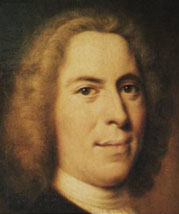
As a young man, Richard Baxter endured years of fragile health and feared he would die before maturing in the faith. This constant nearness to death, more than any abstract theory, shaped his pastoral urgency: every conversation, every sermon, might be the last he would have with that person.
Born on November 12, 1615, in Rowton, Shropshire, he received little formal education because of his poor health and teachers he himself described as poorly prepared. He was ordained a deacon in December 1638 and served as a teacher and preacher in Dudley and Bridgnorth before taking up the ministry that would mark his life.
In 1641, he arrived in Kidderminster, an English weaving town, and remained there for nearly twenty years, with one interruption during the English Civil War, when he served as a chaplain to the parliamentary army. He organized weekly visits to hundreds of families for personal instruction, convinced that the reform of the church begins within each home.
In 1647, during a severe illness in which he feared he would not survive, he began writing The Saints’ Everlasting Rest, a meditation on the hope of heaven, at the home of Sir Thomas Rous in Rous Lench. Published in 1650, it became one of the most widely read devotional books of English Puritanism.
In 1656, he published The Reformed Pastor, a manual on personal pastoral care and the systematic instruction of families. The work became a reference for generations of pastors, far beyond his own tradition.
In 1662, he refused to submit to the Act of Uniformity, even turning down a bishopric that had been offered to him, and was ejected from the Anglican clergy, becoming one of the leaders of the Nonconformist movement. In September of that same year, he married Margaret Charlton, a former hearer of his preaching in Kidderminster, about twenty years younger than him. The difference in age and social standing fueled unkind gossip at the time, but the marriage proved a happy union, lived amid years of persecution and forced moves.
His moderate theological positions on grace and justification, known today as Baxterianism, drew criticism from strict Calvinists and official Anglicans alike, and his extensive prose, spread across nearly two hundred works, made many of his writings difficult to receive. In 1685, nearly seventy years old, he was tried by the feared Judge Jeffreys and imprisoned on charges of slandering the Church of England.
He died in London on December 8, 1691, at the age of 76. His model of personal pastoral care and his pursuit of an essential faith uniting Christians across denominations continue to inspire pastors and missionaries around the world.