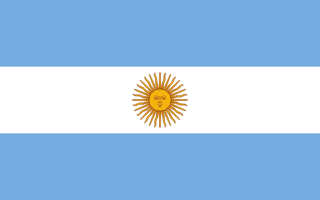
Discover
The identity of the nation
Argentina is a nation of nearly 46 million people occupying the southern tip of South America, from the subtropical heat of the north to the icy winds of Patagonia. Buenos Aires, the capital, is one of the continent’s great metropolises, shaped by European immigration, by tango (the country’s signature dance and music) and by an intense cultural life. Spanish is the language of virtually the entire country, giving the nation a strong unity of communication.
Argentines are a people with deep Christian roots. Catholicism arrived with the Spanish colonizers and shaped the national identity for centuries, though today many Argentines live out their faith in a more cultural than personal way. In recent decades, Argentina has experienced revival movements that touched thousands of lives and fueled the growth of evangelical churches, especially Pentecostal ones, now present in every neighborhood and city.
Alongside this living faith, the number of those who claim no religion is also growing, especially among young people in the big cities. Distance from religion is advancing, and many who carry a Christian name have never had a real encounter with Christ. The challenge is not hostility, but indifference and spiritual emptiness amid an abundance of religious tradition.
Argentina is also home to communities that remain far from the gospel: Arab immigrants of Muslim faith, Buddhist Chinese communities and the large deaf community, with its own sign language. They are few unreached groups in number, but real, living within a Christian-majority nation.
Historically, Argentina has been a cradle of worshipers, preachers and intercessors who have blessed all of Latin America. It is a nation called to overflow: to move from crisis to hope, from religiosity to relationship with God, and to send workers to the peoples still without Christ.
- Before colonization, indigenous peoples such as the Guarani, Diaguita, Mapuche and the hunters of Patagonia inhabited the territory.
- 1516 The Spanish navigator Juan Díaz de Solís reaches the estuary of the Río de la Plata and claims the region for Spain.
- 1536 First attempt to found Buenos Aires; the city would be refounded in 1580.
- 16th-18th centuries Spanish colonization; Catholicism becomes the dominant faith and missions spread throughout the interior.
- 1810 The May Revolution begins the independence process in Buenos Aires.
- 1816 On July 9, the Congress of Tucumán formally declares independence from Spain.
- 19th-20th centuries Massive European immigration, mainly Italian and Spanish, transforms Argentine society.
- 1946 Juan Domingo Perón comes to power; Peronism deeply marks the country's politics.
- 2001 A severe economic and social crisis shakes the nation.
- 2013 The Argentine Jorge Mario Bergoglio, archbishop of Buenos Aires, is elected Pope Francis.
- Today A Christian-majority nation, with growing evangelical churches, advancing distance from religion and persistent economic challenges.
-
Spanishde facto official, spoken by virtually the entire population
-
Indigenous languagesGuarani, Quechua, Mapudungun and others, spoken by native communities
-
Italian and Germanlegacies of immigration, still present in some communities
-
Argentine Sign Languageused by the country's large deaf community
Argentina is the second largest country in South America and stretches about 3,700 km from north to south, giving it an enormous variety of landscapes and climates. The territory ranges from the plateaus and deserts of the northwest, through the fertile plains of the Pampas in the center, to the cold, windswept lands of Patagonia in the far south. To the west, the Andes mountain range forms the natural border with Chile and is home to Aconcagua, the highest peak in the Americas.
Major cities
- Buenos AiresCapital and largest city, political, economic and cultural center
- CórdobaSecond largest city, important university and industrial hub
- RosarioMajor port and agricultural center on the banks of the Paraná River
- MendozaHeart of wine production, at the foot of the Andes
- Mar del PlataMain coastal city and summer destination
- San Carlos de BarilocheTourist city in Patagonia, by the lakes and mountains
Climate and temperature
Asado
Meat slowly roasted over embers, the most emblematic dish and a symbol of Argentine fellowship.
Empanadas
Baked pastries filled with beef, chicken or cheese, with its own recipe in each region.
Mate
An infusion of yerba mate drunk from a gourd, a shared beverage that is almost a social ritual.
Dulce de leche
A creamy caramelized milk sweet, found in desserts, alfajores and ice cream.
Alfajores
Cookies filled with dulce de leche, a classic of Argentine confectionery.
Milanesa
Breaded and fried steak, served with potatoes or in the napolitana version with sauce and cheese.
Locro
A thick stew of corn, beans, squash and meats, traditional on national holidays.
Understand
Culture and spirituality
2a · The culture
Mate as a gesture of friendship
Sharing the mate gourd is a sign of welcome and fellowship; refusing it can come across as rejection.
Passion for soccer
Soccer is part of the national identity, lived with almost religious intensity.
Tango and nightlife
Born in Buenos Aires, tango expresses the country's melancholic and passionate soul.
Strong European heritage
Italian and Spanish immigration shaped the language, the food and the way of life.
National pride
Argentines are deeply attached to their culture, their history and their achievements.
Late social life
Dinners and gatherings happen late at night, with time for conversation.
- Refusing the mate offered to you Sharing the gourd is a gesture of friendship; refusing without explanation can cause hurt.
- Comparing too much with Brazil or Chile Rivalries, especially in soccer, stir sensitivities.
- Treating the faith as mere tradition Many live their faith sincerely; dismissing it closes doors.
- Rushing relationships Trust is built through the rhythm of conversation and time together.
- Ignoring economic wounds Crises have scarred families; speaking lightly of the subject sounds insensitive.
2b · The field
Areas of spiritual battle and cultural captivity to cover in prayer. Tap each point to understand:
More and more people, especially the young, live without any reference to God.
Many carry the Christian name without a personal encounter with Christ.
Devotions to popular saints and folk cults mix faith and superstition.
Repeated economic crises have left marks of cynicism and unbelief.
Attachment to one's own identity can hinder humility before the gospel.
The pursuit of financial security can take the place of trust in God.
Esoteric practices and consultations with mediums attract many in search of answers.
Deep polarization wounds relationships and the unity of society.
Sporting passion at times occupies the space of the sacred.
Muslim immigrants, Buddhists and the deaf community remain far from the gospel.
Argentina is a country of broad religious freedom, where Christians live and practice their faith without significant hostility. The Constitution guarantees the free exercise of worship, and the Christian tradition is part of the national identity, making direct persecution practically nonexistent.
The greatest challenge is not opposition, but spiritual indifference. In a Christian-majority nation, many live far from a personal faith, and distance from religion is advancing among the youngest. The church is free to proclaim the gospel; the battlefield is in the heart of a religious people who nonetheless lack a living relationship with God.
The persecution score runs from 0 to 100: the higher it is, the greater the pressure on Christians.
Argentina has 4 unreached peoples, 2 of them frontier people groups, the farthest from the gospel. They are small communities within a majority-Christian population of Catholic tradition: three Jewish groups (Spanish-speaking, Syrian and Litvish (an ultra-Orthodox Jewish subgroup of Lithuanian origin)) and the deaf community. Each remains with specific needs and little full access to the message of Christ in its own language and culture.
- 228K Unreached 0,5%
- 1.6M Minimally reached 3,6%
- 3.2M Superficially reached 7%
- 1.7M Partially reached 3,8%
- 38.7M Significantly reached 85,1%
- 4 Unreached 5%
- 4 Minimally reached 5%
- 15 Superficially reached 18,8%
- 39 Partially reached 48,8%
- 18 Significantly reached 22,5%
Source of people group data: Joshua Project (joshuaproject.net). Estimates, may vary.
Tcheco
Litvish Jews Frontier
Japonês
Syrian Arab
Jew
Spanish-speaking Jews
Esloveno
Source: Joshua Project. Estimates, may vary.
Source: Joshua Project and Progress.Bible. Estimates, may vary.
Spanish Official
Arabic, Levantine
Mapudungun
Quichua, Santiago del Estero
Argentine Sign Language
Wichi Lhamtes Vejoz
Mocovi
Pray
Intercede for this nation
Go
Practical details for those who want to go
Local time
Cost of living
varies greatly with inflation and the exchange rate
Cost by city
Reference values (source: Numbeo). Confirm before traveling.
Practical points for those who go
- Learn Spanish: English is rarely spoken outside tourist and professional circles.
- Carry cash and stay informed about the exchange rate, which fluctuates greatly.
- Respect the mate ritual: accepting the gourd is a gesture of friendship.
- Be prepared for late social life: dinners and gatherings start late.
- Dress for the climate of the region: the country ranges from subtropical heat to Patagonian cold.
- Have patience with bureaucracy and with price instability.
Send and sustain
Not everyone goes, everyone takes part
Not everyone goes. Everyone takes part.
Behind every worker among these peoples stands a network of people who pray without ceasing, care for the family left behind, and faithfully sustain the work. Sending is mission too.
Start with your church: introduce this nation, adopt it in ongoing prayer, and walk alongside those God is raising up to go.