Discover
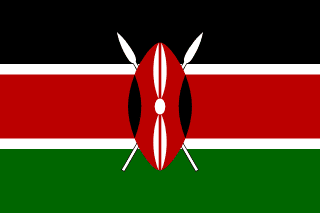
The identity of the nation
Kenya holds a unique place in the history of Christianity in East Africa. It was in Mombasa, in 1844, that Johann Ludwig Krapf landed as the first Protestant missionary to work on Kenyan soil, translating portions of the Scriptures into Swahili and Kamba. Today, more than 80% of the population identifies as Christian, making Kenya one of the nations most open to the gospel on the African continent.
This Christian flourishing, however, coexists with deep tensions. In the northeastern and coastal regions, where Islam is predominant, Christians face growing pressure from radical groups. The porous border with Somalia allows infiltration by Al-Shabaab, which has attacked churches, murdered pastors and forced Christian families to abandon their homes. For these communities, faith is lived out with daily courage.
Internally, Kenya faces the challenge of religious blending: practices from African ethnic religions mix with Christianity in many communities, especially in rural areas. At the same time, a young, urban and connected generation, concentrated in Nairobi’s vibrant tech hub known as Silicon Savannah, is searching for answers to questions of identity, purpose and faith that mere economic growth cannot provide.
Of Kenya’s 57 million people, around 25 people groups are still classified as unreached or minimally reached by the gospel, especially among Muslim communities in the north and remote pastoralist populations. Kenya is also home to dozens of languages without the full Bible translated, representing an open field for translation work and deep discipleship.
The Kenyan church, vibrant and growing, has the potential to lead the missionary advance in East Africa. With committed leaders, churches active in underserved communities and a Kenyan diaspora spread across the world, Kenya is being prepared for more than receiving the gospel: it is being prepared to send it.
- Hunter-gatherer populations have inhabited the territory for millennia; Cushitic pastoralists arrive in the north around 2000 BC.
- 700 Arab traders establish trading posts on the Indian Ocean coast; Islam begins to influence the coastal region.
- 16th century Arrival of the Portuguese on the coast; construction of Fort Jesus in Mombasa (1593).
- 1844 Johann Ludwig Krapf arrives in Mombasa, beginning Protestant missionary work and the first Bible translations into local languages.
- 1895 The territory becomes a British colony; the Uganda Railway links Mombasa to the interior, turning Nairobi into a city.
- 1920 The Colony of Kenya is officially created; British settlers seize the best land, displacing African populations.
- 1952 The Mau Mau uprising begins, led mainly by the Kikuyu, demanding the return of land and the end of colonial rule.
- 1963 Kenya gains independence on December 12; Jomo Kenyatta becomes the first president.
- 1978 Daniel arap Moi assumes the presidency, ruling for 24 years in a period marked by authoritarianism and corruption.
- 2007 Post-election violence between ethnic groups leaves more than 1,300 dead and 600,000 displaced.
- 2010 A new constitution is approved, decentralizing power and expanding civil rights.
- Today Kenya is a benchmark for technological innovation in Africa, with persistent challenges of inequality, corruption and insecurity in the north.
-
Swahili (Kiswahili)Official language and language of national unity, spoken by nearly the entire population
-
EnglishOfficial language, used in government, education and commerce
-
KikuyuLanguage of the largest ethnic group, spoken by about 22% of the population
-
LuoLanguage of the third-largest ethnic group, in the west of the country
-
KalenjinA cluster of dialects of the Nilotic group, about 12% of the population
-
KambaSpoken by about 11% of the population, in the central-eastern region
-
Other languagesKenya is home to more than 60 native languages; 39 still lack a complete translated Bible
Kenya lies in East Africa, crossed by the Equator, with a 536 km coastline on the Indian Ocean. Its territory combines landscapes of rare diversity: the Great Rift Valley cutting through the country from north to south, Mount Kenya (5,199 m, the second-highest peak in Africa), vast savannas where Africa's great mammals roam, highland forests in the center-west and the semi-arid desert that dominates the north. This variety of ecosystems makes Kenya one of the most visited nature tourism destinations in the world.
Major cities
- NairobiCapital and largest city, the economic, technological and diplomatic center of East Africa
- MombasaMain port and historic city on the Indian Ocean coast; strong Arab and Swahili influence
- KisumuThird-largest city, on the shores of Lake Victoria, center of the Luo region
- NakuruRift Valley city, known for the flamingos of Lake Nakuru
- EldoretRift Valley hub, known as the cradle of Kenya's champion runners
Climate and temperature
Ugali
Dense maize-flour porridge, the universal side dish of any Kenyan meal.
Nyama Choma
Charcoal-grilled goat or beef, considered the unofficial national dish; always served with kachumbari.
Chapati
Flat wheat bread of Indian influence, soft and slightly oily, served with stews.
Sukuma Wiki
Collard or mustard greens sautéed with onion and tomato; the name means "stretch the week" in Swahili.
Githeri
Boiled mixture of maize and beans, a hearty and nutritious dish originating with the Kikuyu.
Matoke
Green plantain boiled or stewed, typical of the western region near Uganda.
Pilau
Aromatic rice cooked with spices (clove, cardamom, cumin), of Arab and Indian influence.
Tropical fruits
Fresh mango, passion fruit, papaya and pineapple, abundant in street markets.
Understand
Culture and spirituality
2a · The culture
Community and ubuntu
Kenyan identity is collective: the individual exists in relation to the clan, the extended family and the community, never in isolation.
Radical hospitality
Welcoming a visitor well is a moral obligation. Offering tea (chai) is the first gesture of welcome; refusing it can be interpreted as disrespect.
Respect for elders
Age hierarchy is sacred in nearly all ethnic groups; elders are consulted on important decisions and treated with special deference.
Everyday religiosity
Faith permeates public life: meetings begin with prayer, names carry spiritual meaning and community events have a religious dimension.
Ethnicity and politics
Kenya's 47 ethnic groups deeply shape politics, business and social alliances; ethnic tensions have erupted into violence, especially after contested elections.
Orality and music
Passing on knowledge through stories, proverbs and songs is central; Kenyan gospel music blends African rhythms with vibrant Christian worship.
- Photographing without permission Taking photos of people, especially Maasai and Muslim women, without asking permission is considered disrespectful.
- Skipping greetings Getting straight to business without greeting properly is seen as rude; ask about family and health before any business.
- Using the left hand to give or receive In many Kenyan cultures the left hand is associated with impurity; always offer objects and handshakes with the right hand.
- Speaking ill of ethnic groups Comments about ethnic rivalries are extremely sensitive territory, especially in the post-2007 context.
- Displaying wealth in vulnerable areas Jewelry, phones and expensive cameras attract attention in Nairobi's outlying neighborhoods and in less secure areas.
- Launching into politics in public Kenyan politics is charged with ethnic tension; avoid unsolicited opinions about parties or leaders.
2b · The field
Areas of spiritual battle and cultural captivity to cover in prayer. Tap each point to understand:
Practices from African ethnic religions merge with Christianity in many communities, weakening discipleship and the understanding of the gospel.
Loyalty to clan and ethnic group often outweighs loyalty to Christ or the nation, fueling division and political violence.
Corruption permeates public and private institutions, normalizing dishonesty and blocking the flourishing of justice.
Extremist groups such as Al-Shabaab attack Christian communities in the northeast and on the coast, using terror to drive out churches and intimidate believers.
Beliefs in curses, ancestral spirits and magical practices are widespread, even among professing Christians.
Wealth concentrated in Nairobi contrasts with extreme poverty in the semi-arid north, breeding resentment and social vulnerability.
Women and girls face early marriage, female genital mutilation in some communities and domestic violence.
Nairobi's young generation is shaped by accelerating consumerism that rivals community and faith values.
With 36% of the population under 15 and high youth unemployment, the frustration of young people fuels crime and radicalization.
Kenyan denominations and congregations reproduce ethnic divisions, limiting the unity of the Body of Christ.
Kenya appears on the Open Doors World Watch List with a score of 64 points, classified as a very high level of persecution. Despite being a nation with a strong Christian majority, religious persecution is a concrete reality for tens of thousands of believers, especially in the country’s northeastern and coastal regions.
The main source of persecution is the Islamic extremist group Al-Shabaab, of Somali origin, which crosses the border to carry out attacks against Christian communities. Christian pastors, teachers and community leaders have been murdered or forced to flee. In areas of Lamu and the northeast, Christian men and boys are specific targets of lethal attacks, while Christian women face harassment and pressure to convert to Islam.
In predominantly Muslim counties, Christians who convert from Islam face family rejection, loss of employment and physical threats. Building churches in these territories is practically impossible without reprisals. The pressure comes not only from armed groups but also from community and family structures that isolate anyone who embraces faith in Christ.
The Kenyan church, for the most part, enjoys freedom of worship in urban centers and the Christian interior. But a significant share of believers in the spiritual frontier zones live out their faith in an environment of real risk, needing the support, prayer and solidarity of the global Body of Christ.
The persecution score runs from 0 to 100: the higher it is, the greater the pressure on Christians.
Kenya is home to 102 people groups, of which 25 are still classified as unreached by the gospel, representing about 9.3% of the total population. Most unreached groups are found among Muslim populations in the northeast and on the coast, especially of Somali, Oromo and Arab origin. Semi-nomadic pastoralist groups of the north, such as the Turkana, Rendille and Borana, have limited access to the gospel and to the Scriptures in their mother tongues. The challenge of 39 languages without a complete translated Bible points to the depth of the need for outreach in this nation.
- 5.3M Unreached 9,3%
- 424K Minimally reached 0,7%
- 95K Superficially reached 0,2%
- 6.5M Partially reached 11,3%
- 45M Significantly reached 78,5%
- 25 Unreached 24,5%
- 8 Minimally reached 7,8%
- 1 Superficially reached 1%
- 18 Partially reached 17,6%
- 50 Significantly reached 49%
Source of people group data: Joshua Project (joshuaproject.net). Estimates, may vary.
Mijikenda, Digo Frontier
Swahili Frontier
Mukogodo Yaaku
Ilwana
Somali Frontier
Orma Frontier
Madhiban Frontier
Source: Joshua Project. Estimates, may vary.
Source: Joshua Project and Progress.Bible. Estimates, may vary.
Swahili Official
Kipsigis
Garre
Samburu
Sagalla
Chichonyi-Chidzihana-Chikauma
Keiyo
Pray
Intercede for this nation
Every nation carries a redemptive purpose. Marks that seem woven into the identity God desires to restore:
Go
Practical details for those who want to go
Local time
Cost of living
varies greatly between Nairobi and the interior
Cost by city
Reference values (source: Numbeo). Confirm before traveling.
Practical points for those who go
- Learn a few words of Swahili: greetings like "Jambo" (hello), "Asante" (thank you) and "Karibu" (welcome) open doors and hearts.
- The local currency is the Kenyan shilling (KES); credit cards work in Nairobi, but cash is essential in the interior.
- M-Pesa, a mobile payment system, is widely used; digital payments via mobile are more common than physical cards.
- Safety in Nairobi requires attention, especially in neighborhoods like Eastleigh and Kibera; avoid walking at night in unfamiliar areas.
- Recommended vaccines: yellow fever (mandatory for travelers coming from endemic countries), typhoid fever, hepatitis A and B, and malaria prophylaxis for coastal and rural areas.
- Modest clothing is appropriate in Muslim areas of the coast; in the Christian interior, casual attire is accepted, but nudity or very short clothing raises eyebrows.
- Drinking bottled water is essential; do not drink tap water outside Nairobi.
Send and sustain
Not everyone goes, everyone takes part
Not everyone goes. Everyone takes part.
Behind every worker among these peoples stands a network of people who pray without ceasing, care for the family left behind, and faithfully sustain the work. Sending is mission too.
Start with your church: introduce this nation, adopt it in ongoing prayer, and walk alongside those God is raising up to go.