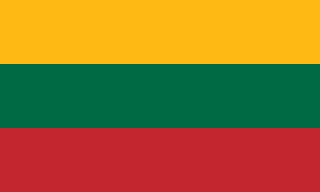
Discover
The identity of the nation
Lithuania is the largest of the three Baltic states, washed by the Baltic Sea to the west and bordered by Latvia, Belarus, Poland, and the Russian exclave of Kaliningrad. Its capital, Vilnius, holds one of the best preserved historic centers in Europe, a reminder of an era when the country led one of the largest territories on the continent, the Grand Duchy of Lithuania, between the 14th and 15th centuries. After decades under Soviet occupation, the nation rebuilt its identity around the Lithuanian language, one of the oldest still spoken in Europe, and a faith that resisted atheism imposed from outside.
Lithuania was the last pagan nation in Europe to convert to Christianity, in 1387, and since then Catholicism has become an essential part of national identity. Still today the majority of the population identifies as **Catholic**, but decades of atheist rule left deep marks: for many Lithuanians, faith is more a symbol of belonging to the culture than a personal conviction lived out day to day. Evangelicals are a small minority, gathered mainly in Baptist, Pentecostal, and Reformed churches scattered across the country.
The contrast between tradition and modernity marks the Lithuanian people. It is a country that today stands out as one of Europe’s hubs for financial technology and laser research, but that also holds dear symbols like the Hill of Crosses, near the city of Šiauliai, where thousands of crosses were raised by generations as a silent sign of faith, even when it was forbidden by the Soviet government. That same resistance appeared in the knygnešiai (the “book carriers”), 19th century Lithuanians who risked prison to smuggle books written in their own language, banned at the time by the Russian empire.
Lithuania’s greatest spiritual challenge today is not a lack of freedom, but the emptying out of faith: a young generation increasingly distant from the church, and traditional communities where Christianity is kept more as a custom inherited from grandparents than as a path of personal transformation. Small groups, such as the Jewish communities of Vilnius and the country’s deaf community, still have little or no access to a church that speaks their language or understands their reality.
Even so, there are signs of hope: a small but living evangelical church seeking to deepen discipleship, and a nation that, after regaining freedom in 1990, has connected more and more with the rest of Europe and the world. Lithuania’s history holds a lesson about faith that endures under pressure, something able to inspire and strengthen Christians far beyond its borders.
- Before the 13th century, Baltic tribes, including the Lithuanians and the Samogitians, inhabited the region.
- 1253 Mindaugas is crowned king, unifying the Lithuanian tribes into the only Lithuanian kingdom recognized by the Church.
- 14th-15th c. The Grand Duchy of Lithuania expands to the Black Sea, becoming one of the largest states in Europe.
- 1387 Under Grand Duke Jogaila, Lithuania becomes the last pagan nation in Europe to adopt Christianity.
- 1569 The Union of Lublin creates the Polish-Lithuanian Commonwealth, which lasts more than two centuries.
- 1795 The partitions of Poland-Lithuania hand the territory over to the Russian Empire.
- 1864-1904 The Russian empire bans publications in Lithuanian; the knygnešiai (book carriers) risk prison to keep the language and faith alive.
- 1918 Lithuania's independence is proclaimed on February 16.
- 1940-1990 Soviet occupation, interrupted by Nazi occupation between 1941 and 1944, marked by mass deportations and religious persecution.
- 1990 Lithuania is the first Soviet republic to declare the restoration of independence.
- 2004 Accession to the European Union and Nato.
- Today A eurozone nation with a growing technology economy and challenges of secularization of faith.
-
Lithuanianofficial language, one of the oldest living Indo-European languages, spoken by about 85% of the population
-
Russianstill understood by part of the older population, a legacy of the Soviet period
-
Polishspoken by a minority concentrated in the Vilnius region
-
Englishwidely understood among young people and in major cities
Lithuania is a predominantly flat country, cut through by thousands of lakes, rivers, and forests of pine and oak. To the west, a narrow strip of coastline washed by the Baltic Sea holds the Curonian Spit, a stretch of sand dunes shared with Russia and recognized by Unesco. There are no significant mountains: the country's highest point, Aukštojas Hill, is less than 300 meters.
Major cities
- VilniusCapital, with the largest preserved baroque historic center in Eastern Europe
- KaunasSecond largest city, was the country's provisional capital between the two world wars
- KlaipėdaThe country's only seaport and gateway to the Curonian Spit
- ŠiauliaiNorthern city near the Hill of Crosses, a symbol of faith that resisted Soviet repression
- TrakaiFormer medieval capital, known for its castle built on an island between lakes
- PalangaThe country's leading seaside resort on the Baltic coast, famous for its beaches, dunes, and Amber Museum
Climate and temperature
Cepelinai
Large dumplings of grated potato filled with meat, cheese, or mushrooms, served with sour cream and bacon sauce; the country's best known dish.
Šaltibarščiai
Cold pink soup made from beets, cucumber, scallion, and kefir (fermented milk), served with a hot boiled potato; very popular in summer.
Kugelis
Oven-baked grated potato pudding, common at parties and family gatherings.
Šakotis
Traditional tree-shaped cake, slowly baked on a rotating spit; an almost obligatory gift at weddings and celebrations.
Balandėliai
Cabbage rolls stuffed with meat and rice, cooked in tomato sauce.
Juoda duona
Dark rye bread, present at nearly every Lithuanian meal.
Skilandis
Traditional cured, smoked meat sausage, pressed into a pig's stomach or bladder and aged for weeks; recognized as a traditional specialty of the country.
Bulviniai blynai
Grated potato pancakes fried until crisp, served with sour cream; a classic of Lithuanian home cooking.
Understand
Culture and spirituality
2a · The culture
Faith as national identity
Centuries of religious oppression strengthened the bond between being Lithuanian and professing the Christian faith, even when lived more through tradition than conviction.
Love of language and land
The Lithuanian language and rural customs are treated almost as a treasure, a heritage of generations who fought to preserve them.
Reserve on first contact
Lithuanians tend to be discreet in initial encounters; trust is built gradually, not through superficial conversation.
Connection with nature
Forests, lakes, and the Baltic coastline are part of rest and identity for the Lithuanian people.
Living memory of suffering
Deportations, persecution, and foreign occupation still shape how families tell their own history.
Tradition of collective singing
Song festivals gather tens of thousands of people and helped sustain national identity during Soviet repression, a spirit that marked the peaceful "Singing Revolution" for independence.
- Forcing intimacy too soon Lithuanians value relationships built gradually, with respect for personal space.
- Treating traditional Catholicism as something to be corrected For many, the Catholic faith is tied to national identity itself; respectful dialogue works better than confrontation.
- Reducing the country's history to "ex-Soviet" Lithuania has its own identity, prior to and distinct from the Soviet Union, and oversimplifying can sound offensive.
- Speaking of the Soviet past without sensitivity Many families suffered deportation and persecution; the topic calls for care and listening.
- Assuming everyone speaks Russian comfortably Although many understand the language, for a good part of the population it recalls a painful period.
- Ignoring silence and introspection Moments of silence in conversation are normal for Lithuanians and do not signal disinterest or discomfort.
2b · The field
Areas of spiritual battle and cultural captivity to cover in prayer. Tap each point to understand:
For many, Catholicism is a family and cultural inheritance, but not a personal, living encounter with God.
Among young people, a lifestyle with no reference to God or church is growing.
Decades of religious repression left distrust toward institutions of faith, not yet fully healed.
Excessive alcohol consumption remains one of the country's most serious social problems.
A large share of young people have left the country in search of work, emptying out families, cities, and churches.
In many traditional churches, the rite lives on, but a personal relationship with God has often been lost.
Small communities, such as the Jewish and deaf communities, have little access to a church that speaks their language.
Rapid economic and technological growth brings the temptation to trade faith for material success.
Evangelical communities and other faith minorities still face distrust from the traditional Catholic majority.
One of Europe's highest suicide rates points to a deep pain that calls for care and hope.
Lithuania’s Constitution guarantees broad religious freedom, and the country imposes no legal restriction on practicing, publishing, or proclaiming the Christian faith. Catholic and Orthodox churches, along with major evangelical denominations such as Baptists, Pentecostals, and Adventists, operate freely and hold official state recognition.
The pressure evangelical Christians face is mostly social and cultural, not legal. In a society where being Lithuanian has historically meant being Catholic, traditional families and communities sometimes look with suspicion on those who leave the church of their childhood for an evangelical congregation, treating the change almost as a betrayal of local culture. Smaller, less traditional religious communities also face more bureaucracy in obtaining state recognition than historic denominations.
The greatest challenge for the church in Lithuania today does not come from persecution, but from indifference: a generation growing up distant from any religious practice, seeing faith as something from their grandparents’ past rather than a living path for the present.
The persecution score runs from 0 to 100: the higher it is, the greater the pressure on Christians.
Lithuania is a country Christian in name for the most part, but it is still home to small groups without a church of their own or with little reach of the gospel, such as the Yiddish-speaking and Karaite Jewish communities of Vilnius and the country's deaf community. Together, these unreached groups add up to about ten thousand people, a small fraction of the population, but a reminder that even majority Christian nations hold groups still waiting for a church that speaks their language and understands their reality.
- 10K Unreached 0,4%
- 0 Minimally reached 0%
- 2.8M Superficially reached 99,1%
- 15K Partially reached 0,5%
- 0 Significantly reached 0%
- 3 Unreached 33,3%
- 0 Minimally reached 0%
- 5 Superficially reached 55,6%
- 1 Partially reached 11,1%
- 0 Significantly reached 0%
Source of people group data: Joshua Project (joshuaproject.net). Estimates, may vary.
Judeu Caraita Frontier
Polish
Deaf Frontier
Lithuanian
Russian
Belarusian
Romani, Baltic
Source: Joshua Project. Estimates, may vary.
Source: Joshua Project and Progress.Bible. Estimates, may vary.
Lithuanian Official
Lithuanian Sign Language
Pray
Intercede for this nation
Every nation carries a redemptive purpose. Marks that seem woven into the identity God desires to restore:
Go
Practical details for those who want to go
Local time
Cost of living
cheaper than the Western European average, more expensive than a decade ago
Cost by city
Reference values (source: Numbeo). Confirm before traveling.
Practical points for those who go
- Learn a few words in Lithuanian: the effort is noticed, though English is well understood among young people.
- Respect personal space and initial reserve: Lithuanian trust is earned gradually.
- Prepare for long, dark winters: bring clothing suited to the cold and limited daylight.
- Avoid comparisons with Russia or generalizations about the Soviet period.
- Use public transportation, which is efficient in the main cities.
- Appreciate nature: walks in forests and visits to lakes are part of local daily life.
- Take part in local festivals and traditions: it shows genuine respect for the culture and helps build trust.
- Bring layered clothing: the weather changes quickly between seasons, especially near the coast.
Send and sustain
Not everyone goes, everyone takes part
Not everyone goes. Everyone takes part.
Behind every worker among these peoples stands a network of people who pray without ceasing, care for the family left behind, and faithfully sustain the work. Sending is mission too.
Start with your church: introduce this nation, adopt it in ongoing prayer, and walk alongside those God is raising up to go.