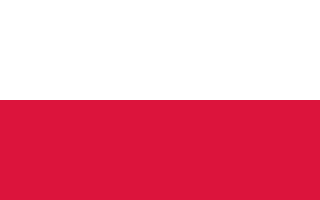
Discover
The identity of the nation
Poland sits right in the center of Europe, between Germany to the west and countries like Ukraine and Belarus to the east. Without strong natural borders on either side, the country spent centuries being invaded, divided and rebuilt, and this history deeply shaped its people’s identity. Despite this, the Polish people preserved their language, culture and above all their faith, which became symbols of national resistance.
The Christian faith is intertwined with the very idea of being Polish. More than eight in ten inhabitants identify as Catholic, and the Catholic Church holds a central place in social life, especially after supporting the people through foreign occupations and the communist regime. Pope John Paul II, born in the country, is a figure of national pride and a symbol of this faith that withstood persecution.
But behind the impressive numbers of religious identification lies a quieter reality. For many Polish people, being Catholic is part of family and national tradition, not necessarily a personal, living faith. Evangelical churches make up less than 1% of the population and are still seen by much of society as something foreign or “un-Polish,” which makes proclaiming the gospel outside traditional patterns difficult.
At the same time, Poland has shown a generous heart: millions of Ukrainian refugees have been welcomed into Polish homes, churches and cities since 2022, an act of hospitality that has touched all of Europe. This same people, who have already suffered so much from wars and occupations, can now become a bridge between East and West, carrying hope beyond its borders.
The challenge for the church in Poland is to help the nation move from a faith of tradition to a faith of personal conviction, without losing what is good in its Christian heritage. There are signs of renewal among young people weary of religious formalism, and real room for the Holy Spirit to awaken a generation that seeks God wholeheartedly, not merely out of custom.
- 966 Baptism of Duke Mieszko I, marking the beginning of Christianity in Polish territory.
- 1025 Coronation of Bolesław I the Brave as the first King of Poland.
- 1569 The Union of Lublin creates the Polish-Lithuanian Commonwealth, one of the largest states in Europe at the time.
- 18th century Successive partitions divide the territory among Russia, Prussia and Austria.
- 1795-1918 Poland disappears from the map for 123 years, under the rule of neighboring powers.
- 1918 Restoration of independence after World War I.
- 1939-1945 Nazi and Soviet invasion; millions of Poles and Polish Jews die in World War II.
- 1945-1989 The country lives under communist rule, integrated into the Soviet bloc.
- 1980 Birth of the Solidarity movement at the Gdańsk shipyards, led by Lech Wałęsa.
- 1989 End of communism and peaceful transition to democracy.
- 2004 Accession to the European Union.
- Today One of Europe's fastest-growing economies and one of the countries that has welcomed the most Ukrainian refugees.
-
Polishofficial language, spoken as a mother tongue by about 97% of the population
-
SilesianSlavic dialect spoken in the Silesia region, considered by some to be its own language
-
Kashubianminority Slavic language, officially recognized, spoken in the Pomerania region
-
Ukrainianspoken by the Ukrainian community in the country, which grew significantly after 2022
Poland is a largely flat country, part of the great plain that crosses central Europe, with few elevations in the center and north. To the south, the landscape changes with the Carpathian and Sudetes mountains, including the peaks of the Tatras, the highest in the country. To the north, the Baltic Sea coastline stretches along beaches and dunes, while the Masuria region in the northeast is famous for its thousands of lakes. The most important river is the Vistula, which crosses the country from south to north, passing through Krakow and Warsaw before flowing into the Baltic.
Major cities
- WarsawCapital and largest city, rebuilt after World War II, now an economic and cultural hub
- KrakowFormer capital, with the country's best-preserved historic center and strong Catholic identity
- WrocławCity in the southwest, known for its canals, bridges and university life
- GdańskThe country's main port on the Baltic Sea, birthplace of the Solidarity movement
- PoznańHistoric city in the west-central region, an important commercial and industrial hub
- ToruńMedieval city on the banks of the Vistula River, birthplace of Nicolaus Copernicus and known for its handmade gingerbread
Climate and temperature
Pierogi
Small boiled dumplings filled with potato, cheese, meat or fruit; the country's best-known dish.
Bigos
A stew of fermented cabbage with various meats, considered Poland's national dish.
Kielbasa
Sausage seasoned with garlic and spices, present at almost every festive meal.
Oscypek
Smoked sheep's milk cheese, typical of the Tatra mountain region.
Żurek
Sour rye soup, served with sausage and a boiled egg, traditional for breakfast and lunch.
Gołąbki
Cabbage rolls filled with ground meat and rice, cooked in tomato sauce.
Sernik
A cottage-cheese-style cheesecake, one of the country's most popular desserts.
Pączki
Fried doughnuts filled with jam, traditional on Fat Thursday before Lent.
Understand
Culture and spirituality
2a · The culture
Hospitality and a strong sense of family
Gatherings around the table and care for the elderly mark social life
National pride and resilience
A history of invasions and partitions forged a strong sense of identity and resistance
Catholicism as part of identity
Being Polish and being Catholic are deeply linked in popular culture
Education and reading valued
The country has a high literacy rate and a strong literary and academic tradition
Christmas traditions
Wigilia, the Christmas Eve supper, brings the family together around age-old rituals
Musical and artistic tradition
Composers like Chopin and a rich classical and folk music scene are a source of national pride
- Treating Poland as part of the Russian or Soviet world The Soviet occupation is remembered as suffering, not as part of the people's identity
- Making jokes about the Holocaust or World War II The subject is still painful; millions of Poles and Polish Jews died during that period
- Confusing cultural Catholicism with personal faith Many call themselves Catholic out of family tradition, without a living relationship with God
- Treating evangelical churches as strange sects Much of the population grew up seeing Protestantism as something foreign
- Expecting shops and services to run normally on Sundays Trade is limited by law on that day, and few establishments open
- Being overly informal from the first contact Polish people value formality and take time to open up to closeness
2b · The field
Areas of spiritual battle and cultural captivity to cover in prayer. Tap each point to understand:
Most identify as Catholic by tradition and birth, without a personal, living faith in Christ.
Being Polish and being Catholic are so intertwined that it is hard to choose a faith outside tradition.
Evangelical churches are still seen by many as strange or not truly Polish.
Each new generation attends church less and drifts from the religious practice inherited from family.
The scars of occupations, the Holocaust and the partitions still weigh on the people's collective memory.
Excessive alcohol consumption remains a deep social problem in the country.
Mass emigration for work abroad has left many families separated for years.
The pursuit of prosperity after decades of scarcity fuels growing consumerism.
Deep divisions between conservatives and liberals also run through the churches.
Decades of isolation and homogeneity have bred distrust of foreigners and minorities.
Religious freedom is guaranteed by the Constitution, and Christians in Poland do not suffer violent or legal persecution from the State. The real challenge is social and cultural: because Catholicism is deeply tied to national identity, Christians from other traditions, such as evangelicals and historic Protestants, are often viewed with suspicion, as if their faith were foreign or a threat to the country’s unity.
Those who decide to leave the Catholic Church to follow an evangelical faith may face reaction from their own family, social pressure and even isolation in small communities, where life revolves around the local parish. When it exists, the pressure is quieter: it happens within the home and the neighborhood, not in the streets or the courts.
The persecution score runs from 0 to 100: the higher it is, the greater the pressure on Christians.
Poland is one of the most ethnically and religiously homogeneous countries in Europe, which reduces the number of people groups within its borders: 24 in total. Even so, four groups remain unreached by the gospel, totaling about 51,000 people: the Deaf Community, who use Polish Sign Language, Polish Jews, the Karaites, a small people of Turkic origin with their own religious tradition, and Kazakh immigrants. These are small groups, living on the margins of the country's Catholic majority and rarely reached by local churches.
- 52K Unreached 0,1%
- 0 Minimally reached 0%
- 37.8M Superficially reached 99,6%
- 106K Partially reached 0,3%
- 6K Significantly reached 0%
- 4 Unreached 16,7%
- 0 Minimally reached 0%
- 13 Superficially reached 54,2%
- 6 Partially reached 25%
- 1 Significantly reached 4,2%
Source of people group data: Joshua Project (joshuaproject.net). Estimates, may vary.
Judeu polonês
Cazaque
Judeu Caraita Frontier
Macedonian
Polish
Silesian
Kashubian
Source: Joshua Project. Estimates, may vary.
Source: Joshua Project and Progress.Bible. Estimates, may vary.
Polish Official
Silesian
Kashubian
Polish Sign Language
Silesian, Lower
Rusyn
Pray
Intercede for this nation
Every nation carries a redemptive purpose. Marks that seem woven into the identity God desires to restore:
Go
Practical details for those who want to go
Local time
Cost of living
cheaper than Western Europe, but rising in major cities
Cost by city
Reference values (source: Numbeo). Confirm before traveling.
Practical points for those who go
- Learn basic phrases in Polish: English is common among young people, but rarely spoken by older generations.
- Bring clothing for the cold: winters are long and can reach negative temperatures.
- Respect the customs when visiting churches: silence and modest dress are expected, even on tourist visits.
- Be patient with the initial formality: Polish people are reserved on first contact, but loyal once trust is built.
- Moderate alcohol consumption at social gatherings: it is common in the culture, but can become a trap.
- Shops close on Sundays: by law, most supermarkets and malls do not open that day, so buy what you need on Saturday.
- Always carry some cash: cards are widely accepted in cities, but markets and taxis sometimes prefer zloty in cash.
- Tipping is not mandatory, but is welcome: around 10% at restaurants is seen as a kind gesture.
- Take off your shoes when entering a Polish home: it is a sign of respect when you are welcomed as a guest.
Send and sustain
Not everyone goes, everyone takes part
Not everyone goes. Everyone takes part.
Behind every worker among these peoples stands a network of people who pray without ceasing, care for the family left behind, and faithfully sustain the work. Sending is mission too.
Start with your church: introduce this nation, adopt it in ongoing prayer, and walk alongside those God is raising up to go.