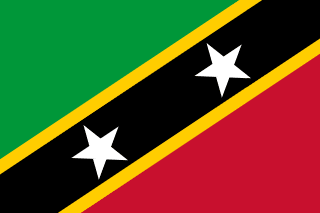
Discover
The identity of the nation
Saint Kitts and Nevis is a small two-island volcanic nation in the Caribbean Sea, the smallest independent country in the Americas in both territory and population. This is where European colonization of the Caribbean began: Saint Kitts was the first island in the region to receive a permanent English settlement, in 1623, and for that reason it is still called the “mother island of the West Indies” to this day. That early history deeply shaped the nation: from the mixing of European colonizers and Africans brought by force to work the sugar cane fields came the Caribbean people of today, mostly descended from enslaved Africans.
The Christian faith arrived alongside colonization, but it took on a life of its own among those who suffered the most: as early as the 18th century, churches such as the Moravian and Methodist began evangelizing the enslaved, teaching them to read and write alongside the Bible, decades before abolition. That legacy left a nation that today is majority Christian, with great diversity among Protestant denominations living side by side with the Catholic Church and small communities of other faiths.
After the end of the sugar era, which closed for good in 2005, the country reinvented its economy around beach and cruise tourism and a citizenship by investment program that attracts people from around the world. That openness brought relative prosperity, but also new challenges: more visible wealth, more influence from materialistic values coming from abroad, and a growing number of foreign residents who do not always integrate into the spiritual life of the island.
The church in Saint Kitts and Nevis is old and established, but it faces the risk common to many nations that have been Christian for generations: a faith that has become more a social habit than a living encounter with God. At the same time, the country carries a clear calling of welcome and hospitality, being a place where the church can, with renewed fervor, reach both residents and the thousands of visitors and new residents who pass through its beaches every year.
Because it is so small, the country rarely appears on missionary strategy maps, but that does not diminish its importance: real people live here, with real needs for revival, deep discipleship, and protection against the materialism that recent prosperity has brought with it.
- 14th-15th c. Kalinago (Carib) peoples inhabited the islands before European arrival, having displaced the Arawaks who came before them.
- 1493 Christopher Columbus sights the islands on his second voyage and names the larger one Saint Christopher.
- 1623 English colonists led by Thomas Warner found the Caribbean's first permanent English settlement, on Saint Kitts.
- 1625 French colonists arrive and share the island with the English for nearly a century.
- 17th-18th c. The sugar economy expands with the labor of enslaved Africans, making the island one of the wealthiest colonies in the British Empire.
- 1834 Slavery is abolished in the British Empire, followed by a period of indentured labor until 1838.
- 1958-1962 The territory briefly joins the West Indies Federation.
- 1983 Independence from the United Kingdom, with the Christian faith already deeply rooted in national culture.
- 2005 The sugar industry, symbol of the colonial economy, shuts down for good.
- Today An independent nation that combines traditional Christian faith, tourism, and a citizenship by investment program known worldwide.
-
Englishofficial language, spoken by practically the whole population
-
Caribbean Creoleinformal variety of English used daily and at home
Saint Kitts and Nevis lies in the arc of the Lesser Antilles, in the Caribbean Sea. It consists of two volcanic islands separated by a narrow channel about 3 km wide called The Narrows. Saint Kitts is elongated, with a central mountain range and Mount Liamuiga, the country's highest point. Nevis is smaller and almost circular, dominated by a single forest-covered volcanic cone.
Major cities
- BasseterreCapital, largest city, and main port of the country, on Saint Kitts
- CharlestownMain town of Nevis, the island's administrative seat
- Sandy PointSecond largest town on Saint Kitts, to the north
Climate and temperature
Stewed salt fish
Dried salted fish cooked with onion, tomato, and seasonings, the country's signature dish, served with fried plantain and coconut dumpling.
Conkies
Sweet dumpling of cornmeal, grated coconut, pumpkin, and sweet potato, cooked wrapped in a banana leaf.
Goat Water
Spicy goat meat stew with vegetables and spices, a traditional dish closely tied to festivities and celebrations.
Seasoned breadfruit
Cooked, seasoned breadfruit, a common side dish for everyday meals.
Rice and pigeon peas
A basic everyday Caribbean dish, rice cooked together with peas and local seasonings.
Understand
Culture and spirituality
2a · The culture
Church as community center
Sunday services bring whole families together and are central to social life, not only religious life.
Living African heritage
Music, cuisine, and cultural expressions carry a strong influence from the African ancestry of most of the population.
Caribbean hospitality
Welcoming visitors and newcomers is valued and seen almost as a community duty.
Pride in pioneer history
Having been the first English settlement in the Caribbean, the country carries a strong sense of regional historical identity.
Unhurried island pace
Life moves at a slower rhythm than in big cities, with time set aside for relationships.
- Rushing or being overly informal at first contact Greeting calmly and courteously before getting to business is a sign of respect.
- Comments that reduce the history of slavery to a tourist curiosity It is a real historical wound for the nation, treated with gravity by the people.
- Ignoring the local church when visiting The church is a central and respected institution in community life.
- Openly flaunting wealth It can come across as tasteless in a society that values discretion and community.
2b · The field
Areas of spiritual battle and cultural captivity to cover in prayer. Tap each point to understand:
Christianity is an inherited social tradition, but not always a personal, living encounter with God.
The prosperity from tourism and citizenship by investment feeds a desire to accumulate possessions.
Beneath the appearance of a Christian nation, a growing segment no longer practices or truly believes.
Obeah practices, folk magic of African origin, still survive on the margins of the Christian faith in some homes.
The large number of churches sometimes breeds rivalry rather than unity among Christians.
Many young people leave the country in search of opportunities, draining future leadership from the local church.
The historical trauma of slavery still leaves quiet marks on collective identity and self-esteem.
National identity revolves too much around foreign visitors, risking neglect of the people's inner life.
Christians in Saint Kitts and Nevis live in full religious freedom, guaranteed by the Constitution and respected in practice by the government and society. There are no reports of discrimination, violence, or persecution because of faith in the country.
The church’s challenge here comes not from outside but from within: the risk of a faith that has become a social custom, practiced out of family tradition more than personal conviction. Churches of different denominations, Anglican, Methodist, Catholic, Moravian, and others, coexist in relative harmony and even cooperate on joint education and social assistance initiatives, a healthy sign of Christian unity in the nation.
The persecution score runs from 0 to 100: the higher it is, the greater the pressure on Christians.
Saint Kitts and Nevis has a small, majority Christian population, but Joshua Project identifies specific groups within the country that remain little reached, including the deaf community, whose access to the gospel in sign language is practically nonexistent. The other groups, descended from Africans, Europeans, and East Asian immigrants (Indians), have varying degrees of gospel access.
- 0 Unreached 0%
- 0 Minimally reached 0%
- 1K Superficially reached 2,5%
- 1K Partially reached 2,1%
- 44K Significantly reached 93,6%
- 1 Unreached 25%
- 0 Minimally reached 0%
- 1 Superficially reached 25%
- 1 Partially reached 25%
- 1 Significantly reached 25%
Source of people group data: Joshua Project (joshuaproject.net). Estimates, may vary.
Deaf Frontier
do Leste Indian
British
Antiguano mestiço
Source: Joshua Project. Estimates, may vary.
Source: Joshua Project and Progress.Bible. Estimates, may vary.
Pray
Intercede for this nation
Every nation carries a redemptive purpose. Marks that seem woven into the identity God desires to restore:
Go
Practical details for those who want to go
Local time
Cost of living
more expensive than the regional average
Cost by city
Reference values (source: Numbeo). Confirm before traveling.
Practical points for those who go
- Learn a few expressions of the local Creole: it helps build closeness, even though English is well understood.
- Have patience with the slower pace of the Caribbean islands in services and appointments.
- Respect local church customs if attending a service, dress is usually more formal.
- Keep the hurricane season (June to November) in mind when planning a longer stay.
Send and sustain
Not everyone goes, everyone takes part
Not everyone goes. Everyone takes part.
Behind every worker among these peoples stands a network of people who pray without ceasing, care for the family left behind, and faithfully sustain the work. Sending is mission too.
Start with your church: introduce this nation, adopt it in ongoing prayer, and walk alongside those God is raising up to go.