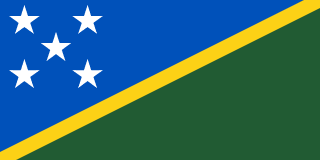
Discover
The identity of the nation
The Solomon Islands form an archipelago (a group of islands) in Melanesia, a region of the South Pacific northeast of Australia, with nearly a thousand islands scattered across an immense sea. About 830 thousand people live divided among more than 70 different languages and cultures, most of them in small coastal villages that depend on fishing and subsistence farming. This great diversity, island by island, makes the archipelago a unique mosaic of peoples within a single nation.
Christianity arrived in the islands as early as the 19th century, first with Catholic attempts in the 1840s and later with an Anglican initiative that, from the outset, invested in training native preachers and catechists rather than depending only on foreigners. That investment bore fruit: in 1925, former policeman Ini Kopuria, born near Maravovo, on Guadalcanal, founded the Melanesian Brotherhood, a religious order made up only of Solomon Islanders that still today carries the gospel to remote communities across the Pacific. Today, more than 95% of the population identifies as Christian, among Anglicans, Catholics, Methodists and a growing number of Evangelicals.
But this nearly universal Christian identity coexists with kastom, the set of customs, taboos (traditional prohibitions) and ancestral beliefs that has shaped village life for far longer than the church. Among the ‘Are’are people, for example, researchers note that most identify as Christian, but many still blend the faith with ancient practices tied to spirits of the land and the sea. This kind of blending, called syncretism, makes the depth of faith, not the initial conversion, the country’s greatest spiritual challenge.
Between 1998 and 2003, the country went through a period known as “the ethnic tension,” when armed groups from Guadalcanal and Malaita clashed over land and power, leaving dozens dead and thousands displaced, even in a nation where nearly everyone attends church on Sundays. A regional mission led by Australia helped restore order, but the wounds of distrust between islands and clans still call for deep work of forgiveness and reconciliation, something only a truly lived gospel can sustain.
Despite the challenges, there is much hope: the churches of the Solomon Islands have a natural gift for communal worship and already send their own workers to other Pacific islands. The greatest blind spot on the country’s spiritual map is small, but real: the deaf community, which communicates through Solomon Islands Sign Language and remains, for the most part, without any contact with the gospel in a language they can truly understand.
- Melanesian peoples arrive and settle on the islands, developing over time hundreds of distinct languages and cultures
- 1568 Spanish navigator Álvaro de Mendaña reaches the archipelago and names it the Solomon Islands
- 1893 The United Kingdom declares a protectorate over the southern islands of the archipelago
- 1925 Solomon Islander Ini Kopuria founds the Melanesian Brotherhood, a Christian order made up only of natives
- 1942-1943 The Battle of Guadalcanal, one of the most decisive confrontations of World War II, takes place on the islands
- 1978 The Solomon Islands gain independence from the United Kingdom
- 1998-2003 A period of conflict known as "the ethnic tension" shakes the country
- Today The country continues rebuilding national unity while facing economic and climate challenges
-
EnglishOfficial language, used in government and education, but fluently spoken by few people
-
PijinCreole (a language born from the mixture of English with local languages) that serves as a lingua franca among the different peoples
-
Local languagesMore than 70 Melanesian and Polynesian languages spoken by the various peoples of the islands
The Solomon Islands form an archipelago of nearly a thousand islands in Melanesia, in the South Pacific, northeast of Australia and east of Papua New Guinea. The territory includes six main islands, among them Guadalcanal, Malaita, New Georgia and Makira, plus hundreds of islets and atolls (small ring-shaped coral islands). The terrain ranges from volcanic mountains covered in dense forest to coral reefs and low beaches, and much of the population lives scattered across coastal villages that are difficult to reach.
Major cities
- HoniaraCapital and largest city of the country, on the island of Guadalcanal, seat of government and commerce
- AukiMain city of the island of Malaita, the most populous island in the archipelago
- GizoSmall port town in Western Province, surrounded by coral reefs
- MundaCoastal village on New Georgia, known for diving and World War II landmarks
- KirakiraMain town on the island of Makira, in the southeast of the archipelago
- BualaAdministrative seat of the island of Santa Isabel, homeland of native Christian leaders
Climate and temperature
Poi
Taro (a root similar to a yam) paste that is fermented and beaten into a puree, served as a side dish with fish or pork
Kokoda
Raw fish marinated in lime juice and coconut milk, with chili and vegetables, similar to a ceviche
Motu
Meal cooked in an earth oven (a pit covered with hot stones and leaves), traditional for feasts and celebrations
Coconut milk
Present in almost every local dish, from fish to desserts, extracted from grated coconut flesh
Kumara
Sweet potato, one of the main root crops grown on the islands, boiled, roasted or mashed
Ngali
Native almond, roasted or used in puddings, highly prized in the western islands
Cassava bread
Made with grated cassava, baked or fried, a staple food in many communities
Understand
Culture and spirituality
2a · The culture
Shell money
In the lagoons of Langa Langa, in Malaita, artisans still make shell strings used as traditional currency in weddings and exchanges
Bamboo panpipe orchestras
The 'Are'are people, in Malaita, are known for their panpipe orchestras (bamboo flutes), recognized internationally
Wood carving
Traditional war canoes were decorated with nguzunguzu, small figureheads carved to protect navigators
The wantok system
"Wantok" (those who speak the same language) is the network of relatives and neighbors who help each other, the foundation of social life on the islands
Land and ancestry
Land is seen as the living inheritance of the ancestors, and almost every piece of it belongs to a clan, not to individuals
Communal singing and dancing
Village feasts bring together singing, dancing and drumming to mark weddings, harvests and other important occasions
- Photographing people without permission Many communities consider this invasive; ask permission first
- Disrespecting land and reef taboos Land and fishing areas have traditional owners and rules that visitors must follow
- Treating witchcraft accusations as a joke The subject is serious and sensitive, as it has already caused real violence against innocent people
- Being in a hurry during conversations The pace of life is unhurried; wanting to resolve everything quickly can seem rude
- Entering clan land without invitation Almost all land has a traditional owner (custom land) and requires permission to visit
- Ignoring elders and local chiefs Elders and chiefs hold a respected leadership role; speaking with them first is a sign of respect
2b · The field
Areas of spiritual battle and cultural captivity to cover in prayer. Tap each point to understand:
Beliefs in witchcraft still lead to accusations that result in real violence, mainly against women, widows and the elderly.
Old rivalries between islands and kinship groups, such as Guadalcanal and Malaita, keep generating distrust and conflicts over land.
Many people call themselves Christian out of family tradition, without the faith having deeply touched daily life.
Competition between churches for followers, sometimes stronger than the desire to proclaim Jesus together, breeds rivalry instead of unity.
Kastom (the set of ancient customs and beliefs) keeps alive the fear of spirits of the land, the sea and the ancestors behind the Christian facade.
Conflicts over land and honor are still resolved through revenge between clans, instead of forgiveness and reconciliation.
Excessive alcohol consumption, especially among men, fuels domestic violence in many communities.
Using public office to benefit one's own clan, rather than the common good, undermines trust in institutions.
Communities scattered across hundreds of islands make pastoral follow-up and the training of new leaders difficult.
The economy relies heavily on international aid and remittances from relatives working abroad, which weakens local initiative.
The sale of forests and natural resources to foreign companies breaks the people's bond with the land of their ancestors.
In the Solomon Islands, being a Christian is not a cause for persecution: the vast majority of the population identifies as Christian, and religious freedom is respected by law. The real tension lies elsewhere, at the border between the Christian faith and kastom (traditional customs and beliefs), where fear of witchcraft still causes real suffering.
People accused of practicing witchcraft, especially women, widows without sons and elderly people, suffer beatings, burnings and even death in some communities, often without the police or local churches intervening with enough force. Another point of friction is the rivalry between long-established denominations and new churches and sects that arrived in the country after independence, which has already caused divisions within families and entire villages.
The persecution score runs from 0 to 100: the higher it is, the greater the pressure on Christians.
Joshua Project counts 74 ethnic groups in the Solomon Islands. Since Christianity arrived early and spread across nearly every island, 69 of these groups (93.2% of the population) are already considered significantly reached with the gospel. Even so, 4 groups (5.4% of the population) are classified as partially reached, cases in which Christian identity coexists with strong ancient traditions, as happens with part of the 'Are'are people, in Malaita. The only group classified as unreached is the country's deaf community, about 3 thousand people who communicate through Solomon Islands Sign Language and have very little access to the gospel in a language they can truly understand.
- 3K Unreached 0,4%
- 0 Minimally reached 0%
- 0 Superficially reached 0%
- 6K Partially reached 0,7%
- 807K Significantly reached 98,9%
- 1 Unreached 1,4%
- 0 Minimally reached 0%
- 0 Superficially reached 0%
- 4 Partially reached 5,4%
- 69 Significantly reached 93,2%
Source of people group data: Joshua Project (joshuaproject.net). Estimates, may vary.
Deaf Frontier
Noipa
Chinês Han Mandarim
Oloha
Vanikoro, Lovono
Kiribatiano
Nembao
Source: Joshua Project. Estimates, may vary.
Source: Joshua Project and Progress.Bible. Estimates, may vary.
English Official
Areare
Lengo
Talise
Aiwoo
Birao
Bauro
Pray
Intercede for this nation
Every nation carries a redemptive purpose. Marks that seem woven into the identity God desires to restore:
Go
Practical details for those who want to go
Local time
Cost of living
Dish of the day for one person
Cost by city
Reference values (source: Numbeo). Confirm before traveling.
Practical points for those who go
- Bring cash: outside Honiara, cards and ATMs are rare.
- Power outages happen frequently in the provinces; bring a flashlight and spare batteries.
- Inter-island travel depends on boats and small planes, with schedules that change easily.
- Ask permission before entering traditionally owned land and reefs.
- Learning a bit of Pijin (the local creole) helps a lot outside urban areas.
- Use sunscreen and insect repellent: the humid tropical climate favors mosquitoes year round.
Send and sustain
Not everyone goes, everyone takes part
Not everyone goes. Everyone takes part.
Behind every worker among these peoples stands a network of people who pray without ceasing, care for the family left behind, and faithfully sustain the work. Sending is mission too.
Start with your church: introduce this nation, adopt it in ongoing prayer, and walk alongside those God is raising up to go.