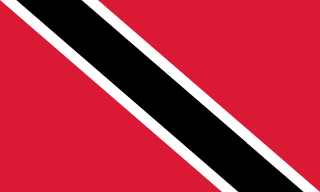
Discover
The identity of the nation
Trinidad and Tobago is made up of two islands at the southern tip of the Caribbean, close enough to South America that the coast of Venezuela can be seen on a clear day. It is the richest and most industrialized country in the Caribbean, sustained by oil and natural gas, but its true hallmark is its mix of peoples: descendants of Africans brought over as slaves, Indians who arrived as indentured laborers after abolition, along with Europeans, Chinese, and Lebanese. Few places in the world bring together so much ethnic and religious diversity in such a small area.
This mix shows up directly in the country’s faith. Most of the population identifies as Christian, split between Catholics and various Protestant and Pentecostal churches, but there is also a large Hindu community descended from Indian immigrants, and a well-established Muslim minority. It is common for Hindus to celebrate Diwali (the Hindu festival of lights) with government support, for Muslims to hold their processions, and for Christians to experience Carnival as part of national identity, all within a climate of peaceful coexistence rarely seen in the region.
Precisely for this reason, the spiritual challenge facing Trinidad and Tobago is not a lack of Christians, but the depth of faith. According to Joshua Project, none of the country’s nine people groups is classified as unreached: all already have some evangelical presence. But much of this Christian faith is inherited from family, lived out of tradition, and coexists without conflict alongside African-derived spiritist practices such as obeah (a form of folk magic) and religious syncretism. There is an established church, but one that still needs more discipleship and depth.
The historical divide between Trinidadians of African descent and those of Indian descent also runs through the country’s religious and political life, and the church has a unique role to play in reconciliation between these two groups. Add to this the rising urban violence linked to drug trafficking in poor neighborhoods of Port of Spain, which directly affects Christian families and communities.
Trinidad and Tobago has resources, religious freedom, and a church with a natural gift for music and communication, which puts it in a privileged position to influence other Caribbean islands. What is lacking is not opportunity, but intercession: for deeper faith, for unity among the country’s peoples, and for freedom from the spiritual bonds that still hold hearts captive even within the church.
- Around 1498 Christopher Columbus arrives at the island of Trinidad, beginning European contact with the Arawak and Carib peoples who already lived there.
- 1498-1797 Trinidad remains under Spanish rule, with slow colonization and the indigenous population reduced by disease and forced labor.
- 1783 The Spanish crown attracts French Catholic settlers to Trinidad, who bring enslaved people of African descent with them.
- 1797 British forces take Trinidad from the Spanish.
- 1802 The Treaty of Amiens officially cedes Trinidad to Great Britain.
- 1814 Tobago, which had already changed hands among several European powers, comes permanently under British control.
- 1834 Slavery ends in the British colonies, followed by the arrival of indentured laborers from India and China.
- 1845-1917 Thousands of Indian laborers arrive in Trinidad under contract, decisively shaping the country's ethnic and religious makeup.
- 1889 Trinidad and Tobago are administratively unified as a single British colony.
- 1962 Trinidad and Tobago gains independence from the United Kingdom.
- 1976 The country becomes a republic, with a president as head of state.
- Today The country is one of the most developed economies in the Caribbean, sustained by oil and natural gas, and is known worldwide for Carnival, calypso, and the steelpan, an instrument invented in Trinidad.
-
EnglishOfficial language, used in government, education, and media.
-
Trinidadian CreoleVariant of English spoken day to day, with strong African, French, and indigenous influence.
-
Tobagonian CreoleVariant of English Creole specific to the island of Tobago.
-
Trinidadian HindiPractically no native speakers today, but still used in Hindu religious songs and ceremonies.
-
French Creole (patois)Spoken by a small number of people, a remnant of the former French colonization.
-
SpanishTaught as a second language in schools, encouraged by the government because of ties with Latin America.
Trinidad and Tobago lies at the southern tip of the Caribbean, close enough to South America that the island of Trinidad comes within a few kilometers of the coast of Venezuela. The country is made up of two main islands: Trinidad, much larger and more populous, and Tobago, smaller and more oriented toward nature and tourism. Trinidad's terrain has three low hill ranges running east to west, with a fertile plain in between, while Tobago is more mountainous and covered in tropical forest. Both islands lie outside the Caribbean's main hurricane path, which reduces the risk of major storms.
Major cities
- Port of SpainThe country's capital, center of government, business, and Carnival.
- San FernandoThe second largest city, known as the 'southern capital,' tied to the oil industry.
- ChaguanasThe country's most populous municipality, in central Trinidad, with a strong community of Indian descent.
- ArimaA historic town linked to the indigenous Carib peoples, who still preserve traditions in the area.
- ScarboroughThe capital of the island of Tobago, a port city and the island's main urban center.
- SpeysideA fishing village in northern Tobago, a gateway for diving and bird watching.
Climate and temperature
Doubles
Fried bread filled with seasoned chickpeas (chana), the country's most popular street snack, eaten at any time of day.
Pelau
Rice cooked with meat, beans, and coconut milk, considered the most traditional dish at parties and family gatherings.
Roti
A kind of thin flatbread wrapped around chicken, goat, shrimp, or vegetable curry, a legacy of the Indian cuisine brought by immigrants.
Callaloo
A creamy soup made with dasheen leaves (a plant similar to taro), okra, crab, and coconut milk.
Bake and shark
A fried fish sandwich served in fried bread, famous at Trinidad's beach stalls.
Curried crab and dumpling
A coastal dish typical of Tobago, with crab cooked in curry, served with steamed dumplings.
Sorrel
A drink made from hibiscus flower with cloves and other spices, traditionally prepared at Christmas.
Understand
Culture and spirituality
2a · The culture
Carnival
The country's biggest celebration, with colorful parades, music, and costumes, held in the days before the Christian season of Lent.
Calypso and soca
Musical styles born in Trinidad, historically used to report news, offer social commentary, and celebrate life.
Steelpan
Musical instrument invented in Trinidad from repurposed metal drums, today a national symbol.
Diwali
Hindu festival of lights, celebrated with major national visibility because of the strong community of Indian descent.
Hosay
Procession of Shia Muslim origin, culturally adapted and attended by people of various religions, with drums and decorated replicas.
Limbo
Traditional dance of Afro-Trinidadian origin, in which the dancer bends backward and passes under a bar set progressively lower.
- Commenting carelessly on race and ethnicity Society is historically divided between Trinidadians of African descent and those of Indian descent, a sensitive topic in politics and daily life.
- Confusing the customs of Trinidad with those of Tobago Although they form a single country, the two islands have different identities, pace of life, and culture.
- Ignoring religious diversity Christianity, Hinduism, and Islam coexist side by side; it is important to respect the festivals and symbols of each tradition.
- Treating Carnival as "just partying" For many Trinidadians, Carnival carries a history of resistance and identity, not just a celebration.
2b · The field
Areas of spiritual battle and cultural captivity to cover in prayer. Tap each point to understand:
Wealth from oil and gas fuels a consumerist lifestyle and the pursuit of status.
African-derived spiritist practices mix with the Christian faith in many homes, even among those who call themselves evangelical.
A large part of the population calls itself Christian out of family tradition, without a personal, living faith in God.
The historical rivalry between Trinidadians of African descent and those of Indian descent still breeds distrust inside and outside the church.
High crime rates linked to drug trafficking hit poor neighborhoods of Port of Spain the hardest.
A form of magic inherited from Africa, still sought out in times of crisis by people who call themselves Christian.
The idea that "things are just this way" weakens hope for change and life transformation.
The Hindu faith, brought by Indian immigrants, keeps thousands of people bound to the worship of multiple gods.
A Muslim community established for generations, with little contact with local Christian witness.
A culture of constant partying can crowd out space for spiritual reflection and seeking God.
Trinidad and Tobago is one of the freest countries in the Caribbean for practicing the Christian faith or any other religion. The Constitution guarantees religious freedom, and Christians, Hindus, and Muslims have lived side by side for generations, often within the same extended family.
The greatest challenge does not come from the State, but from culture and crime. Anyone who decides to leave the family’s religion, whether a Hindu who becomes an evangelical or a young person who breaks with their parents’ merely traditional church, can face social pressure and isolation at home. Urban violence linked to drug trafficking also makes it harder for churches to operate in poor neighborhoods of Port of Spain, making pastoral ministry riskier in those areas.
The persecution score runs from 0 to 100: the higher it is, the greater the pressure on Christians.
According to Joshua Project, Trinidad and Tobago has 9 people groups, and none of them is classified as unreached: all already have some established evangelical presence. The two largest groups are the Afro-Caribbean Trinidadians, mostly Christian, and the Trinidadians of Indian descent (East Indian), divided among Hinduism, Islam, and Christianity. Even though there are no 'unreached' peoples in the technical sense, the depth of faith in many of these groups is still shallow, marked by nominalism and mixing with other beliefs.
- 0 Unreached 0%
- 0 Minimally reached 0%
- 9K Superficially reached 0,6%
- 583K Partially reached 39,8%
- 871K Significantly reached 59,6%
- 0 Unreached 0%
- 0 Minimally reached 0%
- 2 Superficially reached 22,2%
- 3 Partially reached 33,3%
- 4 Significantly reached 44,4%
Source of people group data: Joshua Project (joshuaproject.net). Estimates, may vary.
French
Spaniard
Cantonês
East Indian
British
Santa-lucense
Trinitino de fala crioula inglesa
Source: Joshua Project. Estimates, may vary.
Source: Joshua Project and Progress.Bible. Estimates, may vary.
English Official
Mambae
Makasae
Tetun
Baikeno
Kemak
Bunak
Pray
Intercede for this nation
Every nation carries a redemptive purpose. Marks that seem woven into the identity God desires to restore:
Go
Practical details for those who want to go
Local time
Cost of living
Port of Spain has the highest prices in the country.
Cost by city
Reference values (source: Numbeo). Confirm before traveling.
Practical points for those who go
- English is everyone's language; there is no need to learn another language to communicate.
- The local currency is the Trinidad and Tobago dollar (TTD); cards are accepted in the larger cities.
- During Carnival (February or March), lodging and airfare become much more expensive.
- Electricity is 115V, as in the United States.
- The climate is hot and humid year round; bring light clothing and rain protection.
- Traffic in Port of Spain can get quite heavy during rush hour.
Send and sustain
Not everyone goes, everyone takes part
Not everyone goes. Everyone takes part.
Behind every worker among these peoples stands a network of people who pray without ceasing, care for the family left behind, and faithfully sustain the work. Sending is mission too.
Start with your church: introduce this nation, adopt it in ongoing prayer, and walk alongside those God is raising up to go.