Missions
Peoples who received the Bible in their own language
Discover the stories of Welsh, Māori and Inuit communities who received the Scriptures in their own language and what historical records reveal about that access.
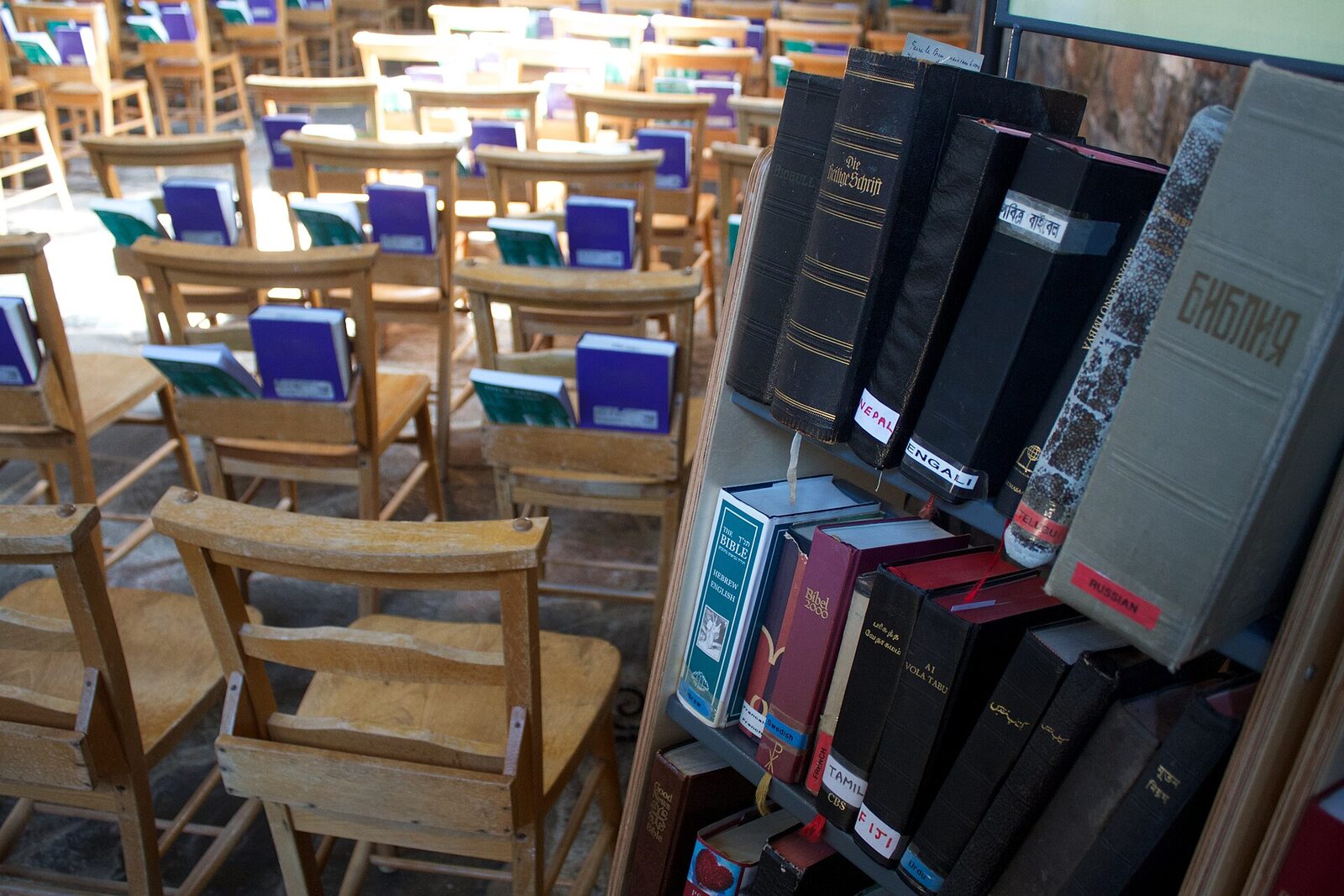
The Welsh, the Māori of New Zealand and the Inuit of the Canadian Arctic are among the peoples who received the Bible in their own language. In each case, the Scriptures arrived through different paths, and historical records show what changed for those who gained access to them.
It helps to distinguish two stages. The New Testament brings together the Gospels and the other Christian writings; the complete Bible also includes the Old Testament. In the accounts that follow, the dates indicate which of the two became available.
The Welsh: a complete Bible for churches
The New Testament in Welsh was published in 1567, mainly through the work of William Salesbury. In 1588, William Morgan published the first complete Bible in the language. According to the National Library of Wales, the volume was prepared for use in churches rather than for reading at home.
Morgan adapted Salesbury’s New Testament and translated the rest from Hebrew and Greek, also consulting English versions of the time, such as the Bishops’ Bible and the Geneva Bible. The translation gave many Welsh speakers access to Scripture without requiring them to learn English first.
A revised edition, prepared by John Davies of Mallwyd, appeared in 1620. With updated spelling, this version remained the standard Welsh Bible until the final decades of the twentieth century. For generations of Welsh people, hearing and reading the Bible in their own language was part of church life.
Copies from the sixteenth century are rare. The National Library of Wales preserves and has digitized its copy, and the National Trust, a British heritage organization, cares for another at Morgan’s birthplace near Penmachno. Today, the work is remembered as one of the most important events in Welsh history.
Māori: reading the Scriptures in their own language
In New Zealand, the complete New Testament in Māori was printed in 1837 in Paihia, in the Bay of Islands, by the missionary and printer William Colenso. Te Papa museum records that these early books served as material for learning to read and write in te reo Māori, the language’s name in the language itself.
Work on writing the language had begun earlier. In 1820, the chiefs Hongi Hika and Waikato traveled to England with the missionary Thomas Kendall and worked with the linguist Samuel Lee on the grammar and vocabulary that helped establish its written form. This foundation was later used in biblical texts.
The Royal Society Te Apārangi, a New Zealand scientific institution, describes a very strong Māori demand for reading material. This demand led to the printing of later editions of the New Testament being moved to London. The 1837 book was part of a learning movement in which readers themselves sought access to the text.
The Church Missionary Society mission in the Bay of Islands spent almost ten years without any converts, and the first conversions came in 1830. Colenso set up the printing press in 1834, and the New Testament was printed later, when readers were already waiting.
Te Papa museum also reports that, by around 1840, about 3,000 people in the Bay of Islands region had been baptized. The history shows the importance of recognizing Māori as active readers: reading spread because the community was interested, as well as through the missionaries’ initiative.
Inuit: a translation by speakers of the language
In 2012, the complete Bible in Inuktitut was finished for Inuit communities in the Canadian Arctic. The project began in 1978 with a workshop led by the linguist Eugene Nida and was published with the Canadian Bible Society. In an April 2012 report, the Anglican Journal stated that the translation had taken 33 years and that Bishop Benjamin Arreak coordinated the team.
The translators were parish priests and could work only during time set aside for the task. In a July 2013 report, Canon Jonas Allooloo, one of the four translators, explained that they had been chosen partly because Inuktitut was their mother tongue. According to him, outsiders can learn the language but find it very difficult to think like an Inuk.
The New Testament in Inuktitut had already been published in the early 1990s, so many readers waited about twenty years for the Old Testament. After retiring in 2010, Arreak began working on the project full time to help complete it.
One practical difficulty was translating references to things from a different environment. The 2012 report mentions camels and palm trees, which have no equivalent in Inuit culture, and says the team used footnotes. There were also regional variations in the language, in places such as Nunavik and Nunavut, which the team needed to consider.
One particular account shows how the translation was received. Allooloo said that a woman cried as she told him she had always wanted the Bible in her language, and that 2,000 leather-bound copies sold out in one day. He called it a privilege to have done this work for his people and said that translation is a way of keeping Indigenous languages alive. Arreak, for his part, hoped every Inuit home would have a copy so that people could understand what the Scriptures say to them.
Praying that other peoples will understand too
These stories give us specific reasons to pray: for readers’ understanding, translators’ care and communities’ participation. The connection between language and understanding already appears in Acts 2:11, when people from different backgrounds recognize that they are hearing the wonders of God in their own language:
“we hear them declaring the wonders of God in our own tongues!”
Acts 2:11
The prayer campaign for Bible translation invites you to remember those still waiting for this access. As you pray, think of those who need to choose a word precisely, revise a sentence or explain a passage to the community.
Pray also for readers and local churches, that the text will be understood and taught faithfully. Remember unreached peoples, among whom access to the gospel is limited, and ask that they may come to know Jesus in words they understand.
 Missions Is Allah the Same God Christians Worship?
 Missions Christians from Hindu backgrounds in India: faith, family, and anti-conversion laws
 Missions International Day of Prayer for the Persecuted Church