Missions
What Is Mawlid, the birthday of Muhammad
Understand the origins of Mawlid, how Muhammad’s birthday is celebrated in different countries, and why some Muslims do not take part.

Mawlid celebrates the birth of Muhammad, known by that name in Arabic and regarded by Muslims as the last prophet sent by God. For those who take part, it is an occasion to thank God, hear accounts of the prophet’s life, sing poems in his honor, and share food. The Arabic expression Mawlid al-Nabi means the birth of the prophet.
The celebration brings together faith, community life, and local customs, but it is not accepted by all Muslims. Some communities organize large gatherings; others do not celebrate it because they believe Muhammad did not teach this practice. Understanding this difference helps explain why the same date can fill the streets in one place and pass without festivities in another.
A celebration that developed over the centuries
The birth commemorated at Mawlid took place in Mecca, in present-day Saudi Arabia. The public festival, however, emerged centuries after Muhammad’s lifetime. It is important to distinguish the remembrance of his birth, which appears in religious accounts, from the establishment of an annual celebration with organized gatherings, meals, and ceremonies.
According to researcher Ines Weinrich, early records include celebrations held by the Fatimids, a dynasty of Shiite Muslim rulers in medieval Egypt. Around the middle of the eleventh century, they included Muhammad’s birth among the occasions celebrated at court. They also commemorated the birthdays of members of the prophet’s family and of the ruler.
Later, there are records of celebrations in Syria and Iraq. Around the turn of the thirteenth century, a festival sponsored by the ruler of Erbil, in present-day Iraq, brought together meals, preaching, processions, and recitations. The history of Mawlid encompasses these different experiences, without a single straightforward explanation for all its current customs.
Love for the prophet and a disputed celebration
For those who celebrate, the main purpose is to show love for Muhammad and gratitude to God for his life. Dar al-Ifta, an Egyptian institution that issues Islamic religious guidance, presents his birth as an expression of divine mercy. In this understanding, remembering the prophet should encourage the faithful to follow his teachings.
The occasion therefore also serves an educational purpose. Telling his story and recalling his conduct offers participants an example for everyday life. Guidance from Jordan’s Iftaa Department, another institution that provides religious guidance, connects the celebration with reading his biography and encouraging people to follow in his footsteps.
Other Muslims reject the introduction of a religious festival that Muhammad and his first followers did not observe. The Saudi scholar Ibn Baz expressed this position in a text distributed by the body responsible for religious affairs at the major Saudi mosques. For him, the celebration is a bid’ah, an innovation introduced into religion without authorization.
In this understanding, loving Muhammad means obeying what he taught without adding a celebration to the religious calendar. Supporters of Mawlid, meanwhile, argue that gathering people to hear the Quran, thank God, and feed others are permissible practices. They believe that organizing these activities in remembrance of his birth can also be permissible.
The disagreement therefore concerns what may be added to religious practice, rather than simply the presence or absence of love for the prophet. Approval can also come with conditions: accepting the commemoration of the birth does not mean approving everything that happens at a festival. Religious authorities may assess its singing, gatherings, and other customs separately.
When it takes place and what participants do
Mawlid follows the Islamic calendar, which is based on the cycles of the moon. The most widely observed date among Sunnis, one of the main branches of Islam, is the twelfth day of Rabi al-Awwal, the third month of that calendar. Many Shiites, another major branch, celebrate on the seventeenth day of the same month. These are traditional dates, since the exact day of the birth is disputed.
In the calendar used in Brazil, the festival falls on a different date each year. Moon sightings and the calendar adopted by each community can also produce differences between places. A date announced for one country should therefore not automatically be taken as the date followed by all Muslims.
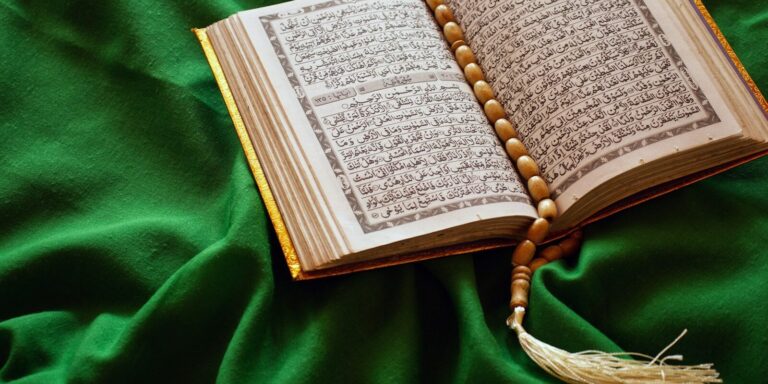
There is no single program followed worldwide. In the Jordanian guidance, the gathering begins with the recitation of passages from the Quran, the sacred book of Islam, followed by a reading of Muhammad’s biography. There are poems in his honor and, at the end, requests addressed to God. The gathering may take place in a mosque, a Muslim place of prayer.
Other practices include dhikr, the remembrance of God through recitations and invocations. Meals offered to others and the distribution of sweets are also part of many celebrations. For participants, generosity turns the joy of the occasion into a practical act involving both family and community.
The duration depends on local custom. Some gatherings take place on a single occasion, while other programs extend over several days, with activities before the main date. In Senegal, for example, vigils precede the main night of the celebration. In Java, Indonesia, ceremonies associated with the palace also form a sequence lasting several days.
From Egypt to Indonesia, different ways to celebrate
In Egypt, sweets are among the best-known signs of the festival. Shops and markets sell treats, and sugar dolls dressed as brides are part of the tradition of gifts for children. A Reuters report also documented the replacement of these dolls with plastic versions in many shops, showing changes in family customs.
In Senegal, the celebration is known as Gamou. At religious centers across the country, the faithful gather for vigils, prayers, and teaching about Muhammad’s life. Coverage by Senegal’s public broadcaster shows how preparations involve homes, markets, and the areas around mosques, as participants travel to the gatherings.
On the island of Java, Indonesia, Mawlid has taken on forms connected with local culture. In Yogyakarta, the Sekaten ceremonies include the gamelan, a traditional instrumental ensemble. At the culmination of the sequence, food arranged in mountain-like structures leaves the palace in a procession and is distributed to the public as an offering from the sultan.
In countries where Muslims are a minority, such as Brazil, observance tends to be quieter and takes place in mosques and at home. The name of the festival alone therefore cannot tell us how a family experiences the occasion.
Mawlid and the message of Jesus
For a Christian reader, gratitude and the desire to follow someone’s example offer a starting point for understanding those who celebrate. This does not require treating the beliefs as the same. It is possible to recognize the value someone places on their tradition and speak clearly about one’s own faith.
The gospel presents Jesus as the one in whom God came to live among us, as John 1:14 explains. The Christian response to the search for closeness to God rests on this divine initiative. When speaking about Jesus, Christians can explain who he is and what he has done without turning the conversation into an attack on Muhammad or the other person’s family.
Ephesians 2:8-10 teaches that salvation is a gift from God received through faith and that life in Christ produces good works. This message makes room to speak about forgiveness, trust in God, and care for others. Generosity can be part of the conversation without assuming that everyone who takes part in Mawlid shares the same religious understanding.
Getting to know those who celebrate and praying for the nations
A respectful approach begins with listening to the person: how their family experiences this season, what they learn at gatherings, and why they take part or prefer not to. Their answers prevent assumptions based only on their country of origin. A Muslim neighbor may have a very different relationship with Mawlid from the one seen at a large public festival.
As we pray for the nations, we can remember the families gathering in Senegal, Indonesian communities, and the Muslims who live near us. We can ask that they come to know Jesus and that Christians learn to explain the gospel patiently. Among unreached peoples, where access to the gospel is limited, this same care also guides our prayers.
For the church, learning about Mawlid helps turn a distant idea of Islam into attention to specific people. This can begin with an honest conversation, a willingness to learn, and hospitality.
 Missions Is Allah the Same God Christians Worship?
 Missions Christians from Hindu backgrounds in India: faith, family, and anti-conversion laws
 Missions International Day of Prayer for the Persecuted Church