Missions
What is Sharia
Understand Sharia, its sources and legal schools, how it varies between countries, what it means for religious minorities, and how to pray.

Sharia is the religious and moral guidance of Islam, often called Islamic law. For Muslims, it expresses the path God offers for life. Its scope includes prayer, food, family relationships, business, and questions of justice. Understanding Sharia therefore requires looking both at religious practice and at countries’ laws.
The Arabic word carries the meaning of a path. There is, however, no single code called Sharia that all Muslim governments apply in the same way. We need to distinguish guidance regarded as divine, scholars’ interpretations, and the rules a state chooses to enact as law. These differences help us understand what appears in the news.
What are the sources of Sharia?
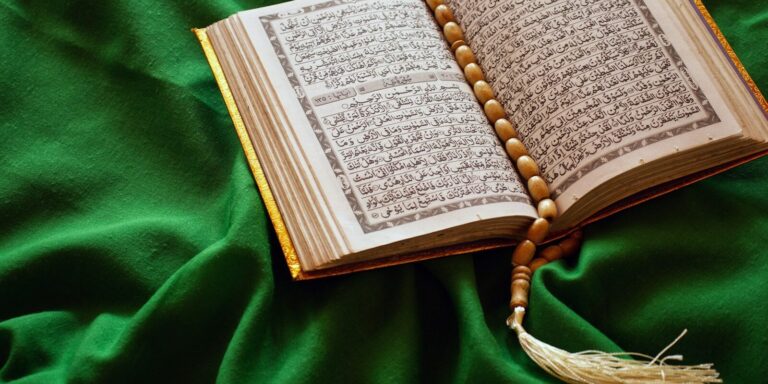
The central sources are the Quran, the book Muslims regard as God’s word, and the Sunnah, the example of Muhammad, recognized in Islam as a prophet. The Sunnah includes his teachings, actions, and approvals. These accounts were transmitted in hadiths, records used to learn about his example and guide believers’ conduct.
Because texts need to be interpreted in specific situations, scholars developed fiqh, the human effort to understand and apply religious guidance. The GlobaLex legal research guide, published in 2022, explains this distinction between religious sources and interpretation. A scholar’s decision should therefore not automatically be equated with an explicit command in the Quran.
In the Sunni tradition, methods include consensus among scholars and reasoning by analogy, which compares a new issue with an already familiar one. The schools give different weight to methods of interpretation. There are also debates about the role of customs and circumstances. This helps explain why scholars working from the same texts can reach different conclusions.
What are Islamic legal schools?
Legal schools are traditions of study and interpretation, rather than schools in the sense of educational buildings. Among Sunnis, one of Islam’s major branches, the principal schools are Hanafi, Maliki, Shafi’i, and Hanbali. Among Shias, another major branch, the most prominent school is Ja’fari. These names identify approaches to studying and applying religious law.
A 2025 overview from the International Committee of the Red Cross places the Maliki tradition in Morocco and parts of West Africa, the Shafi’i tradition in Indonesia and Malaysia, and the Hanbali tradition in Saudi Arabia. The Ja’fari tradition is present in Iran and Iraq. This distribution does not mean that everyone in a country follows the same school or agrees on everything.
It is also useful to understand the term fatwa, a religious opinion issued by a qualified scholar. In itself, this opinion is not equivalent to a court ruling. Its weight depends on the authority of the person issuing it and on the local legal system. Before treating religious guidance as binding law, we therefore need to know who issued it and in what context.
How does application change from country to country?
An explanation from the Council on Foreign Relations, updated in 2021, describes systems that combine rules inspired by Islam with other legal traditions. In some places, religious influence appears mainly in marriage, divorce, and inheritance. Elsewhere, it reaches more areas of legislation. The expression “Muslim country” alone does not tell us which rules apply or who is subject to them.
In Turkey, the 1982 Constitution defines the republic as a secular state, meaning one with no official religion. This shows that a society with a Muslim population can have a constitutional structure different from that of countries that make Sharia a source of legislation. People’s religious beliefs and the state’s legal organization are separate matters.
In Egypt, the 2014 Constitution, as amended in 2019, establishes the principles of Sharia as the main source of legislation. The same text recognizes the religious rules of Egyptian Christians and Jews as the main reference for matters of personal status, religious affairs, and the selection of their spiritual leaders. Even there, then, the relationship between religion and law cannot be reduced to a single rule applied equally to everyone.
In Malaysia, a November 2025 report from the United States Commission on International Religious Freedom describes the coexistence of civil and Islamic courts in an arrangement that often favors Islamic law. This example shows why understanding the constitution, courts, and local decisions is more informative than imagining a uniform worldwide application.
What are the effects on religious minorities?
To understand a minority’s situation, it helps to ask specific questions: can its members practice their faith publicly? Can someone change religion and have that change recognized? Who decides the family’s religious matters? Answers need to be sought in each country. The mere presence of the word Sharia in a constitution does not answer all these questions.
In Malaysia, the same report describes restrictions on Muslim groups the state considers deviant. This shows that the problem affects different communities, rather than Christian minorities alone.
It is important to distinguish recognition of a religious community from an individual’s freedom to choose another faith. The constitutional recognition of specific rules for Egyptian Christians, for example, concerns particular matters within that community. This provision alone does not tell us how every question of religious freedom is resolved in practice.
Learning about these difficulties should deepen our care for people. When talking with a Muslim neighbor, seek to understand what they believe and how they live out their faith, without holding them responsible for a government’s decisions. Respecting their dignity also allows us to speak clearly about rights and religious disagreements without making entire communities objects of suspicion.
How can we pray for peoples and nations?
In 1 Timothy 2:1-2, Paul instructs Christians to pray for everyone and for those in authority, with a view to a peaceful and dignified life. This teaching gives direction to our response. We can ask that rulers and judges act justly and protect freedom of conscience for Muslims, Christians, and people of other beliefs.
Pray also for Christians who face obstacles to having their faith recognized. Ask for wisdom in their decisions, support from the church, and freedom to live out and share the gospel. As you remember unreached peoples, peoples with little access to Christian witness, ask for opportunities for them to know Jesus and discuss faith freely and respectfully.
The prayer campaign for Muslim peoples invites us to continue this intercession. Choose one of the countries mentioned and pray for its authorities, religious communities, and those who want to learn about the gospel. Ask also that God help your church listen attentively and welcome Muslim people with sincere friendship.
You can begin now: God, give wisdom to those who make and enforce laws. Protect everyone’s freedom to seek, believe, and express their faith. Sustain followers of Jesus who face restrictions, and give them courage and care in their decisions. Help our church proclaim the gospel clearly and love our neighbors. Amen.
 Missions Is Allah the Same God Christians Worship?
 Missions Christians from Hindu backgrounds in India: faith, family, and anti-conversion laws
 Missions International Day of Prayer for the Persecuted Church