Missions
What Is the Kumbh Mela
Understand the Kumbh Mela, considered the world’s largest religious gathering: its Hindu origins, four sacred sites and the meaning of bathing in rivers in search of purification.

The Kumbh Mela is a Hindu pilgrimage held in India and often described as the world’s largest religious gathering. At its heart is bathing in rivers considered sacred: participants enter the water seeking purification from sins and spiritual liberation. The celebration brings together ordinary worshippers, families and religious teachers for prayers, teachings and life in the camps.
The festival takes place at four sites: Prayagraj, Haridwar, Nashik and Ujjain. Each has its own river and schedule of celebrations, determined by the positions of celestial bodies in Hindu tradition. Understanding the gathering means learning both the story behind these places and the meaning pilgrims give to bathing. To see how this occasion fits into the Hindu calendar, read about the most important Hindu festivals.
The origins: the vessel containing the nectar of immortality
The word kumbh comes from Sanskrit and means a vessel or pitcher; mela means a gathering or fair. The name refers to a religious story known as Samudra Manthan, the churning of the ocean. According to this Hindu narrative, divine beings and their adversaries worked to extract amrita, the nectar that granted immortality, from the ocean.
When the vessel containing the nectar appeared, a struggle for it began. One version tells how Jayanta, the son of the god Indra, fled with the pitcher and, during the pursuit, drops fell at the four places where the Kumbh Mela is now held. For devotees, this story explains why those waters have special religious significance during the celebration.
The narrative also connects the struggle for the nectar with the interval between festivals: the divine beings’ twelve days are said to correspond to twelve human years. The documented history of the gathering, however, involves river pilgrimages and religious fairs that took shape over time. Historians disagree about when the Kumbh Mela emerged in its present form, and there is no universally accepted founding date.
Why pilgrims seek purification
For those who take part out of devotion, entering the river is a religious act involving the body, the conscience and their relationship with the divine. Many Hindus believe that bathing at that place and during that period washes away sins and brings spiritual benefits. Water is understood to carry a purifying power, especially on dates considered auspicious.
This hope may be linked to moksha, a word meaning liberation from the cycle of birth and death. Within this Hindu understanding, human existence passes through successive rebirths, and liberation marks the end of that cycle. Bathing thus points to a quest that goes beyond health, peace of mind or good fortune in this present life.
Not everyone comes with the same intention. Some seek inner renewal, express gratitude or take part in rites in memory of relatives who have died. The gathering also offers opportunities to listen to religious teachers and make donations, practices that devotees associate with spiritual growth.
The calendar, bathing and life in the camps
The Kumbh Mela calendar depends on traditional calculations of the positions of Jupiter, the Sun and the Moon. Each site has its own combination, so the festival has no fixed date in the calendar used in Brazil. Each host site’s main cycle is approximately twelve years, linked to the time Jupiter takes to complete its orbit around the Sun.
This does not mean a strict sequence in which a city hosts the festival exactly every three years. The configurations of celestial bodies determine the intervals, and the celebrations in Nashik and Ujjain may take place close together. Haridwar and Prayagraj also hold the Ardh Kumbh, or half Kumbh, associated with a six-year interval; in Prayagraj, the celebration in the twelve-year cycle is officially called Maha Kumbh, a name also commonly used for the 2025 gathering, and naming criteria vary between sources.
The celebration lasts for weeks, with certain bathing days considered especially important. For example, the 2025 gathering in Prayagraj took place from January 13 to February 26. During that period, pilgrims could bathe on different days, but particular religious dates drew the great processions and crowds.
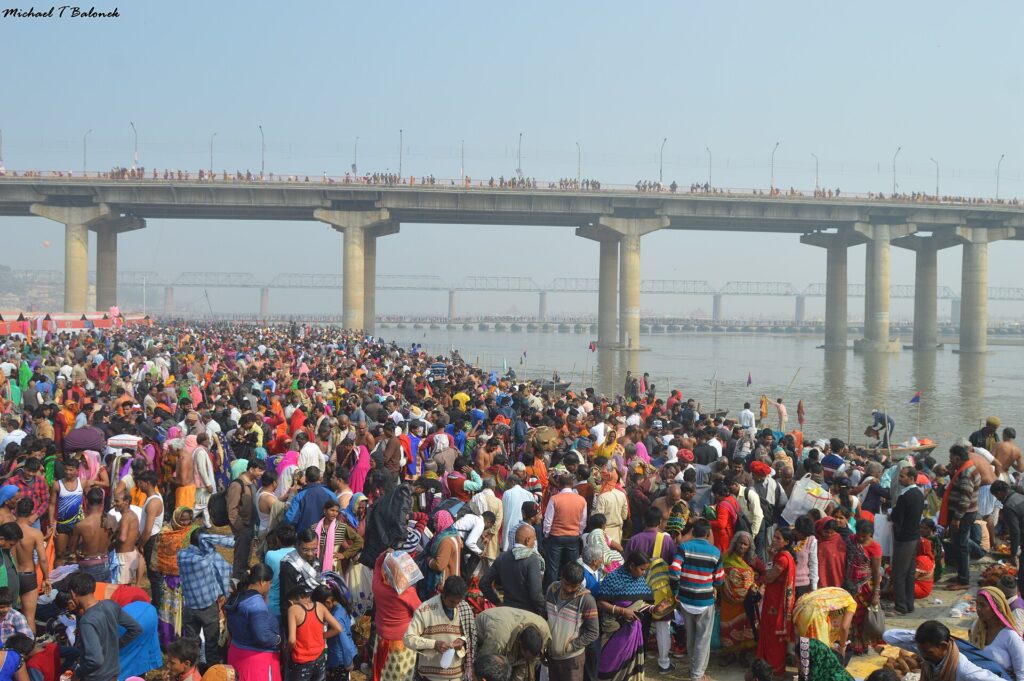
On the main occasions, religious orders proceed to the river in processions and enter the water in an established order. These ceremonial baths are known as Shahi Snan, or royal bathing, and are also called Amrit Snan, a name associated with the nectar of immortality. Representatives of the orders and the authorities responsible for the gathering coordinate the schedule.
The sadhus, people dedicated to religious discipline and the renunciation of possessions or comforts, are especially prominent. Many belong to akharas, orders that maintain communities, teachings and spiritual practices. Some of the most photographed are the naga sadhus, who may appear unclothed with their bodies covered in ash, but participation in the festival includes many other forms of devotion.
Alongside bathing, there are public teachings, meditation, prayers and donations of money, clothing or food. In ceremonies called aarti, priests offer light from lamps as an expression of devotion to the river. The religious camps allow pilgrims to spend time with teachers and their disciples during the celebration.
Some stay only long enough to bathe; others undertake kalpavas, a stay devoted to spiritual discipline near the river. In Prayagraj, this practice usually lasts about a month and includes simple living, bathing, prayer and meditation. Some participants limit themselves to one meal a day, according to the religious commitments they make.
Food is part of the arrangements for welcoming pilgrims, with free meals distributed and food sold. On Makar Sankranti, one of the important dates at the Prayagraj gathering, sweets made from sesame and unrefined sugar are traditional. These foods are associated with the occasion and do not form a compulsory menu for every pilgrim.
Four sacred sites and participants from many places
In Prayagraj, bathing takes place at the confluence of the Ganges and Yamuna rivers, called Triveni Sangam. Tradition also places the Saraswati there, considered a third, invisible river. In Haridwar, the celebration is linked to the Ganges, called Ganga in India and revered by devotees as sacred.
In Nashik, the river is the Godavari, and the celebration also extends to nearby Trimbakeshwar, with separate bathing sites for different religious traditions. In Ujjain, bathing takes place in the Shipra River. At these two sites, the festival is also called Simhastha, a name related to Jupiter’s position in the sign of Leo.
The gathering brings together Hindus from different regions and traditions, including devotees of Shiva and Vishnu, important Hindu deities. Families and ordinary pilgrims share the space with teachers and disciples; participants and visitors also come from other countries. Temporary accommodation, medical care, sanitation and crowd management facilities are set up to receive them.
The search for a new beginning and the gospel’s response
The desire for purification helps Christians recognize human questions present in this pilgrimage: how can we deal with guilt, find forgiveness and hope for something beyond death? Recognizing these questions requires listening to the meaning participants themselves give to their practices. Hindu beliefs about rivers and rebirth need to be understood on their own terms.
The gospel presents salvation as a gift from God received through faith in Jesus. In Ephesians 2:8-9, Paul teaches that it comes by grace, meaning God’s goodness that we cannot earn. This message offers a basis for speaking about forgiveness and new beginnings with clarity and humility, without looking down on those seeking purification.
Getting to know those who celebrate and praying for them
The Kumbh Mela can give prayer for the nations specific names and situations: the families making the pilgrimage, the teachers who teach in the camps and the disciples learning from them. We can ask that they come to know Jesus and understand the gospel. We can also pray for Christians able to explain their faith in the languages and cultural settings of those taking part.
When getting to know a Hindu person, it is worth listening to what bathing, the river and the journey mean to them. This attentiveness helps us share our faith in ways that unreached peoples can understand, without assuming that everyone thinks alike. Love for our neighbor is expressed in respect for the person, a willingness to learn and honesty when speaking about Jesus.
You have read this story. Now pray.
Today we pray for a nation and a people who still need to hear the gospel.
 Missions Veils, hijab and burqa: women in Islam
 Missions 2027 prayer calendar: campaigns and dates for the year
 Missions How to help persecuted Christians beyond prayer