Missions
Who was Muhammad
Learn about Muhammad, from Mecca to Medina, his role in Islam and the differences between Muslim beliefs and Christian faith concerning Jesus.

Muhammad was the religious leader who founded Islam in seventh-century Arabia. Known by the Arabic name Muhammad, he was born in Mecca around 570 and died in Medina in 632. For Muslims, he is the last prophet sent by God to guide humanity.
His life brings together religious preaching, the formation of a community and political leadership. To understand who he was, it is important to distinguish historical events from accounts that express Islamic faith. This distinction allows us to learn about another religion respectfully and understand why Christians and Muslims hold different convictions about Jesus.
From Mecca to the beginning of his preaching
Traditional biographies recount that Muhammad lost his parents as a child and was cared for by relatives, including an uncle. As a young man, he worked in trade and later married Khadija, a merchant for whom he had worked. She played an important role at the beginning of his religious life as one of the first people to embrace his message.
These accounts need to be read with their sources in mind. In addition to the Quran, historians study Muslim biographies and traditions recorded after Muhammad’s death. Ibn Ishaq’s biography, for example, was composed in the eighth century and has reached us through later authors. Not every detail of his childhood has the same degree of historical certainty.
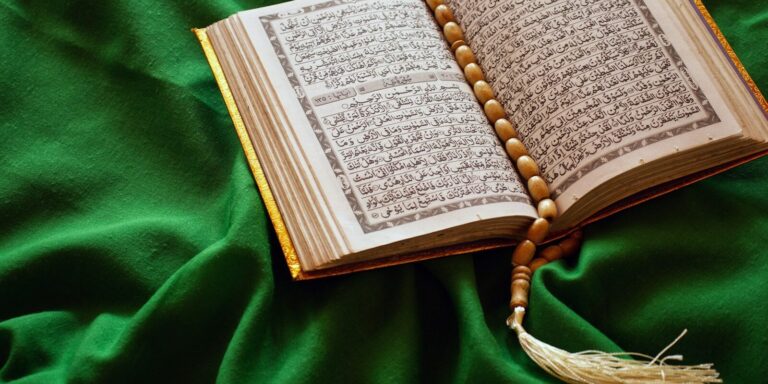
According to Islamic tradition, in 610 Muhammad received his first revelation during a period of retreat in a cave near Mecca. Muslims believe that the angel Gabriel conveyed messages from God to him in Arabic. The words Muhammad recited to his followers were collected in the Quran, Islam’s sacred book.
Mecca was already a center of pilgrimage, and the Kaaba, its sanctuary, housed the worship of several deities. Muhammad preached worship of one God, responsibility for one’s actions and care for the poor. His message attracted followers but also met opposition among the city’s leaders.
The Hijra, Medina and his death in 632
In 622, Muhammad and his followers migrated from Mecca to a city that became known as Medina. This move was called the Hijra, a word meaning migration. The year of this event became the starting point for counting years in the Islamic calendar because of its importance in the community’s formation.
In Medina, Muhammad took on religious and political roles. Alongside conveying his preaching, he helped organize communal life and agreements between groups. The Muslim community gained a more stable base, and his authority came to encompass issues of living together, public commitments and relations with other groups in the region.
In the following years, there were conflicts and negotiations between the community in Medina and Mecca’s leaders. In 630, Muhammad returned to Mecca and established his authority in the city. The Kaaba was dedicated to the worship of one God, according to Islamic faith, and became firmly established as the center of Muslim pilgrimage.
Muhammad died in Medina in 632, after making a pilgrimage to Mecca that year. The community continued under successors called caliphs, who were responsible for its leadership. Disputes over who should take on this role contributed to the formation of Sunni and Shia traditions, two major branches of Islam.
How Muslims view Muhammad
For Muslims, Muhammad is a human being chosen by God as a messenger and example of how to live. They do not consider him God or direct to him the worship due to God. The Islamic declaration of faith combines belief in one God with recognition of Muhammad as his messenger.
The Quran presents Muhammad as the seal of the prophets, an expression understood in Islam to mean the last in a succession of divine messengers. In this understanding, his mission continues that of figures such as Abraham, Moses and Jesus. Muslims believe that he called people to return to the worship of the one God.
In Islamic faith, the Quran is the word of God transmitted through Muhammad. His role is to receive and communicate revelation, rather than to create its content as an independent author. The Arabic word Allah means God and is often spelled Alá in Portuguese. The Arabic text has special importance in Muslim recitation and prayer.
Alongside the Quran, many Muslims seek guidance in the Sunnah, Muhammad’s example preserved in accounts of his words and actions. These accounts are known as hadiths. Islamic traditions differ in their assessment and interpretation of these sources. Understanding this diversity helps avoid the idea that all Muslims think and live in the same way.
How does this differ from the Christian understanding of Jesus?
Islam also recognizes Jesus as an important figure. The Quran presents him as the Messiah, son of Mary and messenger of God, but rejects the Christian understanding of his divinity. The presence of Jesus in both religions therefore does not mean that they teach the same thing about his identity.
In Christian faith, Jesus is the eternal Son of God who became human. John 1:1-14 presents the one who is the Word as God and states that he came to live among us. For Christians, Jesus reveals God in his own person, and his significance goes beyond the role of conveying a message.
The death and resurrection of Jesus are also at the center of the gospel. In 1 Corinthians 15:3-4, Paul summarizes the Christian message: Christ died for our sins, was buried and rose again. Christian hope for forgiveness and reconciliation with God is linked to what Jesus did, not only to the example of his teachings.
Muhammad and Jesus therefore hold different places in their respective traditions. For Muslims, Muhammad is the human messenger who communicates the final revelation; for Christians, Jesus is God’s own Son and Savior. Discussing this difference requires clarity, willingness to listen and care not to attribute beliefs to others that they do not hold.
Learning so we can pray for Muslim peoples
By learning about Muhammad’s history, Christians can speak with Muslims without beginning with assumptions or accusations. A good approach is to ask what their faith means to them and listen carefully to the answer. Respecting someone includes allowing them to explain their own convictions while we also present ours honestly.
To turn this learning into intercession, join the prayer campaign for Muslim peoples. Pray that individuals and families will come to know Jesus through the Gospels and encounter Christians willing to talk patiently. Ask also for wisdom for churches to share their faith without hostility and cultivate friendships that express real care.
As you pray for unreached peoples, those with little access to the gospel and a Christian community, think of people who need the opportunity to know Jesus. Ask God to sustain Christians living among Muslim populations. Finish this reading by praying for yourself as well: that God will give you humility to listen, love for your neighbor and clarity to speak about Christ.
 Missions Is Allah the Same God Christians Worship?
 Missions Christians from Hindu backgrounds in India: faith, family, and anti-conversion laws
 Missions International Day of Prayer for the Persecuted Church