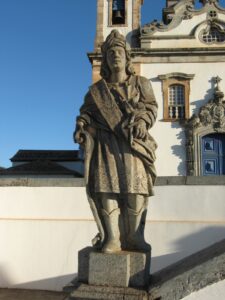
Rechabite · Keeper of a vow

Jaazaniah

PeriodReign of Jehoiakim, ~609 BC - ~598 BC
Summary
Jaazaniah led the family of the Rechabites when he refused to drink wine in front of the prophet Jeremiah, in obedience to a vow made by his ancestor Jonadab. His faithfulness to a human tradition became, in God's hands, a silent indictment of Judah's disobedience.
Who was Jaazaniah
Biography

Every family carries promises made before we were born: a vow from grandparents, a tradition no one remembers the reason for anymore. Keeping those promises when they cost something, when no one would call you out for letting them slip, reveals something about the character of the one who keeps them.

Jaazaniah was the grandson of Habazziniah and led the family of the Rechabites, descendants of Jonadab son of Rechab. Centuries earlier, that ancestor had commanded his descendants: never drink wine, never build houses or plant vineyards, and always live as nomads in tents.

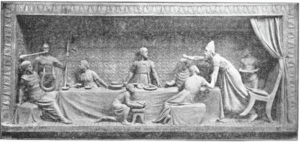
During the reign of Jehoiakim, king of Judah, the Lord sent Jeremiah to invite Jaazaniah and the whole Rechabite family to a room in the temple, and there to offer them wine in front of witnesses. It was a public test, set up by God.

The answer came without hesitation: “We do not drink wine, because our forefather Jonadab son of Rechab gave us this command” (Jeremiah 35:6). They explained that they were only living in Jerusalem because of the invading armies of Babylon and Syria, a temporary refuge, not the abandonment of the vow (Jeremiah 35:11).

God then turned the test into a mirror. If a family could follow, without failing, the command of a human ancestor, why did Judah keep ignoring, generation after generation, the commandments of their own Creator, repeated by so many prophets sent to them (Jeremiah 35:12-16)?

As a reward, the Lord promised that the line of Jonadab would never fail to have a descendant standing before him (Jeremiah 35:19). Jaazaniah, almost a minor character in the narrative, became living proof that God sees and rewards obedience kept without an audience and without ulterior motive.

Jaazaniah’s life asks the reader what they hold onto when no one is checking: a boundary, a commitment, a promise made long ago. Ordinary families, faithful in secret for generations, remain the kind of witness God uses to speak to entire nations.
Defining verses

"We do not drink wine," they replied, "because our forefather Jonadab son of Rekab gave us this command: 'Neither you nor your descendants must ever drink wine.'"

Jeremiah 35:6

"The descendants of Jonadab son of Rekab have carried out the command their forefather gave them, but these people have not obeyed me."

Jeremiah 35:16

Therefore this is what the LORD Almighty, the God of Israel, says: "Jonadab son of Rekab will never fail to have a man to represent him in my presence."

Jeremiah 35:19

Visions, prophecies, and deeds

Summoned to the temple

Jaazaniah and the whole Rechabite family are brought by Jeremiah to a room in the temple, where wine is offered to them in front of witnesses.

Jeremiah 35:3-5

Refuses the wine because of an ancestral vow

Jaazaniah, on behalf of the family, refuses to drink, invoking the command of Jonadab son of Rechab never to drink wine.

Jeremiah 35:6

Explains the nomadic way of life

He explains that the family never built houses, planted vineyards, or sowed crops, always living in tents in obedience to their ancestor.

Jeremiah 35:7-10

Explains the temporary move to Jerusalem

He explains that they only came to live in the city because of the invading armies of Babylon and Syria, without abandoning the vow.

Jeremiah 35:11

Becomes the subject of a prophetic comparison

The Lord uses the Rechabite family's faithfulness to a human command to indict Judah's persistent disobedience to his own commandments.

Jeremiah 35:12-16

Receives a promise of lasting blessing

God promises that the line of Jonadab will never fail to have a descendant before him.

Jeremiah 35:18-19
Timeline
Date unknown

Birth of Jaazaniah, grandson of Habazziniah, into the family of the Rechabites

~609 BC - ~598 BC

During the reign of Jehoiakim, the Lord commands Jeremiah to test the Rechabite family with wine

Jeremiah 35:1-2

~609 BC - ~598 BC

Jaazaniah brings the family to the temple and refuses the wine offered

Jeremiah 35:3-6

~609 BC - ~598 BC

Explains that the move to Jerusalem was a temporary refuge from the Babylonian and Syrian invasion

Jeremiah 35:11

~609 BC - ~598 BC

The Lord compares the faithfulness of the Rechabites to the disobedience of Judah

Jeremiah 35:12-16

~609 BC - ~598 BC

God promises that the line of Jonadab will always have a descendant before him

Jeremiah 35:18-19

Portrait

He refused the wine on the spot, without hesitation, even facing a public offer made by a recognized prophet (Jeremiah 35:6).

He maintained, together with the whole family, decades of practical obedience to an inherited vow, with no break recorded in the text (Jeremiah 35:8-10).

He gave an honest and transparent explanation for the temporary change in routine, rather than leaving doubts about the firmness of the vow (Jeremiah 35:11).

He became, without seeking it, the standard of faithfulness God used to confront an entire people (Jeremiah 35:14-16).

Lessons and legacy
Lessons from their life

Keep promises made to God or to your family even when no one is holding you to them or will notice if you break them.

Be transparent about why you made a temporary change in your routine, rather than leaving the explanation to other people's suspicion.

Faithfulness in small, longstanding things can become, without your planning it, a public testimony that God uses to speak to others.

Obedience to a family custom does not replace obedience to God, but the two can coexist, and it is worth telling them apart.

Missionary legacy

Jaazaniah's story shows that God watches and uses ordinary families, with no public office, to preach by example, not only by words.

The faithfulness of a family outside Judah's official religious circle foreshadows the biblical pattern of God raising up unexpected witnesses among the nations.

The episode encourages Christian families today to keep commitments from generation to generation as a concrete form of testimony before communities watching whether faith holds up in practice.

The promise that the line of Jonadab would always have a descendant before the Lord (Jeremiah 35:19) encourages those who serve in obscurity among the nations, never remembered by name.

Family and context
Family and relationships
Father Jeremiah (not the prophet), son of Habazziniah (Jeremiah 35:3)
Grandfather Habazziniah (Jeremiah 35:3)
Founding ancestor Jonadab son of Rechab (Jeremiah 35:6)
Contemporary Jeremiah the prophet (Jeremiah 35:1)
Contemporary Jehoiakim, king of Judah (Jeremiah 35:1)
Nations mentioned

Babylon (present-day Iraq)

Jeremiah 35:11

Aram/Syria (present-day Syria)

Jeremiah 35:11

Related places

The temple of the Lord, in Jerusalem

Room where Jeremiah tested the Rechabite family by offering them wine (Jeremiah 35:2-4)

Jerusalem (present-day Israel/Palestinian territory)

Temporary refuge of the Rechabite family during the Babylonian invasion (Jeremiah 35:11)

Land of Judah

Where the Rechabites normally lived as nomads in tents (Jeremiah 35:7)

Babylon (present-day Iraq)

Power whose army, under Nebuchadnezzar, prompted the family's flight to Jerusalem (Jeremiah 35:11)

Aram/Syria (present-day Syria)

Aramean armies mentioned alongside the Babylonians as a threat (Jeremiah 35:11)

Where to find them in the Bible

The story of this Jaazaniah, leader of the Rechabite family, is recorded entirely in Jeremiah 35, in a single episode during the reign of Jehoiakim. The name Jaazaniah also appears in other passages (2 Kings 25:23, Jeremiah 40:8, Ezekiel 8:11, and Ezekiel 11:1), but these identify different people who share the name: a military commander in the time of Gedaliah and two leaders linked to idolatry in Jerusalem, seen in a vision by Ezekiel. This profile deals only with the Rechabite of Jeremiah 35.

Other people