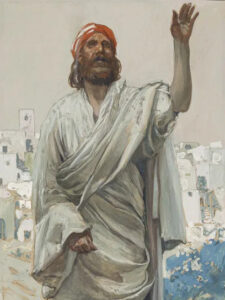
There is a kind of pain few understand: speaking a truth that no one wants to hear, year after year, without seeing any change. Jeremiah lived with that pain for more than forty years, and the Bible does not hide the price it cost him.
Still young, the son of the priest Hilkiah, in the small town of Anathoth, he was called by God to prophesy against Judah. His first reaction was to resist: he said he did not know how to speak, for he was still too young (Jeremiah 1:6). God did not accept the excuse and sent him anyway.
The message was harsh: Jerusalem would fall if it did not repent. In the temple courtyard, Jeremiah announced that God’s own house would be destroyed, and he was nearly lynched for it (Jeremiah 26). Kings ignored him, priests hated him, and a false prophet even publicly broke the wooden yoke he used to illustrate the coming captivity.
King Jehoiakim ordered the scroll with his prophecies burned. Jeremiah simply dictated everything again to his faithful scribe, Baruch (Jeremiah 36). Later, accused of treason for advising surrender to Babylon, he was thrown into a muddy cistern and nearly died, saved only by a foreigner, the Cushite Ebed-Melech.
In 586 BC, he saw with his own eyes what he had spent his life announcing: Jerusalem in ruins, the temple in ashes. He wrote Lamentations over that rubble, not hiding his own despair, even cursing the day he was born (Jeremiah 20:14).
Even so, in the midst of the siege, he bought a field as a sign that God still had a future for the people (Jeremiah 32). And it was he who received the promise of a new covenant, written not on stone but on the heart (Jeremiah 31:33).
Jeremiah’s life tells today’s reader that obeying God guarantees neither applause nor visible success, nor even easy inner peace. It also tells us that it is possible to weep before God without ceasing to trust him, and that the firmest hope tends to be born precisely where everything seems lost.