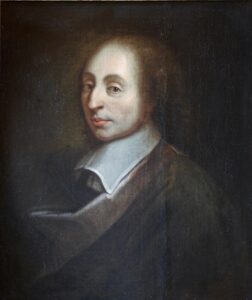
A simple man, the son of a tinker, with almost no formal education, becomes the author of the most widely read book in the Christian world after the Bible. The life of John Bunyan shows how God can use a common vessel to leave a profound mark on the faith of entire generations.
Born near Bedford, England, and baptized on 30 November 1628, Bunyan learned his father’s trade and, at sixteen, served in the parliamentary army. By his own account in Grace Abounding to the Chief of Sinners, his youth was marked by swearing, games, and a restless conscience.
He married around 1649 a young woman whose only dowry was two devotional books left by her father. Reading those books, together with the preaching he heard in Bedford, set off a long spiritual crisis, later described in rich detail in his autobiography.
Around 1653, Bunyan joined the separatist church of Bedford and soon began to preach, drawing crowds with his simple, vivid language. After the Restoration of Charles II, preaching outside the Church of England became a crime, and in 1660 he was imprisoned for refusing to stop.
He spent twelve years in the county jail, supporting his family by selling shoelaces made behind bars; his eldest daughter, blind from birth, visited him often bringing food. He was released in 1672 and became pastor of the Bedford church.
In 1674, an episode damaged his reputation: after allowing young Agnes Beaumont, of the Bedford church, to ride behind him on his horse on the way to a preaching engagement, her father, who opposed her attending the services, died suddenly soon after. Rumors spread of poisoning and of an affair between the two; a jury concluded the death was natural and cleared them both, but Bunyan had to defend himself against the insinuations even in later editions of his autobiography.
A new, brief imprisonment, between 1676 and 1677, gave him time to finish The Pilgrim’s Progress, published in 1678. The book tells the journey of the character Christian toward the Celestial City, in an allegory any ordinary reader could understand and feel as his own.
Bunyan also wrote polemical treatises against groups such as the Quakers, revealing the theological harshness common to his time and to the disputes among English dissenters. He died in London in 1688, after catching a fever on a horseback journey in the rain, and was buried in Bunhill Fields.
His story reminds us that a prison can also be a pulpit: from behind the bars of Bedford came a book that crossed languages, continents, and centuries, leading ordinary pilgrims to see their own walk toward the city God has prepared.