1886-1968

Theologian · Pastor

Karl Barth

Summary
Swiss Reformed theologian, considered one of the most influential figures of twentieth century Protestantism. Principal author of the Barmen Declaration, he led theological resistance to Nazism and defended the exclusive lordship of Christ over the Church and the State.
Who they were
Biography

Karl Barth was born in Basel, Switzerland, on May 10, 1886, the son of a professor of Reformed theology. He studied theology in Switzerland and Germany, in Bern, Berlin, Tübingen, and Marburg, under masters of the liberal Protestant theology then dominant in Europe.

As a young pastor in Safenwil, between 1911 and 1921, he watched that liberal theology fail in the face of the First World War: professors he admired signed manifestos supporting the Kaiser. The crisis led him to reread Paul’s letters with completely new eyes.

The result was his commentary The Epistle to the Romans, published in 1919 and almost entirely rewritten in 1922. In it, Barth broke with liberal theology and affirmed the radical distance between God and humanity, overcome only in Jesus Christ.

He became a professor in Göttingen, Münster, and Bonn. In 1934, he drafted almost single-handedly the Barmen Theological Declaration, a document of the Confessing Church that rejected the submission of the Christian faith to Nazi ideology and affirmed Jesus Christ as the only Word of God to be heard and obeyed.

In 1935, he refused to swear unconditional loyalty to Hitler and lost his chair in Bonn. He returned to Basel, where he taught until his retirement in 1962, and there wrote most of the monumental Church Dogmatics, a work he left unfinished.

His personal life also had its shadows. For decades, he maintained an intimate relationship with his assistant, Charlotte von Kirschbaum, who lived in the family home alongside his wife, Nelly, with whom he had five children. He described the arrangement as the least imperfect solution, without ever resolving it.

After the war, the firmness with which he opposed Nazism was not repeated in the face of Soviet communism. He refused to publicly condemn the suppression of the 1956 Hungarian uprising, an attitude that drew criticism even from close allies, such as theologian Reinhold Niebuhr.

Even so, his legacy remains alive. His insistence that the Church has only one Lord, and that this lordship is not negotiable with any human power, continues to inspire theologians, pastors, and Christian movements around the world.
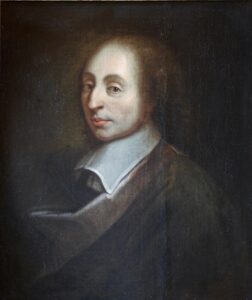
“Take your Bible and take your newspaper, and read both, but interpret the newspapers from your Bible.”
Karl Barth · Barth's recollection as recorded by Time magazine, May 31, 1963
Timeline
1886

Born in Basel

He was born on May 10, the son of a professor of Reformed theology.

1911

Becomes pastor in Safenwil

He takes on the Reformed parish in the canton of Aargau, where he would remain until 1921.

1919

Publishes the 1st edition of The Epistle to the Romans

The commentary marks his initial break with liberal theology.

1922

Publishes the rewritten 2nd edition of The Epistle to the Romans

The version that establishes his so called dialectical theology.

1934

Drafts the Barmen Theological Declaration

The founding document of the Confessing Church's resistance to Nazism.

1935

Expelled from Germany and takes up chair in Basel

He refuses to swear unconditional loyalty to Hitler and loses his position in Bonn.

1946

Gives the lectures that become Dogmatics in Outline

He speaks without notes amid the ruins of the University of Bonn after the war.

1968

Dies in Basel

He dies on December 10, leaving Church Dogmatics unfinished.

Works and milestones

The Epistle to the Romans

1919, 2nd ed. 1922

A commentary that broke with liberal Protestant theology and relaunched the theology of revelation at the center of twentieth century Christian debate.

Barmen Theological Declaration

1934

A text he drafted almost single-handedly for the Confessing Church, affirming Jesus Christ as the only Word of God against Nazi ideology.

Church Dogmatics

1932-1967

His greatest work, a multi-volume theological system that occupied the rest of his life and remained unfinished.

Dogmatics in Outline

1946

A series of lectures given without notes amid the ruins of the University of Bonn after the war, later turned into an accessible summary of his theology.

Chair of Systematic Theology in Basel

1935-1962

After being expelled from Germany, he took up the chair he held until his retirement, producing most of his work there.

Contributions
1

Break with liberal theology

He reintroduced the transcendence of God and the authority of biblical revelation at the center of twentieth century Protestant theology.

2

Theological resistance to totalitarianism

The Barmen Declaration became a reference point for Christians facing states that demand loyalty above Christ.

3

Systematization of Reformed theology

Church Dogmatics engaged with modernity and influenced generations of Catholic and Protestant theologians.

4

Training of theologians

As a professor at four German and Swiss universities, he trained thinkers who spread his theology around the world.

Missionary legacy

The affirmation that Christ, not the State or culture, is the only Lord of the Church continues to sustain Christians facing regimes hostile to the gospel in various parts of the world.

The Barmen Declaration is still studied today by persecuted churches as a model of peaceful resistance grounded in confessional faithfulness.

His emphasis on the Word of God revealed in Christ, rather than in human ideologies, reinforces gospel centered preaching in contexts of political pressure.

Church Dogmatics continues to shape pastors and missionaries in seminaries around the world, decades after his death.

Other people