Ammonite official - Ally of Sanballat - Opponent of Nehemiah

Tobiah

Period~445 BC
Summary
Ammonite official allied with Sanballat, he opposed the rebuilding of Jerusalem's walls led by Nehemiah with mockery and conspiracy. He used marriages with the nobles of Judah to gain influence until, years later, he came to occupy a storeroom inside the temple itself.
Who was Tobiah
Biography

Every work worth doing for God draws laughter before it is finished. Anyone who has tried to repair something broken, a family, a neighborhood, a work of faith, knows the voice that mocks before the first brick is laid. Tobiah was that voice to Nehemiah.

He was an Ammonite official, a servant of the administration of the region east of the Jordan, in territory that today corresponds to Jordan. When Nehemiah arrived in Jerusalem with the king’s authorization to rebuild the city’s walls, Tobiah allied himself with Sanballat the Horonite, and both were greatly disturbed at the news (Nehemiah 2:10).

The irritation turned to scorn as soon as the stones began to rise. Standing beside Sanballat, Tobiah mocked, “What they are building, even a fox climbing up on it would break down their wall of stones!” (Nehemiah 4:3). He underestimated the wall, and he underestimated the God behind it.

Mockery was not enough, and opposition turned into conspiracy. Tobiah, Sanballat, and other neighboring peoples plotted an attack against Jerusalem when they realized the repairs were advancing (Nehemiah 4:7,8). Afterward, they tried to lure Nehemiah out of the city, intending to harm him (Nehemiah 6:1,2).

But Tobiah’s more dangerous game moved slower. Son-in-law of Shecaniah and joined by marriage to a son of Meshullam, he was bound by oath to many nobles of Judah, who exchanged letters with him and even praised him in front of Nehemiah himself (Nehemiah 6:17-19). The threat now came from within.

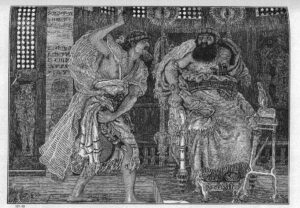
The final blow came years later. While Nehemiah was away from Jerusalem, the priest Eliashib, a relative of Tobiah, gave him one of the sacred storerooms of the temple (Nehemiah 13:4,5). When Nehemiah returned and discovered what had happened, he threw all of Tobiah’s belongings out of the room with his own hands (Nehemiah 13:8).

Tobiah’s story unsettles because he nearly won, not through force, but through access. Unable to bring down the wall from outside, he tried to corrupt from within what he could not stop.

Every work of God today faces this double threat: the laughter of doubters outside, and the silent compromise of those who yield ground within. Tobiah reminds the reader that guarding the heart and one’s alliances is just as necessary as raising any wall.
Defining verses

When Sanballat the Horonite and Tobiah the Ammonite official heard about this, they were very much disturbed that someone had come to promote the welfare of the Israelites.

Nehemiah 2:10

Then Tobiah the Ammonite, who was at his side, said, "What they are building, even if a fox climbed up on it, it would break down their wall of stones!"

Nehemiah 4:3

I was greatly displeased and threw all Tobiah's household goods out of the room.

Nehemiah 13:8

Visions, prophecies, and deeds

Opposed the news of the rebuilding

Upon hearing that someone had come to promote the good of the Israelites, Tobiah was greatly disturbed, alongside Sanballat.

Nehemiah 2:10

Mocked the work on the walls

He mocked Nehemiah's effort, saying that even a fox would knock down the stone wall the Jews were building.

Nehemiah 4:3

Plotted an attack against Jerusalem

Together with Sanballat and other neighboring peoples, he plotted an ambush against the city when he saw the repairs advancing.

Nehemiah 4:7,8

Tried to lure Nehemiah into a trap

Together with Sanballat and Geshem, he tried to draw Nehemiah into a meeting outside Jerusalem, intending to harm him.

Nehemiah 6:1,2

Kept allies among the nobles of Judah

Through ties of marriage and oath, he exchanged letters with Jewish nobles, who even praised him in front of Nehemiah.

Nehemiah 6:17-19

Occupied a storeroom in the temple

With the help of the priest Eliashib, his relative, he moved his belongings into a room previously used for the temple offerings.

Nehemiah 13:4,5

Was expelled from the temple by Nehemiah

Upon returning to Jerusalem, Nehemiah discovered what had happened, threw out Tobiah's belongings, and ordered the rooms purified.

Nehemiah 13:7-9
Timeline
~445 BC

Reacts to Nehemiah's arrival in Jerusalem

He is greatly disturbed upon learning that someone has come to seek the good of the Israelites (Nehemiah 2:10).

~445 BC

Mocks the rebuilding of the wall

He says a fox would knock down what is being built (Nehemiah 4:3).

~445 BC

Takes part in the conspiracy to attack

He joins Sanballat and other neighboring peoples to attack Jerusalem (Nehemiah 4:7,8).

~445 BC

Tries to lure Nehemiah out of the city

He sends invitations intending to harm him (Nehemiah 6:1,2).

~445 BC

Keeps up correspondence with the nobles of Judah

He receives letters and praise through alliances of marriage and oath (Nehemiah 6:17-19).

~433 BC

Receives a room in the temple through Eliashib

The priest, his relative, gives him a sacred storeroom (Nehemiah 13:4,5).

~433 BC

Is expelled from the temple by Nehemiah

Nehemiah returns, discovers what happened, and throws out Tobiah's belongings (Nehemiah 13:7-9).

Portrait

He knew how to build lasting political alliances, joining with Sanballat and Geshem against Nehemiah's work (Nehemiah 2:19)

He used marriages and kinship ties to gain support among the nobles of Judah (Nehemiah 6:18)

He persisted in his opposition for years, adapting his tactics as the wall advanced

He openly mocked the work of God, underestimating both the wall and the One behind it (Nehemiah 4:3)

He resorted to conspiracy and the threat of violence against Jerusalem (Nehemiah 4:7,8)

He corrupted a priest and defiled a sacred space of the temple for his own benefit (Nehemiah 13:4,5)

He used family ties to infiltrate influence and weaken Nehemiah's leadership from within (Nehemiah 6:17-19)

Lessons and legacy
Lessons from their life

Not all opposition to a work of God comes violently from outside, sometimes it comes from within, through relationships and concessions

Mocking a work that God sustains is to underestimate God himself, not just the labor

Alliances and kinship ties can become bridges of compromise when they are not governed by the fear of God

Guarding who has access to the sacred spaces of life is just as necessary as guarding the visible walls

Missionary legacy

Every mission work today faces its own Tobiah: voices that mock the labor before seeing the results

The story warns churches and mission teams to guard against internal concessions as much as external threats

It reminds us that local partnerships and alliances must be weighed in light of faithfulness to God, not mere convenience

It shows that persistence in prayer and obedience, like Nehemiah's, is the right response to the opposition of a Tobiah

Family and context
Family and relationships
Ally Sanballat the Horonite (Neh 2:10)
Father-in-law Shecaniah, son of Arah (Neh 6:18)
Son Jehohanan, married to Meshullam's daughter (Neh 6:18)
Relative Eliashib, the priest (Neh 13:4)
Adversary Nehemiah, governor of Judah
Nations mentioned

Ammon

Nehemiah 2:10

Related places

Jerusalem

City whose walls Tobiah tried to prevent from being rebuilt, today in Israel

Ammon

Tobiah's home region, east of the Jordan, present-day Jordan

Samaria

Base of Sanballat, Tobiah's ally, in territory that today is the West Bank

Temple of Jerusalem

Where Tobiah managed to occupy a sacred storeroom through the priest Eliashib

Trans-Euphrates

Persian province that included Judah, Ammon, and Samaria, today divided among several countries in the Middle East

Where to find them in the Bible

Tobiah's story is told in the book of Nehemiah, in chapters 2, 4, 6, and 13, always in connection with the opposition to the rebuilding of Jerusalem's walls.

Other people