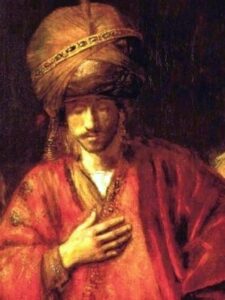
There are people who do the right thing even when no one is watching, even when doing wrong would be easier and no one would ever know. The life of Uriah the Hittite is the story of such a man, surrounded by powerful people willing to use his integrity against him.
Uriah was a foreigner, a Hittite who served Israel with such distinction that his name appears on the list of David’s Thirty Mighty Men, the king’s elite warriors (2 Samuel 23:39). He married Bathsheba, daughter of Eliam, and set out for the siege of the Ammonite city of Rabbah while Israel’s army fought in the field (2 Samuel 11:1,3).
Meanwhile, David stayed behind in Jerusalem, saw Bathsheba, and slept with her. When she became pregnant, she sent word to the king, and David had Uriah brought back from the war, hoping he would go home so the pregnancy would appear to be his (2 Samuel 11:2-6).
But Uriah refused. While the ark and his companions were camped in the open field, he would not allow himself to eat, drink, and lie with his wife (2 Samuel 11:11). David tried to get him drunk, but even so Uriah did not give in (2 Samuel 11:13).
With no other option left, David sent Uriah back to the front with a letter for Joab, his commander: put him where the fighting was fiercest and then withdraw, so that he would die (2 Samuel 11:14-15). Uriah unknowingly carried his own death sentence, and he died in battle (2 Samuel 11:17).
The text marks the moment with a stark line: “what David had done displeased the LORD” (2 Samuel 11:27). Later, the prophet Nathan would confront the king without mincing words: “You struck down Uriah the Hittite with the sword” (2 Samuel 12:9).
Uriah’s story reminds us that power can crush those who do what is right, but it does not go unnoticed before God. He saw the loyal soldier when no one else seemed to, and he held David accountable for the price of an innocent life. In the face of injustices suffered or witnessed in silence, this is the assurance that sustains us: God does not forget the forgotten victims.