Discover
The identity of the nation
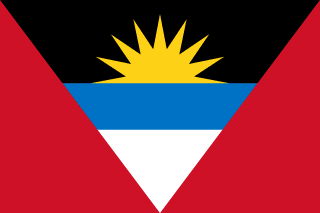
Antigua and Barbuda is a small island nation in the eastern Caribbean, made up mainly of two islands, Antigua and Barbuda, plus the uninhabited islet of Redonda. With about 95 thousand people and a capital in Saint John’s, it is one of the smallest independent nations in the Americas. The islands are known for white sand beaches, and local tradition says Antigua has a beach for every day of the year.
The Christian faith deeply shapes life in the country. The vast majority of the population identifies as Christian, spread across Anglicans, Adventists, Pentecostals, Moravians (members of the Moravian Church, a Protestant missionary denomination), Catholics and Methodists, the fruit of British colonial history and mission work among the enslaved population in past centuries. Churches remain important centers of community life, and attending services is part of the weekly rhythm for many families.
National identity was born out of the experience of slavery and emancipation. Carnival, celebrated in late July and early August, commemorates precisely the liberation of enslaved people, and the traditional benna music, a forerunner of calypso, arose as a way to sing news, protest and the memory of the people. Sport and culture go hand in hand: cricket is almost a civil religion, and names like Viv Richards and Curtly Ambrose are a source of national pride.
The economy depends heavily on Caribbean tourism, which sustains jobs and drives most of the islands’ income. This dependence brings visible prosperity in some areas, but also vulnerability to hurricanes, global crises and swings in visitor numbers. The contrast between luxury resorts and the everyday life of many residents is part of the country’s reality.
Although it is a majority Christian nation with a strong church heritage, real spiritual challenges remain: faith in name only, the mixing of faith with popular superstitions, attachment to material things tied to tourism, and the need for deep discipleship among young people. Prayer for Antigua and Barbuda asks that this Christian heritage become a living faith and that the local church be a light for the whole Caribbean.
- Arawak peoples and, before them, the Ciboney inhabited the islands, living off fishing and farming.
- 1493 Christopher Columbus sights Antigua and names the island Santa María la Antigua.
- 1632 English settlers establish themselves in Antigua, which becomes a British possession.
- 1674 Sugarcane transforms the economy; thousands of Africans are enslaved on the plantations.
- 1834 Abolition of slavery in the British Empire; a society of freed people is born.
- 1981 Independence from the United Kingdom on November 1, with Vere Bird as the first prime minister.
- Today A majority Christian nation, dependent on tourism and marked by the memory of emancipation.
-
Englishofficial, spoken by practically the entire population
-
Antiguan CreoleEnglish-based dialect used in daily life
Antigua and Barbuda lies in the northeastern Caribbean, in the Leeward Islands group. The territory comprises the island of Antigua, the busier and more populated of the two, the island of Barbuda, flat and sparsely inhabited, and the uninhabited islet of Redonda. The terrain is low and volcanic in origin, with a heavily indented coastline dotted with coves, bays and more than 365 white sand beaches. The highest point is Mount Obama, at 402 meters.
Major cities
- Saint John'sCapital and main port, concentrates commerce and tourism
- English HarbourFormer naval port, home to the historic Nelson's Dockyard
- CodringtonBarbuda's only settlement, next to a frigatebird reserve
- All SaintsOne of the largest towns in Antigua's interior
Climate and temperature
Fungie
Firm cornmeal and okra mash, a staple of local cuisine, served in small dumplings.
Pepperpot
Stew of salted meats with vegetables such as pumpkin, chayote and leafy greens.
Ducana
Sweet dumpling of sweet potato and coconut cooked in a banana leaf.
Barbuda lobster
A delicacy caught in the waters off Barbuda, a symbol of the island.
Saltfish
Sautéed salted cod, a traditional side dish for fungie.
Understand
Culture and spirituality
2a · The culture
Cricket as a national passion
The sport unites the country and produced idols celebrated across the whole Caribbean.
Emancipation Carnival
The July and August festival celebrates liberation from slavery, with music and parades.
Benna and calypso music
Rhythms born after slavery, used to tell the news and to resist.
Community life centered on the church
Services and Christian denominations shape much of social life.
British and Caribbean heritage
English language, British institutions and African roots coexist in everyday life.
- Ignoring the memory of slavery Emancipation is central to the people's identity and pride.
- Treating the country as just a beach destination There is living culture, history and faith beyond the resorts.
- Disrespecting Sunday and church services Religious practice is taken seriously by many families.
- Making demeaning comparisons with neighboring islands Each Caribbean nation has its own identity and values it.
2b · The field
Areas of spiritual battle and cultural captivity to cover in prayer. Tap each point to understand:
Many call themselves Christian out of tradition, without a personal, living faith.
The pursuit of wealth and status tied to resort luxury competes for people's hearts.
Remnants of folk beliefs and occultism blend with inherited faith.
Tensions between Antigua and Barbuda weaken the nation's unity.
The contrast between resorts and poor communities breeds resentment and exclusion.
Dependence on tourism leaves families insecure in the face of crises and hurricanes.
The multiplicity of denominations sometimes scatters rather than unites.
Lack of opportunity drives part of the youth to emigration or discouragement.
Consumption tied to the festive, tourist environment harms homes and young people.
Antigua and Barbuda guarantees religious freedom in its Constitution and is, in practice, a country where Christians live out and practice their faith without restrictions. The nation is majority Christian, with a strong historic presence of the Anglican, Adventist, Pentecostal, Moravian, Catholic and Methodist churches, and religion is openly part of public life.
The level of pressure on Christians is low. There is no state persecution nor significant social hostility toward those who follow Christ. The country’s spiritual challenges are of a different kind: faith in name only, inherited faith that does not always become living faith, and the influence of attachment to material things. Prayer here is directed less toward protection and more toward revival and depth in the local church.
The persecution score runs from 0 to 100: the higher it is, the greater the pressure on Christians.
Antigua and Barbuda is a small and fairly homogeneous nation, made up mostly of people of African descent, with minorities of British, Portuguese, Lebanese and other Caribbean island origins. Practically the entire population has access to the gospel in English, and Christianity is the majority faith. The main challenge is not lack of access, but the shift from nominal Christianity to a living, mature faith.
- 0 Unreached 0%
- 0 Minimally reached 0%
- 0 Superficially reached 0%
- 3K Partially reached 3,4%
- 89K Significantly reached 96,6%
- 0 Unreached 0%
- 0 Minimally reached 0%
- 0 Superficially reached 0%
- 1 Partially reached 25%
- 3 Significantly reached 75%
Source of people group data: Joshua Project (joshuaproject.net). Estimates, may vary.
British
Antiguano mestiço
Afro-antiguano
Americans, U.S.
Source: Joshua Project. Estimates, may vary.
Source: Joshua Project and Progress.Bible. Estimates, may vary.
English Official
Arabic, Algerian
Tachawit
Tamazight, Central Atlas
Algerian Sign Language
Hassaniyya
Tumzabt
Pray
Intercede for this nation
Every nation carries a redemptive purpose. Marks that seem woven into the identity God desires to restore:
Go
Practical details for those who want to go
Local time
Cost of living
driven up by tourism and imports
Cost by city
Reference values (source: Numbeo). Confirm before traveling.
Practical points for those who go
- English is the official language and is enough to communicate throughout the country.
- The currency is the Eastern Caribbean dollar (EC$), pegged to the US dollar.
- Watch out for hurricane season, between June and November.
- Bring sunscreen and light clothing: the climate is hot year round.
- Respect the rhythm of the churches: Sundays are set aside for services for many families.
Send and sustain
Not everyone goes, everyone takes part
Not everyone goes. Everyone takes part.
Behind every worker among these peoples stands a network of people who pray without ceasing, care for the family left behind, and faithfully sustain the work. Sending is mission too.
Start with your church: introduce this nation, adopt it in ongoing prayer, and walk alongside those God is raising up to go.