Discover
The identity of the nation
Norfolk Island is a tiny territory in the middle of the South Pacific Ocean, administered by Australia and home to just over 2,000 people. Life there revolves around a unique history: most of the population descends from the Bounty mutineers and their Tahitian wives, who left the overcrowded Pitcairn Island in 1856 and started a new life on Norfolk. Surnames such as Christian, Quintal, and Adams, inherited from that generation, are still common among residents, as is Norf’k, a creole blending eighteenth century English with Tahitian.
The Christian faith has been woven into this history from the start. Isolated on Pitcairn after the mutiny, the mutineers’ descendants lived for years without law or order, until reading the ship’s own Bible sparked a profound spiritual turnaround in the small community: within a few years, every islander had converted and began organizing daily life around prayer and the reading of Scripture. This Christian identity crossed the ocean with them in 1856 and shaped the community’s earliest days on Norfolk.
Decades later, the island played an important role in evangelizing the whole Pacific: for more than fifty years, an Anglican college welcomed young people from across Melanesia for Christian training, and the chapel built in memory of that era, with stained glass by renowned artists, is still one of the island’s most visited landmarks. Before that, though, Norfolk also spent decades as one of the harshest penal colonies of the British Empire, a painful past that still echoes in the collective memory of the place.
Today, most residents still identify as Christian, mainly Anglican, but regular church attendance has dropped sharply in recent decades, and more than a third of the population now declares no religion, following the same secularizing trend seen on mainland Australia. The island’s churches are small, rely heavily on ministers who come from outside for short stints, and the younger population has been leaving the island in search of study and work, further aging the local congregations.
Because of this history, Norfolk Island is not seen by missionary metrics as a place of unreached peoples, but its greatest challenge today is different: rekindling a personal, living faith where genuine revival once took place, turning into real experience what for many has become little more than family tradition and heritage pride.
- 1774 Captain James Cook sights the island and names it after the Duchess of Norfolk
- 1788 British settlers found the first penal colony at Kingston, weeks after the British fleet's arrival in Australia
- 1814 The colony is abandoned because it does not justify its upkeep costs
- 1825 A second, harsher penal colony reopens for the empire's worst convicts
- 1855 The penal colony closes for good, ending nearly seven decades of history as a prison
- 1856 Descendants of the Bounty mutineers leave overcrowded Pitcairn Island and settle on Norfolk
- 1867 An Anglican college for training native Pacific leaders is established on the island, welcoming young people from across Melanesia
- 1913 Norfolk Island comes under the administration of the newly formed Commonwealth of Australia
- 1979 The island is granted local self government
- 2015 Self government is abolished and administration returns directly to the Australian federal government
- Today A small community lives off tourism and proudly preserves its Pitcairn and Christian heritage
-
EnglishOfficial and majority language, used in administration, commerce, and education
-
Norf'k (Norfuk)Local creole blending eighteenth century English with Tahitian, a heritage of the Pitcairn settlers, recognized as a co official language
Norfolk Island is a small, isolated volcanic territory in the South Pacific Ocean, about 1,400 km northeast of Sydney, between New Zealand and New Caledonia, on the so called Norfolk Ridge. Covering just 34.6 km², it has steep coastlines with no natural harbor, and is surrounded by the small, now uninhabited Phillip and Nepean Islands. Its highest point, Mount Bates, reaches 319 meters, and the landscape is marked by the famous Norfolk pines, remnants of the ancient subtropical forests that once covered the territory.
Major cities
- KingstonHistoric and administrative capital, seat of government and the former penal colony, now a UNESCO World Heritage Site
- Burnt PineThe island's largest settlement and commercial center, home to shops, banks, and the post office
- MiddlegateCentral locality on the island, crossed by the main inland road
- CascadeCoastal village to the north, home to one of the island's only two landing places
- Steels PointFishing spot on the east coast, near reefs and natural pools
- Anson BayBay on the west coast, known for its surf waves and sunsets
Climate and temperature
Pilhi de milho
Baked cake of grated corn and sweet potato, a traditional homemade dish of island families
Mudda
Dumpling or bread made from mashed green banana, created to use up unripe fruit
Hihi pie
Pie made with small sea snails gathered from the rocks along the coast
Fried trumpeter
Local fish seasoned with lemon, the centerpiece of the island's traditional "fish fry"
Norfolk Blue Beef
Beef from the island's own cattle breed, raised under strict local biosecurity rules
Porpeih
Homemade jam made from wild guavas, gathered by families in the island's bush and kept to last the whole year
Understand
Culture and spirituality
2a · The culture
Kingston and Arthur's Vale Historic Area
Ruins of the former penal colony, recognized by UNESCO as a World Heritage Site
St. Barnabas Chapel
Gothic style church built in the nineteenth century, with stained glass by renowned artists, a landmark of the island's Christian presence
Norf'k Language
Local creole blending old English and Tahitian, spoken by the descendants of the Pitcairn settlers
Bounty Day
Holiday on June 8 celebrating the arrival of the Bounty mutineers' descendants in 1856
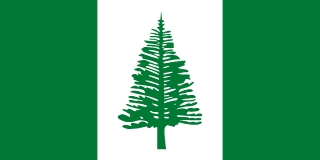
Norfolk Pines
The island's symbol tree, featured even on the local flag
Fletcher's Mutiny Cyclorama
A panoramic work depicting the story of the Bounty mutiny and the island's settlement
- Driving fast or honking Islanders greet each other with a wave of the hand while driving, and hurrying is frowned upon on such a small island
- Photographing people without permission The community is small and reserved; ask before photographing residents up close
- Interrupting a funeral procession Funerals are important community events; when crossing one, custom calls for pulling the car over to the roadside
- Expressing pity about the isolation Residents take pride in the island's isolated, self sufficient life
- Dressing inappropriately in chapels Modest clothing covering shoulders and knees is expected when visiting historic churches
- Ignoring the Pitcairn heritage Surnames, customs, and the Norf'k language are central to local identity and deserve respect
2b · The field
Areas of spiritual battle and cultural captivity to cover in prayer. Tap each point to understand:
Many call themselves Christian out of family tradition, but real church attendance is increasingly rare
More than a third of the population now declares no religion, following the trend on mainland Australia
Distance from the rest of the world fuels a self sufficiency that also hinders spiritual openness to outside influences
Economic life revolves almost entirely around visitors, leaving little room for other priorities
Young people leave the island to study and work elsewhere, aging the population and emptying the churches
Strong pride in Pitcairn ancestry sometimes replaces genuine personal faith with cultural identity
The memory of decades as a punishment colony still weighs on the island's collective identity
Small churches rely on temporary ministers from outside, without stable local leadership
Long standing relationships among a few families breed rivalries that hinder unity among the churches
Religious rituals and holidays are still observed, but often emptied of their original spiritual meaning
As an Australian territory, Norfolk Island guarantees broad religious freedom, and local Christians face no hostility, persecution, or restriction because of their faith. The Anglican, Catholic, Adventist, and Uniting churches coexist without tension in the small community, and holidays such as Bounty Day, which celebrates the arrival of the Pitcairn settlers in 1856, keep alive the memory of a collective conversion that once shaped the island’s identity.
The real challenge today comes not from outside but from within: a quiet secularization is advancing among the local population, and more and more residents, especially younger ones, do not identify with any religion. For many, faith has become more a symbol of Pitcairn cultural heritage than a lived practice, and churches struggle to keep resident ministers in such a small, isolated community.
The persecution score runs from 0 to 100: the higher it is, the greater the pressure on Christians.
According to Joshua Project, Norfolk Island has only 3 catalogued ethnic groups, reflecting the tiny size of the territory. Two of them, made up of descendants of Australian and New Zealander settlers, are already considered significantly reached by the gospel. The third, the Pitcairner/Norfolk people, descended from the Bounty mutineers and their Tahitian wives, is classified as partially reached: it retains a strong historical Christian identity but today lives out a faith that is more cultural than personal. There is no unreached people group recorded on the island.
- 0 Unreached 0%
- 0 Minimally reached 0%
- 0 Superficially reached 0%
- 400 Partially reached 19%
- 2K Significantly reached 81%
- 0 Unreached 0%
- 0 Minimally reached 0%
- 0 Superficially reached 0%
- 1 Partially reached 33,3%
- 2 Significantly reached 66,7%
Source of people group data: Joshua Project (joshuaproject.net). Estimates, may vary.
Anglo-Australian
Anglo-New Zealander
Pitcairner, Norfolk
Source: Joshua Project. Estimates, may vary.
Source: Joshua Project and Progress.Bible. Estimates, may vary.
English Official
Pitcairn-Norfolk
Pray
Intercede for this nation
Every nation carries a redemptive purpose. Marks that seem woven into the identity God desires to restore:
Go
Practical details for those who want to go
Local time
Cost of living
Dish of the day, such as local trumpeter fish with salad and potatoes
Cost by city
Reference values (source: Numbeo). Confirm before traveling.
Practical points for those who go
- Isolation: flights to the island are infrequent, so any trip requires planning ahead
- Currency: the Australian dollar is used, accepted throughout local commerce
- Mild climate: pack a light jacket even in summer, because of the constant ocean winds
- Own time zone: the island keeps its own time, different from mainland Australia
- Small community: just over 2,000 people live there, and almost everyone knows each other
- No public transport: taxis are rare and there are no buses, so renting a car is the most practical way to see the island
- Local SIM card: Australian phones do not get signal automatically; tourists usually buy a local SIM for internet access
- Watch for cattle on the road: loose livestock have right of way on the island's narrow roads, and driving is on the left
Send and sustain
Not everyone goes, everyone takes part
Not everyone goes. Everyone takes part.
Behind every worker among these peoples stands a network of people who pray without ceasing, care for the family left behind, and faithfully sustain the work. Sending is mission too.
Start with your church: introduce this nation, adopt it in ongoing prayer, and walk alongside those God is raising up to go.