Discover
The identity of the nation
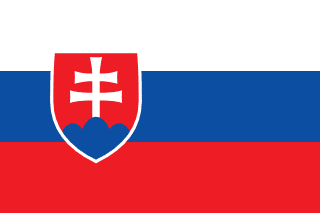
Slovakia is a small country in the heart of Europe, marked by mountains, castles and a history of more than a thousand years of Christian faith. It was there, in the old Great Moravia (a Slavic kingdom that existed before the formation of Hungary and later split among several present-day countries), that the missionaries Cyril and Methodius arrived in the ninth century, bringing the gospel and creating the first alphabet used by the Slavic peoples. That deep Christian root still shapes Slovak identity today, even as it coexists with an increasingly strong secularization (a turning away from religion).
After centuries under Hungarian rule and, later, the Habsburgs (the Catholic dynasty that governed much of Central Europe), Slovakia only became an independent country in 1993, when Czechoslovakia split peacefully. Before that, the country lived through nearly half a century of communism, a regime that openly persecuted churches and imprisoned religious leaders. The fall of communism in 1989 restored freedom of worship, but it also opened the door to a new challenge: the spiritual emptying of an entire generation that grew up without any religious teaching.
Today most Slovaks still identify as Catholic, but often more out of family tradition than personal conviction. The number of people with no religion has more than doubled over the last decade, especially among young people in the cities. Alongside this, there are historic evangelical communities, such as the Lutheran and Reformed churches, which withstood centuries of pressure and still maintain their own identity today, even as a minority in a majority Catholic country.
One of the country’s greatest missionary challenges lies among the Roma (Romani) people, a community that faces social prejudice and remains largely unreached by local churches. At the same time, Slovakia is today a country fully integrated into Europe, a member of the European Union, with good infrastructure and complete freedom to gather and worship. This creates a rare opportunity: prepared ground, free of legal barriers, but with a people who need to personally rediscover the faith their ancestors already knew more than a thousand years ago.
- 9th century The missionaries Cyril and Methodius arrive in the region sent by Byzantium, translate sacred texts into Old Church Slavonic and begin the formal evangelization of the people.
- 906 The kingdom of Great Moravia, which included Slovak territory, is overthrown by Hungarian invaders, and the region becomes part of the Kingdom of Hungary.
- 10th-15th century The Slovaks remain for centuries under Hungarian rule, preserving their language and faith among other peoples of the kingdom.
- 1526 The territory comes under the rule of the Habsburgs, the Catholic dynasty that governs the region for nearly four centuries.
- 16th-17th century The Protestant Reformation reaches Slovakia; many nobles and peasants adopt the Lutheran and Reformed faith, generating decades of religious tension.
- 1918 With the end of the First World War, Slovaks and Czechs unite and form Czechoslovakia.
- 1939-1945 During the Second World War a satellite Slovak state of Nazi Germany exists; many Slovak Jews are killed in the Holocaust.
- 1948 The communist party takes power in Czechoslovakia and begins decades of persecution against churches.
- 1989 The Velvet Revolution overthrows the communist regime without bloodshed and restores religious freedom to the country.
- 1993 Czechoslovakia splits peacefully, and Slovakia becomes an independent country.
- 2004 Slovakia joins the European Union and NATO (a military alliance among European and North American countries).
- Today The country lives with a contrast between the rapid growth of people with no religion and the emergence of living Christian communities, especially among young people.
-
Slovakthe official language, spoken by the vast majority of the population, from the West Slavic group (along with Czech and Polish).
-
Hungarianspoken by the Hungarian minority, concentrated in the south of the country, near the border with Hungary.
-
Rusyna Slavic language spoken by a small community in the northeast, connected to the Rusyns, a Slavic people of the Carpathians (the mountain range in the region).
-
Romanithe language spoken by the Roma (Romani) communities, found mainly in the east and center of the country.
-
Czechwidely understood by the population because of the long shared history with the Czech Republic.
Slovakia lies in the center of Europe, landlocked, surrounded by the Czech Republic, Poland, Ukraine, Hungary and Austria. The country is known for its mountains: the Western Carpathians cover much of the territory, with the High Tatras standing out as the highest range in the region, home to Gerlachovský štít, a 2,655 meter peak and the country's highest point. In the south, near the Danube River, the terrain becomes flatter, with lowlands used for agriculture. Dense forests, caves and hot springs that rise from the ground also mark the Slovak landscape.
Major cities
- Bratislavathe country's capital, on the banks of the Danube River, with a historic castle overlooking the landscape.
- Košicethe second largest city, in the east of the country, known for its Gothic cathedral, the easternmost in Europe.
- Prešova city in the east, with a preserved historic center and a strong presence of the Rusyn minority (a Slavic people of the Carpathians).
- Žilinaa city in the northwest, at the confluence of three rivers, an important industrial and university hub.
- Banská Bystricaa historic city in the center of the country, linked to the resistance against Nazism in the Second World War.
Climate and temperature
Bryndzové halušky
the national dish: potato dumplings topped with bryndza (a creamy sheep's milk cheese) and pieces of fried bacon.
Kapustnica
a sour cabbage (sauerkraut) soup, made with smoked sausage and mushrooms, traditional on Christmas Eve.
Bryndzové pirohy
dumplings filled with bryndza and topped with fried bacon.
Kapustové halušky
boiled potato dough served with sautéed cabbage and bacon.
Trdelník
sweet rolled dough baked over a stick, dusted with sugar and walnuts, sold at fairs and on the street.
Slovak beer
a traditional drink and an important part of bar culture and social gatherings in the country.
Understand
Culture and spirituality
2a · The culture
Bratislava Castle
a fortress overlooking the capital on the banks of the Danube River, a symbol of the country's history.
High Tatras
the highest mountain range in the Carpathians, a destination for hiking and skiing, surrounded by local legends.
Slovak caves
the country has hundreds of caves, several open to visitors, some recognized by Unesco (the UN's cultural and heritage agency).
Thermal springs
a tradition of bathing in hot waters that rise from the ground, present in several towns for centuries.
Folklore and traditional music
dances and regional costumes still alive at popular festivals, especially in the countryside.
- Confusing it with the Czech Republic they have been different countries since 1993, with their own histories, accents and identities, despite the similar language.
- Discussing the communist period carelessly many families still carry painful memories of that era; it is better to listen before offering an opinion.
- Ignoring the difference between Catholics and evangelicals the majority is Catholic, but there are historic Protestant communities that value their own identity.
- Assuming everyone is very religious the number of people with no religion is growing fast, especially among young people in the cities.
- Making prejudiced comments about the Roma (Romani) people this is a sensitive topic in the country; avoid generalizations and stereotypes.
2b · The field
Areas of spiritual battle and cultural captivity to cover in prayer. Tap each point to understand:
The number of people who say they have no religion has more than doubled since 2011, especially among young people in the cities.
Many identify as Catholic out of family tradition, without a living personal faith in Jesus.
After decades of scarcity, the pursuit of comfort and consumption now occupies the place once held by faith.
Old rivalries between Catholics and Protestants still hinder unity among the country's Christians.
The Roma (Romani) community suffers social discrimination and remains largely unreached by the country's churches.
Alcohol consumption is high and, in some regions, is linked to social and family problems.
Many young people leave to work in other European countries, emptying churches and local communities.
Beliefs in amulets, divination and old folk practices still circulate alongside the Christian faith.
Decades of religious persecution left marks of distrust toward institutions, including the church itself.
In the big cities, the fast pace of life weakens the bonds of community that sustain faith.
Religious freedom is guaranteed by law in Slovakia, and violent persecution against Christians, such as exists in other parts of the world, is not part of the country’s reality. The challenge there is different: a society that, after decades of atheist communism, is now trading faith for a growing spiritual emptiness.
In a majority Catholic culture, small evangelical churches are sometimes viewed with suspicion, treated as strange groups by neighbors and relatives. Those who decide to follow Jesus outside the Catholic tradition may face quiet social pressure, jokes or isolation within their own family, more than open persecution.
Christians from the Roma (Romani) people face a double difficulty: the social prejudice that already affects their community is compounded by the lack of churches equipped to reach them in their own culture and language.
The persecution score runs from 0 to 100: the higher it is, the greater the pressure on Christians.
Slovakia has at least 15 distinct ethnic groups, including Slovaks, Hungarians, Roma (Romani), Rusyns, Ukrainians and other smaller peoples. Although Christianity has been present for more than a thousand years, much of the population lives out a faith of tradition, more cultural than personal. The Roma (Romani) people, one of the largest non-Slovak groups in the country, remain among the least reached by local evangelical churches.
- 18K Unreached 0,3%
- 19K Minimally reached 0,3%
- 4.8M Superficially reached 89%
- 558K Partially reached 10,3%
- 0 Significantly reached 0%
- 2 Unreached 13,3%
- 2 Minimally reached 13,3%
- 7 Superficially reached 46,7%
- 4 Partially reached 26,7%
- 0 Significantly reached 0%
Source of people group data: Joshua Project (joshuaproject.net). Estimates, may vary.
Judeus de Fala Eslovaca Frontier
Vietnamitas
Deaf Frontier
Source: Joshua Project. Estimates, may vary.
Pray
Intercede for this nation
Every nation carries a redemptive purpose. Marks that seem woven into the identity God desires to restore:
Go
Practical details for those who want to go
Local time
Cost of living
average price of a meal at a budget restaurant in Bratislava.
Cost by city
Reference values (source: Numbeo). Confirm before traveling.
Practical points for those who go
- Slovak is the official language; English is more common among young people and in Bratislava than in the countryside.
- The currency is the euro, used in the country since 2009.
- Public transportation in the cities is efficient and widely used, with trams and buses.
- The country is a member of the European Union, which eases travel with neighboring countries.
- Winter can be harsh in the mountainous regions; pack warm clothing if visiting between November and March.
Send and sustain
Not everyone goes, everyone takes part
Not everyone goes. Everyone takes part.
Behind every worker among these peoples stands a network of people who pray without ceasing, care for the family left behind, and faithfully sustain the work. Sending is mission too.
Start with your church: introduce this nation, adopt it in ongoing prayer, and walk alongside those God is raising up to go.