Bible
Hebrew, Aramaic and Greek: the original languages of the Bible
Discover which parts of the Bible were written in Hebrew, Aramaic and Greek, and why the original languages matter for translation today.
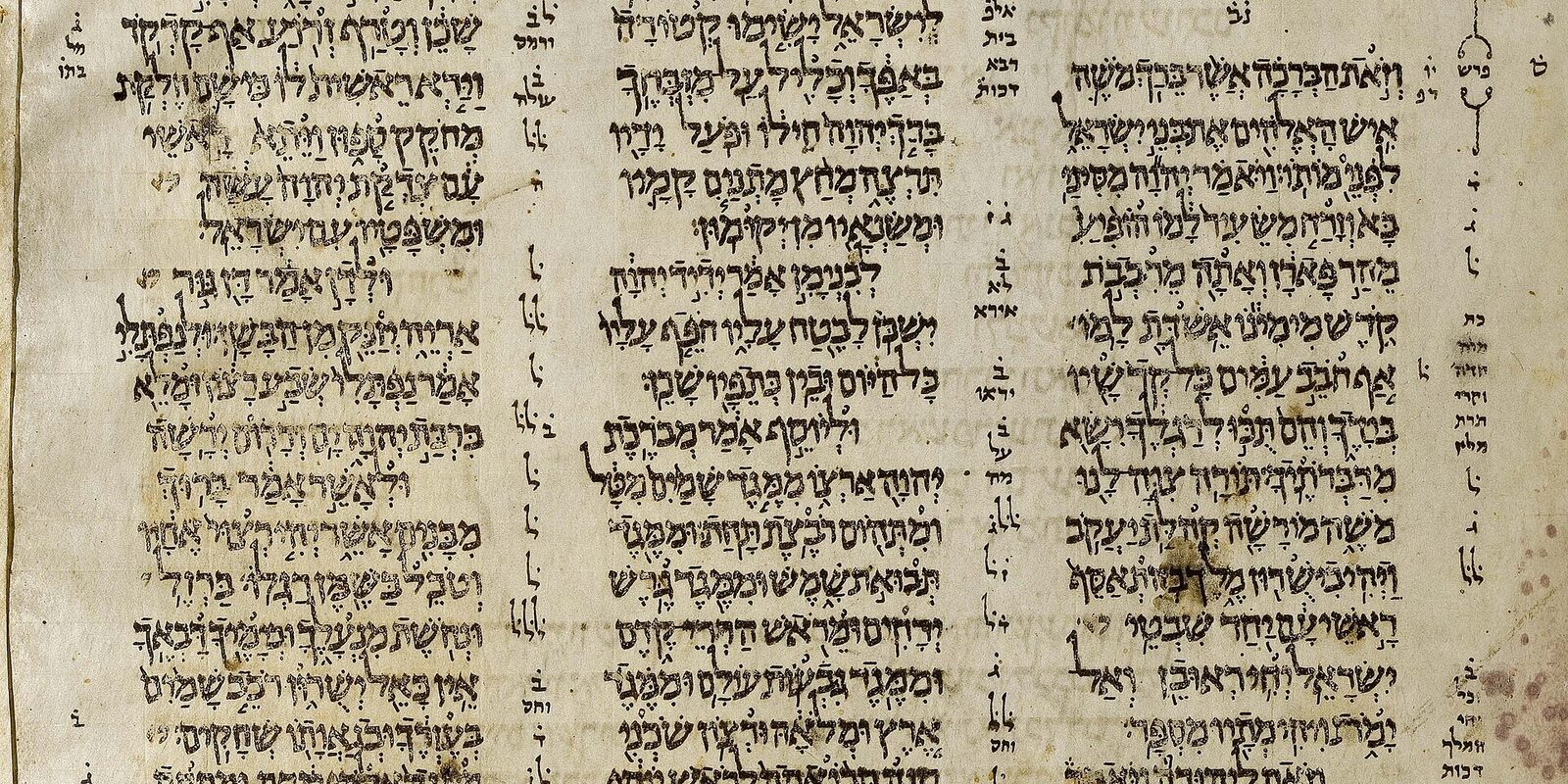
The Bible was written in Hebrew, Aramaic and Greek. Hebrew is the language of most of the Old Testament; Aramaic appears in some passages and in expressions preserved in the Gospels; Greek is the language of the New Testament. A Bible translation therefore needs to take more than one language into account.
Knowing these origins helps explain familiar words, differences between versions and the work of translators. You do not need to learn these languages to start reading the Bible. But understanding how the text came into Portuguese helps us appreciate the care needed so that others can also read the Scriptures in their own language.
Hebrew: the language of most of the Old Testament
Hebrew is connected to the history and faith of the people of Israel. It is the predominant language of books such as Genesis and Exodus, and the language of Psalms, Proverbs and Isaiah. Narratives, laws, prayers, poems and prophetic messages were recorded in it and collected in what Christians call the Old Testament.
One familiar word is shalom, usually translated as peace. Depending on the passage, it can also express well-being, safety or the idea that all is well. This shows why consulting a dictionary is only part of translation: we need to consider what the word means in that particular sentence.
Translators also need to recognize the kind of text they are reading. A poem calls for attention to imagery and the way its lines relate to one another; a narrative requires following what happened. This difference is reflected in the way translations present the text, sometimes arranging poems in lines and narratives in paragraphs.
Aramaic: passages in Ezra and Daniel and words of Jesus
Aramaic is a language closely related to Hebrew, but distinct from it. It was used for communication between different peoples and in the administration of the Persian Empire. Its presence in the Bible helps us see that Israel’s history unfolded in contact with other peoples, governments and ways of speaking.
The longest Old Testament passages in Aramaic are Ezra 4:8-6:18, Ezra 7:12-26 and Daniel 2:4-7:28. In Daniel, the change begins with the words addressed to the king in 2:4. Ezra includes official correspondence, such as the letter from King Artaxerxes, whose text appears in Aramaic in chapter 7.
There are also shorter instances: Jeremiah 10:11 is in Aramaic, and Genesis 31:47 preserves the Aramaic name Jegar Sahadutha. In this account, Laban and Jacob give different names to the same heap of stones. The NIV footnote explains that the names, one Aramaic and the other Hebrew, have the same meaning.
Jesus also spoke Aramaic, and the Gospels preserve some of his expressions. In Mark 5:41, Talitha koum accompanies the command for a little girl to get up, followed by an explanation of its meaning. In Mark 14:36, Abba is the Aramaic term for Father, used by Jesus in prayer.
Greek: the language of the New Testament
The books of the New Testament were written in Greek. The form used is called Koine, a word meaning common: it was the Greek shared by people from different places in the Mediterranean world. The Gospels, Acts, the apostles’ letters and Revelation were written in this language.
This helps distinguish the language spoken in a situation from the language used to describe that situation. Jesus might speak Aramaic while the Gospel writer wrote in Greek for his readers. An Aramaic expression preserved within an account does not change the language in which the book was written.
One Greek example is euangelion, meaning good news, which gave rise to the Portuguese word for gospel. The term appears at the opening of Mark, in Mark 1:1, in connection with Jesus Christ. Knowing its meaning helps readers understand that gospel refers to the message proclaimed as well as naming the books that recount Jesus’ life.
Another example is logos, translated as Word in John 1:1 in the Portuguese NVI. That translation’s own footnote gives an alternative term meaning Word, derived from the Latin for word or verb. In this usage, that alternative does not refer to a grammatical category: it is a way of translating the Greek term with which John presents the one who was with God and was God.
Why translate from the original languages?
Translating from the originals means working with texts in Hebrew, Aramaic and Greek rather than relying solely on an existing translation. Latin, for example, is important in the history of Bible versions, but it is not the original language of the biblical books. An ancient Bible in Latin is still a translation.
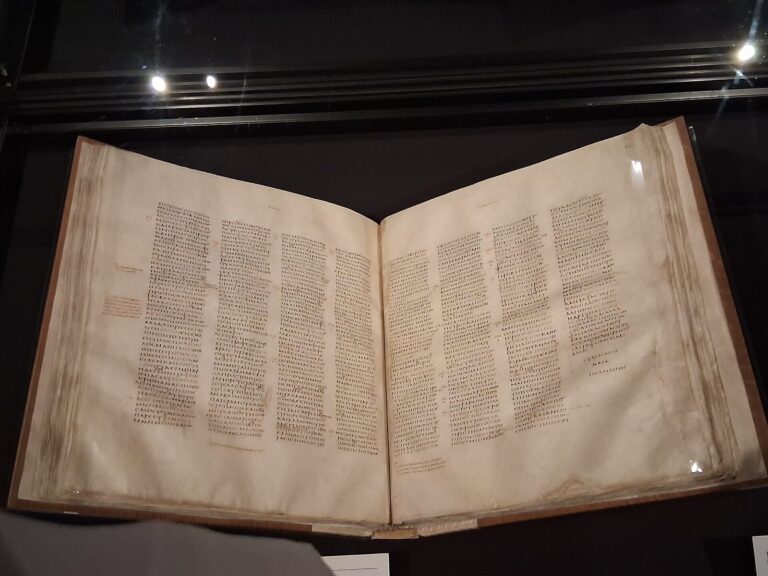
The expression originals also needs explaining: the documents written by the biblical authors have not survived. The work relies on ancient copies, called manuscripts, and editions prepared by scholars. Comparing manuscripts helps assess differences introduced during copying and establish the text used by translators.
Consulting these languages directly makes it possible to examine words, sentences and context without relying only on another translator’s choices. Other versions can be useful for comparison, but the source text remains the reference. A difficult decision can thus be discussed on the basis of the passage rather than simply repeated from an earlier version.
This does not mean replacing each ancient word with a Portuguese word in the same order. Languages organize ideas differently, and a sentence copied that way can become confusing. A translation needs to communicate the meaning faithfully while forming a sentence that readers can understand.
The preface to the Portuguese NVI, dated 2001, explains this commitment to the source texts and to clarity in Portuguese. It also states that footnotes present alternative translations and textual difficulties. For readers, these notes offer an opportunity to better understand the team’s choices.
From ancient languages to the languages of the nations
The same care remains necessary in Bible translation today: knowing the source text and mastering the language of those who will receive the translation. The process involves revision, discussion of choices and attention to readers’ questions. Producing a sentence that is correct according to the dictionary is not enough; it needs to communicate what the passage says.
For a community that does not yet have access to the Scriptures in a language it understands well, this work has practical importance. People need to understand who is speaking, what happens and what is being taught. As we pray for unreached peoples, we can also remember this need for understanding.
In Acts 2:11, people from different backgrounds say they hear the wonders of God in their own language. This passage helps us see the value of a message its recipients can understand. The prayer campaign for Bible translation invites you to bring this matter into your prayers.
Pray for those who translate and revise the Scriptures, asking for close attention to the text, sound decisions and clarity in the readers’ language. Ask too that churches help people understand and put into practice what they read. As you give thanks for the Bible in Portuguese, remember communities that want to know its message in their own language.
 Bible Babel and Pentecost: From Confused Languages to the Gospel in Every Language
 Bible Biblical manuscripts: how we know the text is reliable
 Bible What is the best Bible translation in Portuguese