Bible
Paul’s missionary journeys
Paul traveled through cities in what are now Turkey and Greece, proclaiming Jesus. Explore the three journeys described in Acts and his journey to Rome.

The book of Acts tells how the apostle Paul set out from Antioch in Syria to proclaim Jesus in cities in areas that are now part of Turkey and Greece, as well as on the island of Cyprus. These are commonly described as three missionary journeys, followed by a final journey to Rome as a prisoner. On each journey, the message reached people who had never heard of Jesus.
The first journey: Cyprus and the region of modern Turkey
In Antioch, the prophets and teachers of the church were worshiping and fasting when the Holy Spirit said: “Set apart for me Barnabas and Saul for the work to which I have called them.” After fasting and praying, they placed their hands on the two men and sent them off (Acts 13:1-3). Saul is also called Paul.
They sailed to Cyprus. In Paphos, the island’s Roman governor, Sergius Paulus, sent for them because he wanted to hear the word of God, and he came to believe (Acts 13:4-12). They then reached cities such as Pisidian Antioch, Iconium, Lystra, and Derbe. They usually began in the synagogues, the Jewish places of assembly. When many Jews rejected the message in Pisidian Antioch, Paul and Barnabas said that they were now turning to the Gentiles, meaning people who are not Jewish (Acts 13:46-47).
In Lystra, after Paul healed a man who could not walk, the crowd thought they were gods and wanted to offer sacrifices. The two men could barely stop them. Soon afterward, some Jews who had come from other cities won over the crowd, and Paul was stoned and dragged outside the city (Acts 14:8-19). On their return through the same cities, they appointed elders, local leaders, in each church (Acts 14:23).
An important decision in Jerusalem
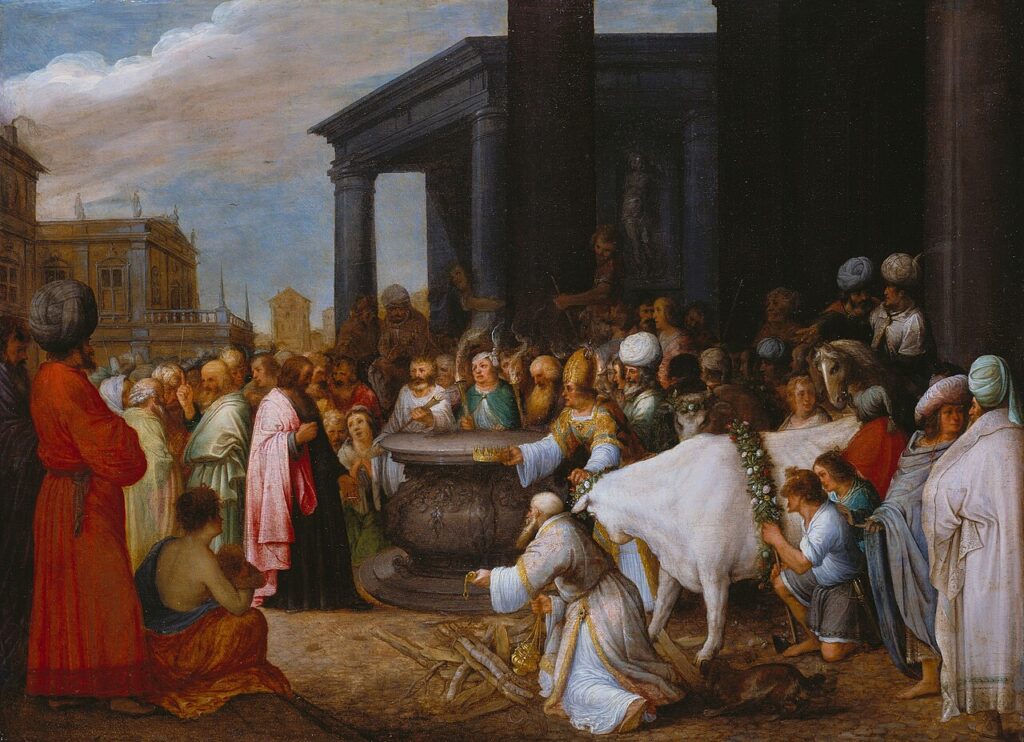
Between the first and second journeys, some men who had come from Judea were teaching that Gentile converts needed to be circumcised, according to the custom taught by Moses, in order to be saved. Paul and Barnabas went to Jerusalem to discuss this with the apostles and elders (Acts 15:1-6). The question was whether someone from another people had to become Jewish to follow Jesus.
This meeting is known as the Council of Jerusalem. James concluded that they should not make it difficult for Gentiles who were turning to God (Acts 15:19).
The second journey: Macedonia and Greece
After a disagreement about taking Mark along, Paul and Barnabas parted ways. Barnabas went to Cyprus with Mark, and Paul chose Silas (Acts 15:36-41). In Lystra, the young Timothy joined the group (Acts 16:1-3).
In Troas, Paul had a vision of a man from Macedonia who pleaded: “Come over to Macedonia and help us” (Acts 16:9). The group crossed over to Europe and arrived in Philippi, where Lydia, a dealer in purple cloth, was baptized along with her household (Acts 16:11-15). In Thessalonica, Paul reasoned from the Scriptures in the synagogue on three Sabbaths (Acts 17:1-4). In Athens, he was distressed to see the city full of idols and spoke every day in the marketplace. Some scoffed when they heard about the resurrection, but others believed, including Dionysius and a woman named Damaris (Acts 17:16-34). In Corinth, he stayed for a year and a half, teaching and working with Aquila and Priscilla, who were tentmakers (Acts 18:1-3,11).
The third journey: Ephesus
On the third journey, Paul went through Galatia and Phrygia again, strengthening the disciples (Acts 18:23). In Ephesus, he spoke in the synagogue for three months and then began teaching in the lecture hall of Tyrannus. This continued for two years, so that all the Jews and Greeks living in the province of Asia heard the word of the Lord (Acts 19:8-10). He then traveled through Macedonia and Greece again (Acts 20:1-2) and arrived in Jerusalem, where he was arrested (Acts 21:17,33).
The journey to Rome
Paul appealed to Caesar and was taken to Rome. There, fellow believers from the church came to meet him, and he was allowed to live on his own, guarded by a soldier (Acts 28:14-16). For two years, even as a prisoner, he welcomed everyone who came to see him and preached the kingdom of God without hindrance (Acts 28:30-31).
“For this is what the Lord has commanded us: ‘I have made you a light for the Gentiles, that you may bring salvation to the ends of the earth.'”
Acts 13:47
What Paul’s journeys tell us about the nations
The journeys show a pattern: a church that prays, fasts, and sends. That is how it happened in Antioch. Paul then went to places the gospel had not yet reached. He himself wrote that he had always made it his ambition to preach where Christ was not yet known (Romans 15:20). In several cities, he left groups of Christians and local leaders.
Today there are still unreached peoples, groups with few Christians and without churches strong enough to take the gospel to everyone among them. We can pray as the church in Antioch did: that God would call and send people to these peoples.
 Bible Babel and Pentecost: From Confused Languages to the Gospel in Every Language
 Bible Biblical manuscripts: how we know the text is reliable
 Bible What is the best Bible translation in Portuguese