History
Proselytes and God-fearers: Foreigners Who Sought the God of Israel
Explore proselytes and God-fearers, and what Pentecost, the Ethiopian eunuch, Cornelius, and Lydia teach about faith in Jesus.
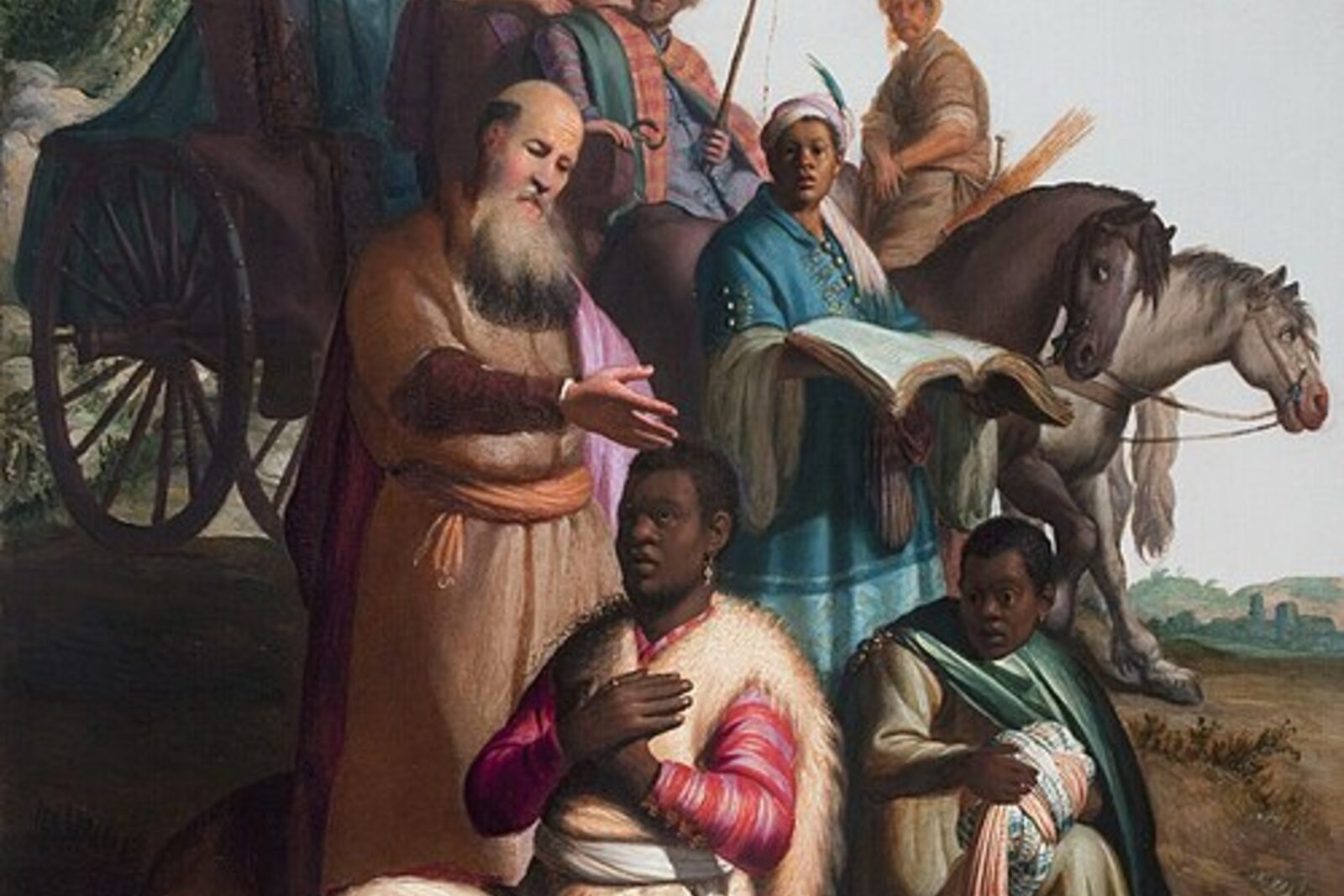
Proselytes were people of non-Jewish origin who converted to Judaism. For men, this commitment normally included circumcision, the removal of the male foreskin, a sign of the covenant, God’s commitment to Israel. Those known as God-fearers, meanwhile, drew close to Israel’s faith without necessarily becoming Jews.
The distinction helps us understand Pentecost, Cornelius, and Lydia. It also calls for care: not every foreigner who worshiped in Jerusalem can be classified as a proselyte, and the Bible does not present God-fearers as an organization with the same rules everywhere.
What was the difference between them?
A proselyte became part of the Jewish community through conversion, embracing a life guided by the Law of Moses, the commandments given to Israel. This was more than simply being interested in learning about another religion. The term could include women, so circumcision does not describe all converts.
A God-fearer is someone who reveres God and seeks to live before him with respect. In the study of Acts, the expression usually refers to Gentiles, people who were not Jewish, associated with worship of the God of Israel. This connection could involve prayer and contact with the synagogue, a place for gathering and teaching the Scriptures.
Scholars debate the use of this expression as the name of a formal group. It could also simply describe someone’s devotion. It is therefore helpful to consider each passage without assuming identical obligations in every community.
A source outside the Bible illustrates this diversity. In Antiquities of the Jews, book 20, chapter 2, the Jewish historian Josephus relates that King Izates of Adiabene (a region of Mesopotamia) received differing advice: Ananias allowed him to worship God without circumcision, considering the political risks; Eleazar insisted on the rite, and the king underwent it. This historical account is not a biblical passage.
Proselytes were present at Pentecost
Acts 2:10-11 includes visitors from Rome, both Jews and converts to Judaism, among those present in Jerusalem. These converts are the proselytes. Together with people from different regions, they heard the disciples proclaiming the wonders of God in their own languages.
Pentecost was a Jewish festival, and the proclamation of Jesus took place in this setting of worship. The presence of proselytes shows that people from other backgrounds had already joined Israel’s faith. This differs from what would happen in Cornelius’s house, where uncircumcised people would receive the Holy Spirit.
Was the Ethiopian eunuch a proselyte?
Acts 8:26-39 presents an Ethiopian in charge of the queen’s treasury, described as a eunuch, a term associated with castrated men who served in royal courts. He had gone to Jerusalem to worship and was returning while reading Isaiah. His search for the God of Israel is clear, but the account does not say that he was a proselyte.
We therefore cannot state with certainty what his status was within the Jewish community. His journey and his reading show interest and devotion, but do not prove a formal conversion. It is better to acknowledge this limit than to fill the text’s silence with an overly confident classification.
Philip heard his question about the passage and, beginning with it, proclaimed Jesus. The man was baptized and continued his journey with joy. The center of the narrative is this encounter with the gospel, the good news about Jesus, rather than a definition of his previous religious category.
Cornelius and Lydia encountered the gospel
Cornelius was a centurion, an officer in the Roman army, who lived in Caesarea. Acts 10:1-4 describes his devotion, his prayers, and his help for those in need. Although he revered the God of Israel, he was not circumcised, as the discussion of Peter’s visit in Acts 11:1-3 confirms.
God acknowledged Cornelius’s prayer and generosity, but he still needed to hear the message of Jesus to be saved (Acts 11:13-14). His search deserved respect and attention; his story also shows why we should proclaim Christ to those who already show an interest in God.
Peter proclaimed Jesus’ death and his resurrection, his return to life, and explained that forgiveness of sins comes through faith in him. As those present listened, they received the Holy Spirit and were then baptized (Acts 10:34-48). The astonishment of Peter’s Jewish companions shows the importance of this event.
“[…] God does not show favoritism but accepts from every nation the one who fears him and does what is right.”
Acts 10:34-35, NIV
Lydia appears in Philippi as a dealer in purple cloth and a woman who worshiped God. She was listening to Paul at a place of prayer, and the Lord opened her heart to receive the message. After being baptized, she welcomed the missionaries into her home (Acts 16:12-15).
Lydia is commonly understood to have been a Gentile associated with Jewish worship, but the text does not detail her previous status. Her story highlights God’s initiative and her tangible response of faith and hospitality.
The lesson for today and for the nations
In Acts 15:7-11, Peter explains that God purified the Gentiles’ hearts by faith and that Jews and Gentiles are saved through the grace of Jesus, his favor that cannot be bought. The church should not require foreigners to become Jews in order to receive salvation.
This history calls for respect for the Jewish roots of Christian faith. Jews taught the Scriptures to foreigners, and the first people to proclaim Jesus were also Jewish. The differences of that time should not be turned into contempt for a people: the gospel calls people of every background to the same faith in Christ.
Today, we can listen to the questions of someone seeking God, read the Bible with them, and open our homes, without judging by accent or origin. We can also pray for unreached peoples, who have little access to the gospel. Jesus reached people from different groups and, through his disciples, his message reached people such as Cornelius and Lydia.
 History Who were the tax collectors and why were they hated
 History Who were the Sadducees?
 History Who were the Samaritans and why did Jews and Samaritans not get along