History
Roman soldiers and centurions in the Gospels
Learn what a centurion was, about the faith of the officer in Capernaum, the testimony at the cross, and the conversion of Cornelius.
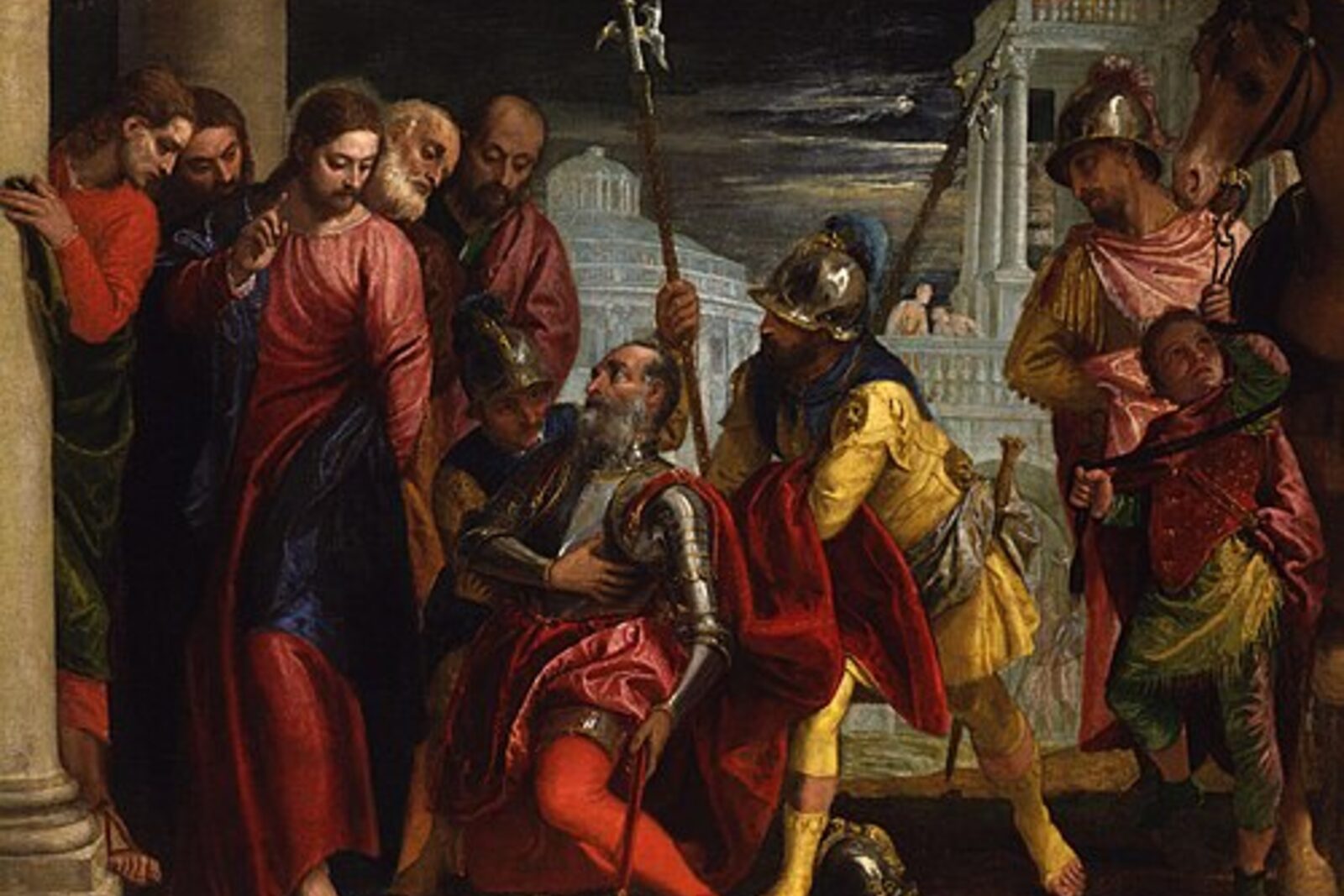
The Roman soldiers in the Gospels represented the power of Rome, and the centurions were officers who commanded military units. They appear both in the violence against Jesus and in accounts of faith: one centurion seeks healing for his servant, and another recognizes something extraordinary in Jesus’ death.
In Acts, after Jesus’ resurrection, the centurion Cornelius receives the gospel in his home, in a decisive episode for the welcome of Gentiles, meaning non-Jews, into the church.
How the army was organized
According to historical sources on the Roman army, legions were large formations of soldiers who were Roman citizens. They were divided into cohorts, smaller units, which in turn were divided into centuries, groups of soldiers who fought on foot. There were also auxiliary troops, recruited from different peoples, with soldiers fighting on foot and on horseback.
A centurion led a century and was responsible for the soldiers’ discipline. Although the name suggests a hundred, many of these units had about eighty men; their size varied. These numbers come from historical reconstruction of the army, rather than from the Gospels.
We also need to distinguish between the soldiers in each account. Luke 23:11 mentions Herod’s soldiers, while Mark 15:16-20 describes soldiers taking Jesus to the Praetorium, the headquarters of the governor Pilate. The word soldier, on its own, does not tell us a man’s ethnic background or mean that he was born in the city of Rome.
In Luke 3:14, some soldiers ask John the Baptist how they should act. He tells them to give up extortion, which means extracting money through threats or abuse of power, avoid false accusations, and be content with their pay. The text does not identify their unit; its concern is to show that repentance, a change of attitude before God, must extend to decisions in everyday work.
The centurion of Capernaum trusted Jesus
Matthew 8:5-13 and Luke 7:1-10 recount the healing of a centurion’s servant in Capernaum. Matthew presents the request as a conversation with the officer; Luke describes Jewish elders and then friends delivering his messages. One explanation adopted by interpreters is that Matthew summarizes the representatives’ actions as the actions of the man who sent them.
According to Luke, the Jewish elders support the request because the officer loves their people and built the synagogue, a meeting place for prayer and the teaching of Scripture. The account shows cooperation between Jews and a foreigner. The centurion himself, however, acknowledges that he does not deserve to receive Jesus and trusts in the power of his word.
Accustomed to obeying and giving orders, he understands that Jesus can heal even from a distance. Jesus praises his faith, and the servant is healed. The comparison with Israel highlights this unexpected trust; it does not justify contempt for the Jewish people, to whom Jesus and his first disciples also belonged.
This centurion’s military affiliation remains debated. There is no record of Roman troops in Galilee at that time, and scholar Bart Bruehler notes that the officer could be understood as belonging to the Herodian forces, which adopted Roman practices. This is a hypothesis: the Gospels do not identify his unit or his birthplace.
The centurion at the cross
Mark 15:16-24 describes soldiers humiliating Jesus, beating him, and taking part in the crucifixion. The account does not hide the cruelty of those carrying out the execution or the responsibility of Pilate, who hands Jesus over to be executed. Recognizing a centurion’s faith does not erase these acts of violence.
When Jesus dies, Mark records the declaration of the centurion standing before him. The man overseeing an execution comes to recognize the identity of the one who was crucified. The declaration is striking because it comes from someone on the side of those responsible for Jesus’ death:
“Surely this man was the Son of God!”
Mark 15:39, NIV
Matthew 27:54 includes the centurion and those guarding Jesus in this reaction. Luke 23:47 emphasizes that the officer praises God and recognizes Jesus as righteous. Each account has its own emphasis; none gives this man’s name or tells us about his later life.
Cornelius heard the gospel at home
Cornelius appears in Acts, rather than in the Gospels. He lived in Caesarea and was a centurion in the Italian Regiment, a military unit. Acts 10:1-8 describes a man who prayed, helped those in need, and, following an angel’s instructions, sent for Peter.
When Peter arrives, he finds relatives and friends gathered together. He proclaims Jesus’ death and resurrection and the forgiveness of sins for those who believe in him. As those present listen, they receive the Holy Spirit, and Peter orders that they be baptized in the name of Jesus Christ (Acts 10:24-48).
Cornelius’ generosity does not make the message of Christ unnecessary. In explaining what happened, Peter says that Cornelius needed to hear the message through which his household would be saved. The church recognizes that God has also granted non-Jews repentance that leads to life (Acts 11:13-18). This recognition makes room to welcome as brothers and sisters those who once seemed distant, because God was also at work among them.
The lesson for today and for the nations
These accounts teach us to exercise authority justly, abandon abuse, and trust in Jesus. They also prevent us from allowing someone’s profession or background to determine in advance how we will treat that person. Jesus reaches people from every group, including those connected with institutions that have committed injustices.
In Matthew 8:11, Jesus speaks of people coming from the east and the west to take part in the kingdom of heaven, God’s rule. We can pray for military personnel, their families, and unreached peoples, among whom there is little access to the gospel. The story of Cornelius invites us to cross barriers and share Christ’s message with people from other backgrounds.
Mission begins when we listen to someone without reducing their story to a uniform or a nationality. Like Peter, we need to be willing to enter a home different from our own and explain who Jesus is, with respect and clarity, without demanding that the other person share our background. Explore the other groups of Jesus’ time.
 History Who were the tax collectors and why were they hated
 History Who were the Sadducees?
 History Who were the Samaritans and why did Jews and Samaritans not get along