History
The Romans in Judea: How Rome Ruled the Land of Jesus
Explore Roman rule in Judea, Herod and Pilate, taxes, the census debate, and the routes taken by the first Christian missionaries.
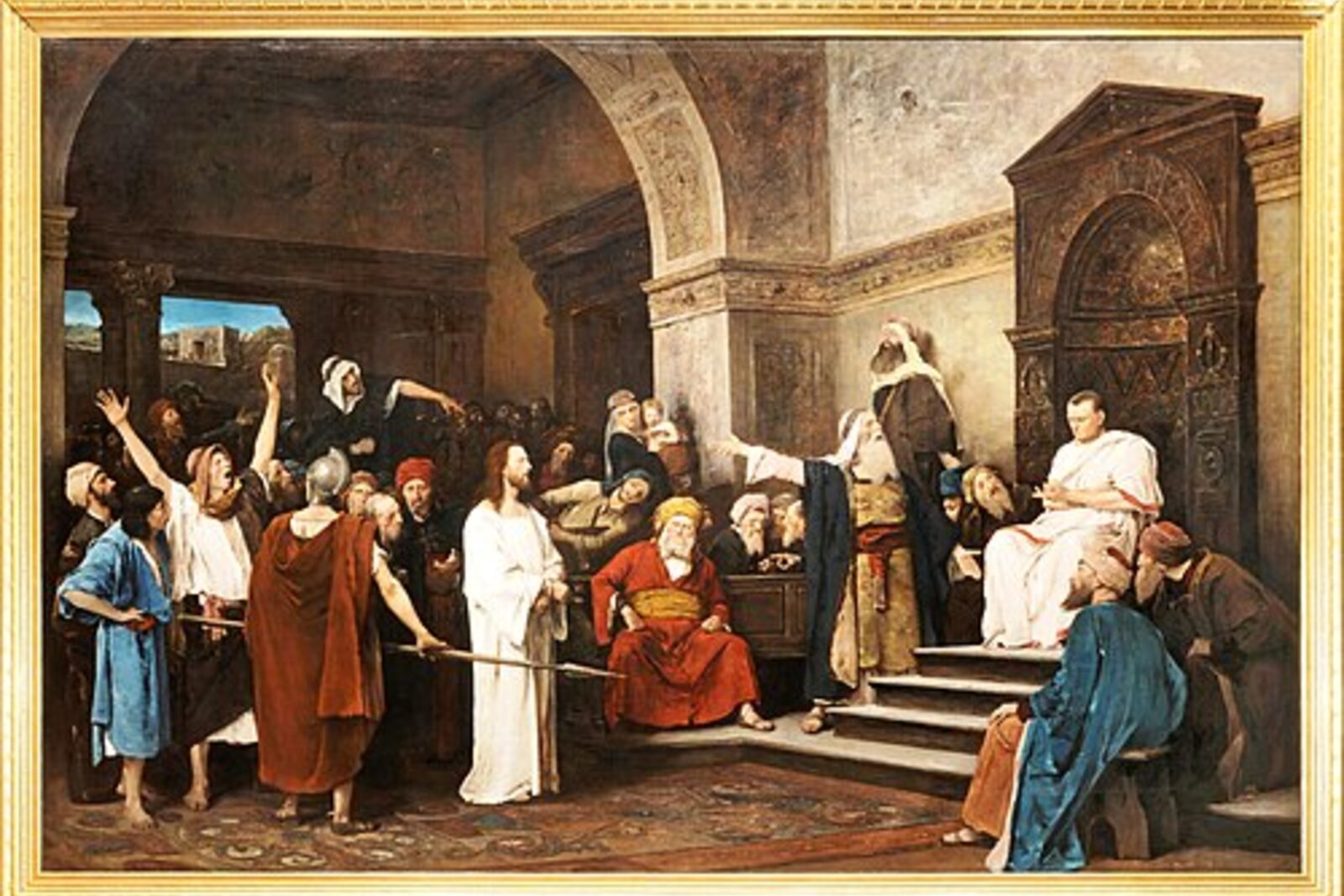
Rome ruled the land of Jesus through dependent local rulers and representatives sent by the emperor. During Jesus’ ministry, Judea was under Pontius Pilate, while Galilee was ruled by Herod Antipas. Being under Roman rule therefore did not mean having the same administration in every region.
The Romans were the political power dominating the region. Understanding this government sheds light on taxes, Jesus’ trial, and the routes traveled by the first Christians. It also helps distinguish the decisions of particular authorities from the attitudes of an entire people.
From Pompey to Herod’s kingdom
The Roman general Pompey besieged and captured Jerusalem in 63 BC, amid disputes between Jewish rulers. This intervention made Judea dependent on Rome long before Jesus’ birth, without immediately establishing the form of government familiar from the Gospels.
Later, Herod, known as the Great, received the title of king from the Roman Senate in 40 BC and took Jerusalem in 37 BC. He was a client king, meaning that he ruled his territory but depended on Roman support. He had local power, yet his position was tied to the interests of those who sustained his throne.
Matthew 2:1 places Jesus’ birth during this Herod’s reign. After his death, generally dated to 4 BC, his territories were divided among his sons. The Herod at Jesus’ birth is therefore not the same as Herod Antipas, who appears as ruler of Galilee during his ministry.
Prefects, procurators, and Pilate’s power
In AD 6, Rome removed Herod’s son Archelaus from power and placed his territories under direct administration. A prefect, an imperial representative with military and administrative authority, began governing Judea. Later, procurators, another title used for imperial governors, performed similar functions.
The University of Vienna’s historical catalogue explains that these governors were based in Caesarea and had authority over trials that could result in the death penalty. Pilate governed from approximately AD 26 to 36, when Emperor Tiberius removed him following complaints about his harshness. An inscription found in Caesarea confirms his name and his title as prefect of Judea.
The Bible identifies Pilate as governor of Judea and Herod as ruler of Galilee in Luke 3:1. Luke 23:6-12 shows this division when Pilate sends Jesus to Herod Antipas. There were different authorities, although both operated within the political order sustained by Rome.
According to Luke 23:13-25, Pilate acknowledged that there were no grounds for sentencing Jesus to death, but authorized the decision requested by his accusers. Mark 15:16-24 describes soldiers mocking Jesus and crucifying him. The involvement of certain leaders and a crowd does not justify blaming all Jews, then or now. Jesus and his first disciples were Jewish.
Taxes and the question about Caesar
Taxes were a tangible expression of subjection to Rome. According to Josephus, a first-century Jewish historian, the assessment of property conducted by Quirinius provoked opposition, although many accepted registration after the intervention of the high priest, the chief priestly authority. His account shows different reactions within the population, rather than a single Jewish response.
In the Gospels, publicans are tax collectors. Luke 3:12-13 records John the Baptist instructing some of them not to collect more than the required amount. The text condemns excessive collection without claiming that all collectors acted in the same way, or that every tax mentioned in the Bible went directly to Rome.
In Mark 12:13-17, Jesus faces the question of paying tax to Caesar, a title used for the Roman emperor. He asks for a coin and draws attention to its image and inscription. His response acknowledges a civic obligation and, at the same time, an obligation to God.
“Give back to Caesar what is Caesar’s and to God what is God’s.”
Mark 12:17, NIV
The coin represents a limited human authority. In a Christian reading of this response, fulfilling public duties does not make the ruler the master of one’s conscience or grant automatic approval to every decision of his government, including those that cause unjust suffering.
The census in Luke 2 and the historical debate
Luke 2:1-7 recounts a census, a registration of the population, ordered by Caesar Augustus. The Gospel writer associates this registration with Quirinius, governor of Syria, and relates that Joseph went with Mary from Nazareth to Bethlehem. It is important to distinguish Luke’s account from attempts to establish its chronology.
Josephus describes an assessment linked to Quirinius after the removal of Archelaus, dated by historians to AD 6. This is later than Herod’s death, during whose reign Matthew places Jesus’ birth. The difference presents a real historical difficulty and should not be explained away.
Scholars propose an earlier registration or different readings of Luke’s wording. Others understand Luke to have associated the birth with the later census. No reconciliation should be presented as proven: there is insufficient evidence to settle the question with certainty. Acknowledging this limit allows us to read the text without inventing documents or dates.
From Roman roads to the nations
The Roman peace, the name given to the relative stability imposed by the empire, facilitated travel between cities. As Yale University’s New Testament history course explains, roads and sea travel helped Christianity spread. This does not mean there was no violence: Jesus’ own trial shows how Roman power could produce injustice.
Jesus responded to a centurion, an officer commanding soldiers, and praised his faith in Matthew 8:5-13. Later, Acts 10 recounts how Cornelius, also a centurion, heard the gospel proclaimed by Peter and received the Holy Spirit with the other listeners. People connected with imperial power also needed the forgiveness offered by Christ.
The lesson for today is to avoid reducing people to the group they belong to. Jesus reached people from every group, and his message crossed political and cultural boundaries. We can pray for unreached peoples, who have little access to the gospel, and seek to know people before judging their origins. See also the other groups in the time of Jesus.
 History Who were the tax collectors and why were they hated
 History Who were the Sadducees?
 History Who were the Samaritans and why did Jews and Samaritans not get along