Cupbearer to the king, governor of Judah

Nehemiah

Period~445 BC
Summary
Cupbearer to the Persian king Artaxerxes who left a comfortable position to lead the rebuilding of Jerusalem's walls. He joined prayer with practical planning, faced political opposition, and corrected injustices within his own people, remembered both for the work and for his integrity.
Who was Nehemiah
Biography

Some news arrives from far away and changes everything: a call about the family home, a hometown in ruins after a disaster. That is how Nehemiah received the news about Jerusalem, even while living comfortably in another country.

Nehemiah was cupbearer to King Artaxerxes of Persia, a position of trust that included tasting the wine before serving it to the sovereign. When brothers who had come from Judah told him that the walls of Jerusalem were still broken down and the gates burned, he sat down and wept (Nehemiah 1:3-4).

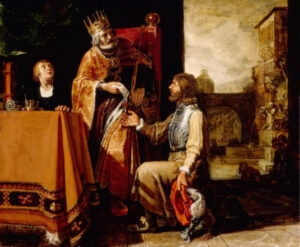
Before acting, Nehemiah prayed and fasted for days, asking God for favor before the king (Nehemiah 1:4-11). When Artaxerxes noticed his sadness, he responded with a direct request: permission and resources to rebuild the city of his ancestors (Nehemiah 2:1-8).

Arriving in Jerusalem, he did not announce his plans right away. He walked through the rubble by night, accompanied by a few men, assessing the extent of the damage before calling the people to the work (Nehemiah 2:12-16).

The work advanced despite the mockery of Sanballat and Tobiah, who tried to intimidate, deceive, and even ambush Nehemiah. He answered with a line that sums up his character: “I am carrying on a great project and cannot go down” (Nehemiah 6:3). The wall was finished in 52 days (Nehemiah 6:15).

As governor, Nehemiah also corrected internal injustices: nobles who were charging abusive interest to their own poor brothers. He returned what had been taken and refused the salary he was entitled to, so as not to be a burden on the people (Nehemiah 5:1-15).

After rebuilding the stones, he rebuilt the soul of the community. Alongside the scribe Ezra, he gathered the people to hear the Law read aloud, and the sorrow of conviction turned into celebration: “the joy of the LORD is your strength” (Nehemiah 8:10).

Nehemiah’s life shows that rebuilding is rarely just a technical project. It involves prayer before planning, courage in the face of opposition, and a willingness to give up personal advantage for the common good.
Defining verses

When I heard these things, I sat down and wept. For some days I mourned and fasted and prayed before the God of heaven.

Nehemiah 1:4

I am carrying on a great project and cannot go down. Why should the work stop while I leave it and go down to you?

Nehemiah 6:3

Do not grieve, for the joy of the LORD is your strength.

Nehemiah 8:10

Visions, prophecies, and deeds

Request to the king

As cupbearer, he obtained permission and resources from Artaxerxes to rebuild the walls of Jerusalem.

Nehemiah 2:1-8

Nighttime inspection of the walls

He toured the ruins of Jerusalem by night, without revealing his plans to anyone, before calling the people to rebuild.

Nehemiah 2:12-16

Rebuilding the wall in 52 days

He organized the people into teams, each family rebuilding the section next to its own house, and finished the work despite opposition.

Nehemiah 6:15

Resistance to Sanballat and Tobiah

He faced mockery, threats, and an attempted ambush, keeping half the men armed while the others worked.

Nehemiah 4:16-18

Correction of usury among the people

He confronted the nobles who charged interest to their own poor brothers and returned the pledged property, giving up the governor's salary.

Nehemiah 5:1-15

Public reading of the Law with Ezra

Alongside the scribe Ezra, he gathered the people to hear the reading of the Law, resulting in confession and renewal of the covenant.

Nehemiah 8:1-12

Second term as reformer

He returned to Jerusalem after a period at the Persian court and corrected abuses: Sabbath profanation, mixed marriages, and neglect of the temple.

Nehemiah 13:6-31
Timeline
~445 BC

Receives news in Susa about the situation in Jerusalem

Nehemiah 1:1-3

~445 BC

Asks Artaxerxes for permission to go to Judah

Nehemiah 2:1-8

~445 BC

Arrives in Jerusalem and inspects the walls by night

Nehemiah 2:12-16

~445 BC

Rebuilding of the wall completed in 52 days

Nehemiah 6:15

~445 BC

Ezra reads the Law publicly to the people

Nehemiah 8

445-433 BC

Governs Judah for twelve years without taxing the people

Nehemiah 5:14-15

~433 BC

Returns to the Persian court

Nehemiah 13:6

date unknown

Returns to Jerusalem and corrects religious abuses

Nehemiah 13:7-31

Portrait

A man of prayer before action: he sought God in fasting and supplication before asking the king for anything (Nehemiah 1:4-11)

Careful planning: he inspected the ruins in secret before mobilizing the people (Nehemiah 2:12-16)

Organized leadership: he assigned the work by families and sections of the wall (Nehemiah 3)

Financial integrity: he refused the governor's salary and returned pledged property to the poor (Nehemiah 5:14-15)

Perseverance under pressure: he refused to stop the work even in the face of repeated threats (Nehemiah 6:3)

Harsh reactions: he went so far as to beat and pull out the hair of men who had married foreign women (Nehemiah 13:25)

A tendency to remind God of his own merits, almost demanding recognition for what he had done (Nehemiah 13:14,22,31)

Lessons and legacy
Lessons from their life

In the face of bad news, the first response can be to pray before acting (Nehemiah 1:4)

Planning quietly keeps opposition from organizing before the work begins (Nehemiah 2:16)

Refusing personal advantage strengthens the authority to ask sacrifice of others (Nehemiah 5:14-15)

External opposition is no reason to abandon a work known to be from God (Nehemiah 6:3)

Reforms last when accompanied by teaching of the Word, not discipline alone (Nehemiah 8-10)

Missionary legacy

Nehemiah shows that rebuilding something destroyed, walls, communities, faith, requires both prayer and organized work, a pattern useful for long-term projects in any mission field

His willingness to leave a comfortable position at court to serve a people in distress illustrates the real cost of going

His partnership with Ezra, practical action plus teaching of the Word, is a reminder that physical rebuilding without spiritual formation is not enough

His refusal to benefit at the expense of the poorest challenges those who serve today, including in cross-cultural contexts, to never exploit the people they intend to help

Family and context
Family and relationships
Father Hacaliah (Nehemiah 1:1)
Brother Hanani (Nehemiah 1:2; 7:2)
King he served Artaxerxes I of Persia (Nehemiah 2:1)
Collaborator Ezra, the scribe (Nehemiah 8:9)
Opponent Sanballat the Horonite (Nehemiah 2:19)
Opponent Tobiah the Ammonite (Nehemiah 2:19)
Nations mentioned

Iran

Susa, the Persian winter capital (Nehemiah 1:1)

Jordan

Tobiah the Ammonite, one of the opponents (Nehemiah 2:19)

Related places

Susa

Winter capital of the Persian empire, where Nehemiah served as cupbearer (present-day Iran)

Jerusalem

City whose walls and gates Nehemiah rebuilt

Judah

Province where Nehemiah governed for twelve years

Plain of Ono

Place where Sanballat tried to lure Nehemiah into an ambush (Nehemiah 6:2)

Where to find them in the Bible

Nehemiah's story is told in the book that bears his name, from chapter 1 to 13. He is also mentioned in Nehemiah 10:1, among those who set their seal to the renewed covenant with God.

Other people