Missions
What Is Vesak
Vesak celebrates the Buddha's birth, enlightenment, and death. Discover its origins, the customs of different countries, and the question of suffering.
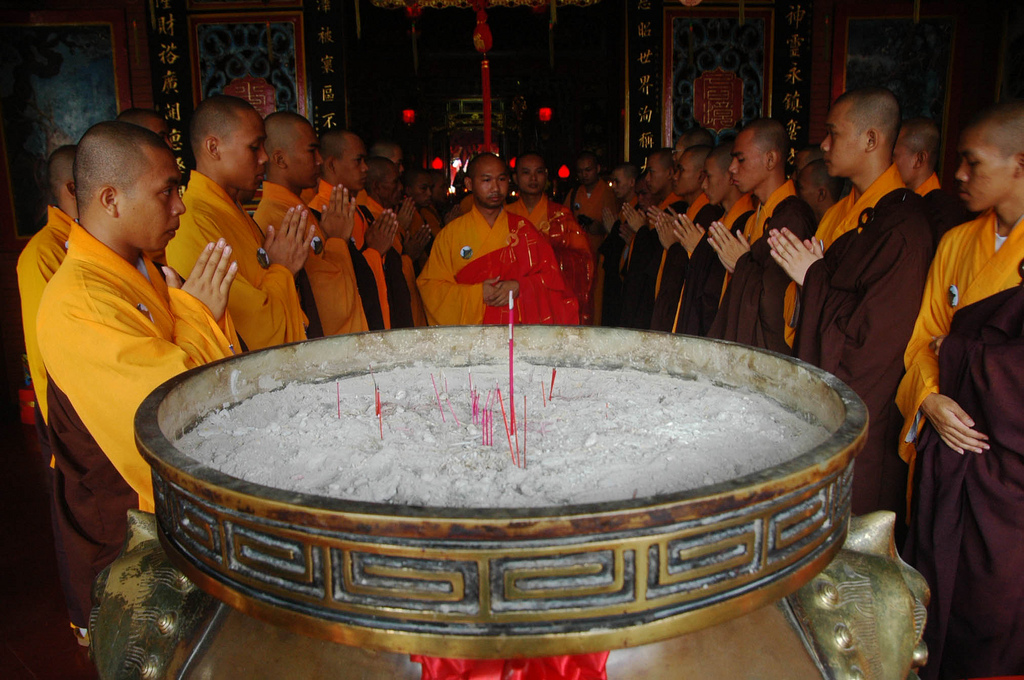
Vesak is one of the main Buddhist celebrations. It brings together the remembrance of the birth, enlightenment, and death of Siddhartha Gautama, known as the Buddha. According to the tradition that connects these events, they took place on the same date in the lunar calendar, in different years, and are therefore celebrated together.
The festival usually falls in May, although the calendars used by different communities may lead to other dates. Temple visits, meditation, food offerings, and acts of generosity are part of the celebration. In Sri Lanka, Thailand, and Myanmar, it also takes distinctive forms in the streets and places of worship. To see how this festival fits into the Buddhist calendar, read about the most important Buddhist festivals.
The origins of the festival and the life of the Buddha
The name Vesak comes from the name of a month in the Indian calendar, called Vaisakha in Sanskrit, an ancient language of India. The celebration has ancient roots: the Sri Lankan Buddhist chronicle known as the Mahavamsa associates Vesak festivals with King Dutthagamani, around the first century BC.
To understand the celebration, we need to know the story Buddhists tell about their teacher. Siddhartha was born in Lumbini, in present-day Nepal. According to traditional accounts, he grew up sheltered in palace life but encountered old age, sickness, and death. These encounters awakened his search for a way out of human suffering.
After abandoning his comfortable life and trying severe practices of self-denial, Siddhartha chose a balanced path between these extremes. Tradition places his enlightenment beneath a tree in Bodh Gaya, India. Enlightenment, in this context, means a profound understanding of the human condition and the path to liberation from suffering. Buddha is a title meaning awakened one.
After teaching this path, the Buddha died in what is now India. Vesak brings these moments together especially in the Theravada tradition, one of the major branches of Buddhism, found in Sri Lanka and Southeast Asia.
Why suffering is at the heart of the celebration
Buddhists celebrate Vesak to honor the Buddha and renew their commitment to practicing his teachings. Enlightenment has a central place because, for them, it represents the discovery of a possible path to liberation. Remembering his death also invites people to face the fact that the body ages and life changes.
This understanding is expressed in the Four Noble Truths, basic teachings of Buddhism. They state that life involves suffering and dissatisfaction, that the desire to possess and cling to what changes feeds this suffering, that it can cease, and that there is a path to its cessation. This path brings together ethical conduct, understanding, and meditation practices.
The goal is nirvana, understood in Buddhism as liberation from the desire and ignorance that sustain suffering and the cycle of rebirth. This cycle is the succession of lives in which Buddhists believe. The festival is therefore connected both with gratitude for the Buddha’s teaching and with the effort to transform one’s way of living.
Generosity gives tangible form to this commitment. Offering food, helping other people, and avoiding harm are ways of practicing the teachings remembered during the festival. Candles and lanterns also recall enlightenment: their light evokes the Buddha’s teaching about the path to awakening.
From the full moon to lanterns and processions
Vesak is timed around the full moon of the month of Vaisakha. Since communities follow different traditional calendars, the celebration has no fixed date in the calendar used in Brazil. It generally takes place in May, but in some years and countries it falls in June. Two Buddhist communities may therefore celebrate on different days while preserving the meaning of the festival.
The religious day may begin early, with visits to temples and monasteries. Families bring food for the monks, listen to teachings, join in recitations of religious texts, and set aside time to meditate. Some worshippers take on additional commitments to discipline during the celebration. In Sri Lanka, some wear white clothing and spend the day at the temple.
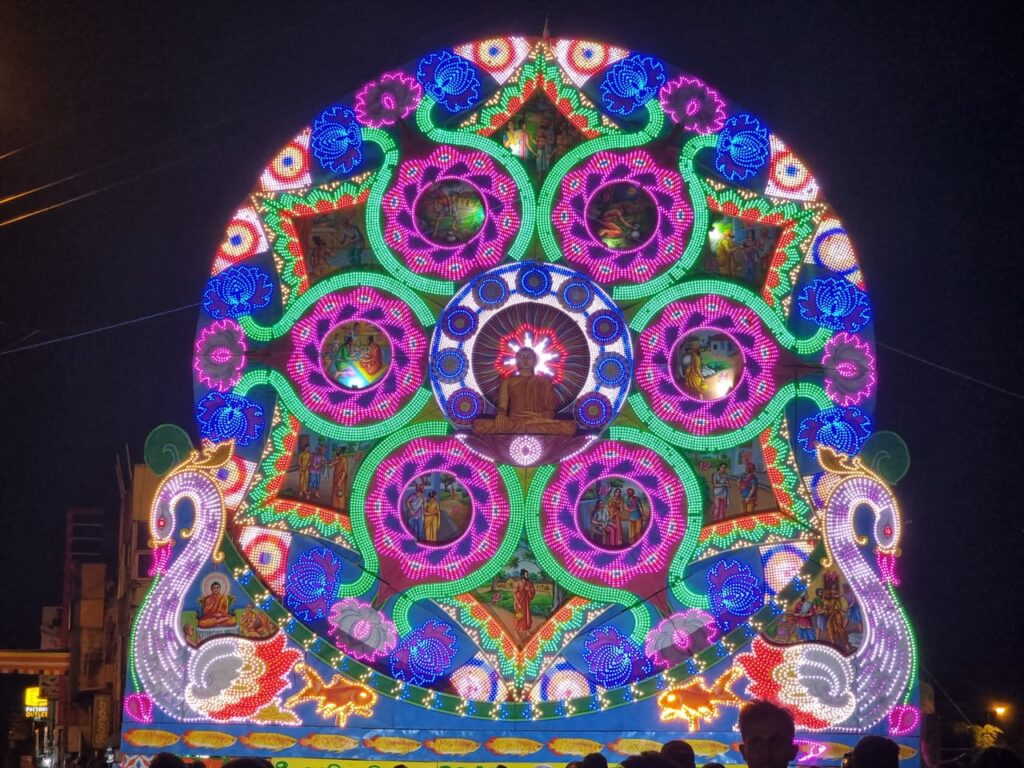
In Sri Lanka, street activities may continue for several days around the full moon. Homes and public spaces are decorated with lanterns, many made with bamboo frames and colored paper. Large illuminated displays, called pandals, present scenes from Buddhist narratives about the Buddha’s previous lives. There are also religious songs and lantern competitions.
Another custom is the dansalas, stalls that distribute free food and drink to passersby. They may offer anything from tea and other refreshments to full meals. Those who prepare and serve the food take part in a practice of giving.
In Thailand, the festival is called Visakha Bucha. Worshippers offer food to monks and listen to teachings at temples. At night, many join a procession in which they walk around one of the temple buildings, carrying flowers, incense, and lit candles. They complete the circuit three times as a gesture of religious respect.
In Myanmar, the celebration corresponds to the full moon of the local month called Kason. One distinctive custom is bringing water to water bodhi trees, associated with the tree under which the Buddha is believed to have attained enlightenment. This gesture accompanies visits to places of worship, food offerings, and acts of charity.
Meals also vary from one community to another. Some participants eat vegetarian food for the day as an expression of care for life.
Who celebrates and where the festival is observed
Besides Sri Lanka, Thailand, and Myanmar, Vesak is observed by Buddhist communities in countries such as India, Nepal, Cambodia, Laos, Malaysia, Singapore, and Indonesia. The name and program may vary from place to place. The presence of the festival in a country does not mean that its entire population follows Buddhism.
There are differences even within a single country. In Singapore, for example, the program at a school with Buddhist origins includes bathing an image of the Buddha, offering flowers, and reciting religious texts. Bathing the image also takes place in other communities and may express a desire for inner purification, according to the temple’s tradition.
Some East Asian traditions set aside separate days for the Buddha’s birth, enlightenment, and death. It is therefore worth asking each community which event it is remembering.
The question of pain and the gospel’s response
Vesak confronts the reader with a question that crosses borders: how can we live in the face of sickness, loss, and death? To speak with those who celebrate, Christians need to recognize the seriousness of this search. Listening to what a person understands by suffering and liberation is part of getting to know their faith respectfully.
The gospel presents Jesus as involved in human pain. In John 11:25-35, he weeps at the death of Lazarus and declares that he is the resurrection and the life, offering hope to those who believe in him. Christian faith acknowledges grief and finds in Jesus someone to whom we can entrust both our tears and our future.
The Christian response to suffering is connected with the death and resurrection of Jesus. According to 1 Peter 3:18, Christ suffered for sins to bring us to God. Revelation 21:4 presents the hope of a life in which God wipes away tears and death and pain come to an end.
Getting to know those who celebrate and praying for the nations
When meeting a family that celebrates Vesak, seek to learn how they observe the day and what they consider most important about it. Ask about the meaning of the lanterns, offerings, or temple visits, without assuming that everyone practices the same rituals.
When praying for Sri Lanka, Thailand, and Myanmar, remember the families who take part in these celebrations and the Christians who live alongside them. Ask God that these Christians will speak about Jesus in words people can understand, care for those who suffer, and maintain sincere friendships. As you intercede for unreached peoples, pray for opportunities for them to encounter the gospel in their own language.
You have read this story. Now pray.
Today we pray for a nation and a people who still need to hear the gospel.
 Missions What Is Yom Kippur
 Missions What Is Vaisakhi
 Missions What Is Janmashtami