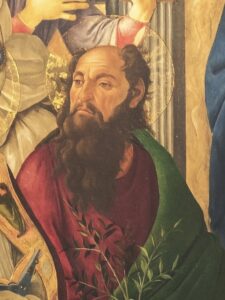
Deacon · Evangelist

Philip the Evangelist

Period1st century AD
Summary
Deacon of the Jerusalem church who became one of the New Testament's first itinerant evangelists, bringing Christ to Samaria and to an Ethiopian official on a desert road. Decades later, he hosted the apostle Paul in Caesarea, a city where his four daughters prophesied. He should not be confused with Philip, one of the Twelve apostles.
Who was Philip the Evangelist
Biography

Some serve God behind the scenes, distributing bread, tending to details, and feel that such work counts for less than preaching before crowds. The story of this Philip dismantles that idea. He is not the apostle among the Twelve who bears the same name, but a deacon of the Jerusalem church whom God moved from serving tables to opening the gospel to another continent.

Philip first appears in Acts 6, when the Jerusalem church needed to resolve a practical complaint: Greek widows were being overlooked in the daily distribution of food. The apostles asked the community to choose seven men of good reputation for this task, and Philip was one of them, alongside Stephen.

When Stephen was stoned and a wave of persecution scattered the Christians out of Jerusalem, Philip did not hide: he went down to Samaria, a region historically hostile to the Jews, and proclaimed Christ there. Signs accompanied the preaching, evil spirits came out, the paralyzed and the lame were healed, and the city was filled with great joy.

After this revival, an angel redirected Philip to the desert, to the lonely road between Jerusalem and Gaza. There he found an Ethiopian eunuch, a high official of Queen Candace’s court, reading the prophet Isaiah without understanding what he read. Philip climbed into the chariot, explained that the prophecy spoke of Jesus, and hours later baptized that foreigner in the waters beside the road.

As soon as they came up out of the water, the Spirit suddenly took Philip away, and the Ethiopian went on alone, full of joy, back to his own land. Philip reappeared in Azotus and went on preaching from city to city until he settled in Caesarea, where, decades later, the apostle Paul stayed in his house and met his four daughters, who prophesied.

Philip’s life shows that God uses those who are available for common work as well as for the unexpected task. No one imagines, on agreeing to serve tables, that one day they will be sent to the desert to reach someone from the other side of the world. Obedience in small things is what prepares us for the great ones.
Defining verses

Philip went down to a city in Samaria and proclaimed the Messiah there.

Acts 8:5

When they came up out of the water, the Spirit of the Lord suddenly took Philip away, and the eunuch did not see him again, but went on his way rejoicing.

Acts 8:39

He had four unmarried daughters who prophesied.

Acts 21:9

Visions, prophecies, and deeds

Chosen as one of the seven deacons

The Jerusalem church chooses Philip, alongside Stephen and five other men full of the Spirit, to oversee the daily distribution of food to the widows.

Acts 6:1-6

Preaching and signs in Samaria

After the dispersion caused by the persecution over Stephen, Philip goes down to Samaria and proclaims Christ; unclean spirits come out, the paralyzed and the lame are healed, and the city is filled with joy.

Acts 8:5-8

Conversion of Simon the sorcerer

Simon, a sorcerer who had amazed the people of Samaria, believes Philip's preaching about the kingdom of God and is baptized along with many others.

Acts 8:9-13

Guided by an angel to the desert

An angel of the Lord commands Philip to leave Samaria and go to the desert road between Jerusalem and Gaza; he obeys at once.

Acts 8:26-29

Explains Isaiah and baptizes the Ethiopian eunuch

Philip finds a high official of Queen Candace reading Isaiah without understanding, explains that the prophecy speaks of Jesus, and baptizes him in a source of water beside the road.

Acts 8:30-38

Taken away by the Spirit

As they come up out of the water, the Spirit of the Lord suddenly takes Philip away; he reappears in Azotus and continues preaching from city to city until he reaches Caesarea.

Acts 8:39-40

Hosts Paul in Caesarea

Decades later, the apostle Paul stays in Philip's house, called there the evangelist, whose four daughters prophesied.

Acts 21:8-9
Timeline
~34 AD

Chosen as one of the seven deacons in Jerusalem

Acts 6:1-6

~34-35 AD

Persecution after Stephen's death scatters the Christians out of Jerusalem

Acts 8:1-5

~35 AD

Preaches in Samaria with signs and miracles; Simon the sorcerer believes and is baptized

Acts 8:5-13

~35 AD

Meets and baptizes the Ethiopian eunuch on the road to Gaza

Acts 8:26-39

date unknown

Settles as an evangelist in Caesarea

Acts 8:40; 21:8

~57-58 AD

Hosts the apostle Paul in his home in Caesarea

Acts 21:8-9

Portrait

He served with excellence in a practical task (distributing food to widows) before being called to something greater, showing that faithfulness in small responsibilities prepares us for greater ones (Acts 6:5).

He brought the gospel to Samaria, a region historically rejected by the Jews, breaking through ethnic barriers to preach Christ (Acts 8:5).

He obeyed at once an unusual instruction, leaving a city in the middle of revival to go to a desert road, without demanding explanations (Acts 8:26-27).

He used the Scripture the man was already reading (Isaiah) to present Jesus to someone from another culture, showing sensitivity and biblical knowledge (Acts 8:35).

He kept preaching from city to city even after being taken away from a moment of great fruitfulness, without clinging to recognition (Acts 8:40).

Lessons and legacy
Lessons from their life

Accepting tasks considered minor in the church, like distributing food, can be the training God uses before sending us into something greater.

Being willing to change plans in the middle of visible success requires trusting that God sees a bigger picture than ours.

The gospel does not respect ethnic, social, or geographic boundaries: it reaches rejected Samaritans and a foreign eunuch, socially marginalized in his own culture.

Knowing the Scriptures well prepares believers to explain Jesus to those who ask, even suddenly and without warning.

Building a household that serves the church, hosting travelers, raising children who serve God, is also a lasting ministry.

Missionary legacy

He is one of the earliest biblical examples of individual cross-cultural evangelism: a Christian who crosses the ethnic boundary with the Samaritans and then reaches someone from another continent.

Christian tradition links the baptism of the Ethiopian eunuch to one of the earliest accounts of the gospel's expansion into Africa, although the later historical details are not recorded in the Bible.

His method of starting from the text the person was already reading (Isaiah) to present Jesus still inspires those who work among people of other religions and cultures today.

He shows that the office of evangelist (Acts 21:8) was already recognized in the early church, alongside apostles and prophets, a reminder that the church needs those devoted to proclaiming the good news beyond it.

His home in Caesarea, open to Paul and home to daughters who prophesied, illustrates how whole families can sustain the advance of the gospel among the nations.

Family and context
Family and relationships
Fellow deacon Stephen, the first martyr, Acts 6:5
Daughters Four prophetesses, Acts 21:9
Notable guest Apostle Paul, Acts 21:8
Apostles sent to Samaria Peter and John, Acts 8:14
Convert in Samaria Simon the sorcerer, Acts 8:13
Convert in the desert Ethiopian eunuch, Acts 8:38
Nations mentioned

Israel

Setting of Jerusalem, Samaria, and Caesarea, Acts 6-8; 21

Ethiopia (region of ancient Cush)

Homeland of Queen Candace's eunuch, Acts 8:27

Related places

Jerusalem

Israel; chosen as one of the seven deacons, Acts 6:5

Samaria

Today part of Israel/the West Bank; preached and performed signs, Acts 8:5-8

Road to Gaza

Today the Gaza Strip; encounter with the Ethiopian eunuch, Acts 8:26

Azotus (Ashdod)

Today Israel; reappeared after being taken away, Acts 8:40

Caesarea

Today Israel; settled there and hosted Paul, Acts 8:40; 21:8

Where to find them in the Bible

The story of Philip the Evangelist is recorded in Acts 6:1-6 (chosen as a deacon), Acts 8:4-40 (ministry in Samaria and the encounter with the Ethiopian eunuch), and Acts 21:8-9 (hosts Paul in Caesarea). He does not appear in any other book of the New Testament.

Other people