Missions
The most important Jewish festivals
Discover Purim, Passover, Shavuot, Rosh Hashanah, Yom Kippur, Sukkot and Hanukkah: their origins, customs and meaning for the Jewish people.

Jewish festivals recall the history of the Jewish people, pass on faith to children and set aside time for gratitude, repentance and fellowship. Readings, prayers and meals help each generation remember the deliverance from Egypt, the teaching received from God and the preservation of the community in the face of threats.
The Jewish calendar follows the cycles of the moon and adds a month in certain years to keep the festivals in the same seasons. This is why their dates change in the civil calendar. The sequence below follows that calendar, from Purim, usually in February or March, to Hanukkah, usually in November or December.
Purim: the joy of deliverance
Purim commemorates the deliverance of the Jews from the attempted extermination recounted in the book of Esther. In ancient Persia, Queen Esther reveals her Jewish identity and exposes Haman’s plot against her people. The festival preserves the memory of survival and the courage to act on behalf of others.
The celebration includes listening to the reading of Esther, sending food to friends, helping people in poverty and sharing a festive meal. Costumes, sweets and games also feature in many communities. Generosity is part of the meaning of the occasion: the joy should also reach those who cannot afford to celebrate.
Passover: remembering deliverance
Passover, the Jewish festival of deliverance, commemorates the Israelites’ release from slavery in Egypt, and its biblical origins are found in Exodus 12. The festival begins in Nisan, usually in March or April. It lasts seven days in Israel, while many communities outside the country celebrate for eight days.
The central event is the seder, a dinner with readings, questions and foods that tell the story of deliverance. Matzah, unleavened bread, recalls the haste of the departure; bitter herbs recall the suffering of slavery. Children take part by asking questions, and adults explain the customs, passing on the memory of freedom and gratitude to God.
Shavuot: harvest and teaching
Shavuot means weeks and takes place after seven weeks have been counted from Passover, usually in May or June. Its biblical origins are linked to the wheat harvest and the offerings presented to God, as described in Leviticus 23:15-21. Jewish tradition also associates the festival with the giving of the Torah at Mount Sinai, the teaching that guides Jewish life and includes the first five books of the Bible.
Study plays an important part in the celebration, with gatherings that may last through the night. The Ten Commandments are read, as is the book of Ruth in many communities. Foods made with milk and cheese are common at the table. The festival brings together gratitude for sustenance and a commitment to learn and live according to God’s teaching.
Rosh Hashanah: a new year before God
Rosh Hashanah is the Jewish New Year, celebrated in Tishrei, usually in September or October. Although Tishrei is the seventh month in the biblical reckoning, it is when the year changes. The festival originated in the day of rest and trumpet blasts described in the Bible, whose meaning was developed by Jewish tradition.
In synagogues, the community’s places of prayer, the sounding of the shofar has a prominent role. This instrument is usually made from a ram’s horn. At the table, apples with honey express the wish for a good and sweet year. The festival opens a period of repentance that ends on Yom Kippur, with reflection on choices, making amends for harm done and seeking reconciliation.
Yom Kippur: repentance and forgiveness
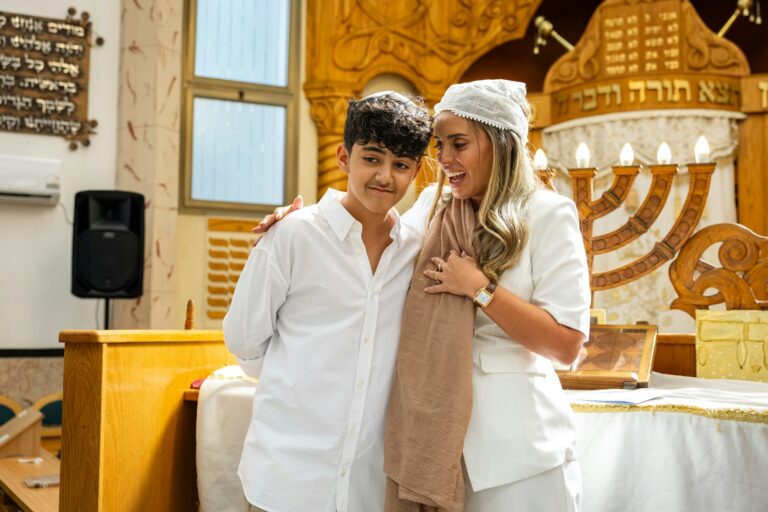
Yom Kippur is the Day of Atonement, a term linked to the forgiveness of sins and purification before God. It is the holiest day in the Jewish calendar and closes the period that began on Rosh Hashanah. Its origins are found in Leviticus 16, which describes the annual purification ritual performed by the high priest, the chief official responsible for worship.
Without the temple in Jerusalem, observance centers on prayer, confession, rest and fasting. In traditional practice, abstinence includes food and water, with exceptions for health reasons and for young children. Seeking forgiveness also requires attention to relationships: anyone who has harmed another person must acknowledge the wrong and seek reconciliation.
Sukkot: gratitude in shelters
Sukkot, the Festival of Tabernacles, follows Yom Kippur and lasts seven days. Its basis is Leviticus 23:33-43, which brings together gratitude for the harvest and remembrance of the Israelites’ life after leaving Egypt. The shelters recall their dependence on God’s care during their journey through the wilderness.
Families and communities build a sukkah, a temporary shelter with a roof of plant material, where they eat meals and welcome guests. Another ritual brings together branches of date palm, myrtle and willow with a citron, a citrus fruit, for use in blessings and prayers. The festival values joy, hospitality and gratitude for shared food.
Hanukkah: lights and dedication
Hanukkah commemorates the Maccabees’ recovery of the temple in Jerusalem and its restoration to Jewish worship after religious repression. Tradition tells of a small quantity of pure olive oil, enough for one day, that lasted eight. This memory accompanies gratitude for the preservation of faith in the face of persecution.
Over eight nights, families light lamps on the hanukkiah, a nine-branched candelabrum: eight correspond to the nights, and one holds the helper light. Each night, one more light is lit. Prayers, family gatherings, foods fried in oil and games with a spinning top are among the customs.
Getting to know those who celebrate and praying for the nations
Learning about these festivals helps us listen to Jewish friends and neighbors with an awareness of their history. We can pray for families in Israel, Brazil and other countries, asking for protection from hatred of Jews and opportunities to know Jesus. Prayer for unreached peoples, who have little access to the gospel, should go hand in hand with sincere friendships, listening and respect when sharing the Christian faith.
You have read this story. Now pray.
Today we pray for a nation and a people who still need to hear the gospel.
 Missions What Is Yom Kippur
 Missions What Is Vaisakhi
 Missions What Is Vesak