


 +13
Region · Africa
In the past century Christianity grew here like nowhere else, and African churches already send missionaries; even so, entire peoples remain without a witness.


The 51 flags of the region. Tap one to open the country.
Largest unreached peoples:
 Hausa 58.9M
 Somali 27.3M
Nigerian Fulani 20.8M
Source: Joshua Project and Progress.Bible. Estimates, may vary. Compiled from the data of each country in this region.
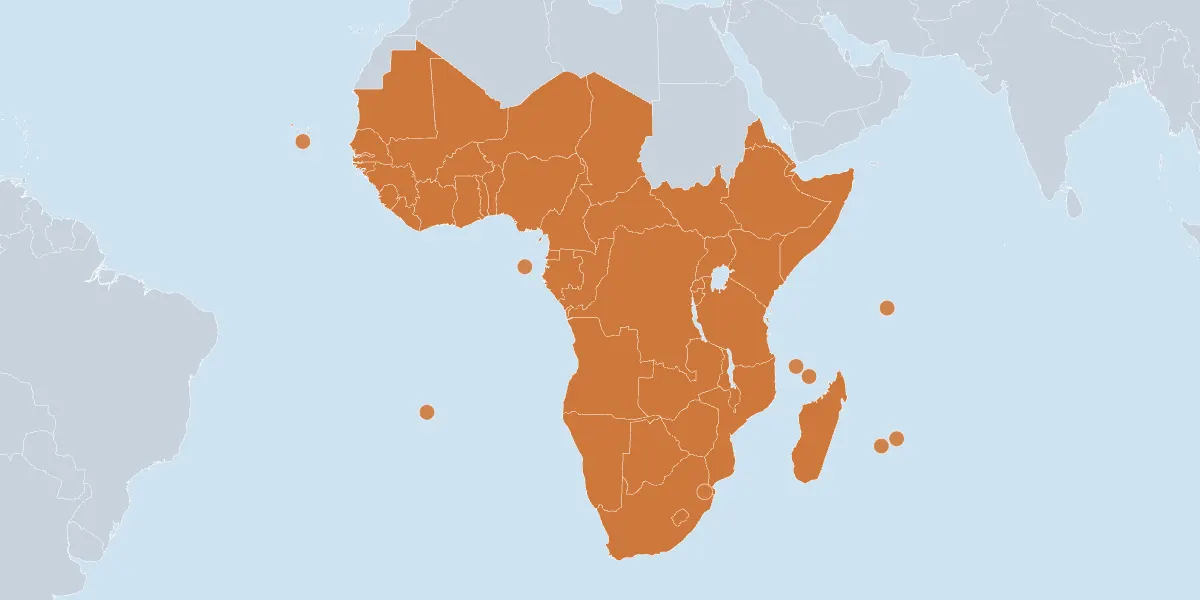
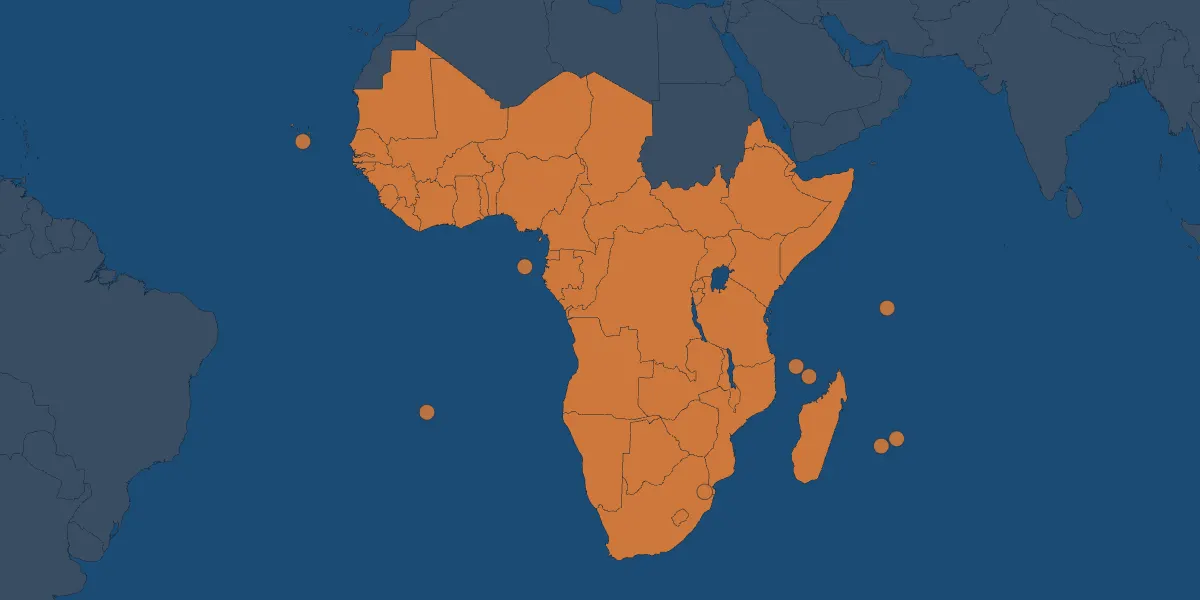
Sub-Saharan Africa comprises 51 countries south of the Sahara Desert, from Senegal on the western Atlantic coast to Ethiopia in the Horn of Africa and South Africa at the southern tip. It is the part of the continent where Christianity has grown the most in recent decades, turning nations such as Nigeria, Kenya and Ethiopia into centers of Christian life and missionary sending.
Even so, the region bears the deep scars of conflict, forced displacement and poverty, which particularly affect children and families in rural areas and on the outskirts of cities. The coexistence of Christianity, Islam and traditional African religions continues to shape each country’s spiritual identity.
Of Sub-Saharan Africa’s 2,287 ethnic groups, 635 are still considered unreached people groups, many of them concentrated in the Sahel belt and in urban and rural pockets where Islam predominates. The regional average proportion of evangelicals is 19.1%, but 2,177 of the region’s 2,966 languages still have no Scripture translation at all.
Pray for this church that is growing in numbers, that it may also grow in depth and reach the peoples and languages the Bible has yet to touch.
It is home to some of the countries with the highest proportions of evangelicals in the world, such as Nigeria and Kenya.
The Sahel belt and the Horn of Africa are home to concentrations of predominantly Muslim peoples who remain largely unreached.
Ancestral beliefs and spiritist practices continue to influence the Christian faith in many communities.
Civil wars and humanitarian crises in several countries force families to leave their land.
Churches in the region already send missionaries to other parts of Africa and the world.
 Angola
 Benin
 Botswana
 Burkina Faso
 Burundi
 Cameroon
 Cape Verde
 Central African Rep.
 Chad
 Comoros
 Congo
 DR Congo
 Djibouti
 Equatorial Guinea
 Eritrea
 Eswatini
 Ethiopia
 Gabon
 Gambia
 Ghana
 Guinea
 Guinea-Bissau
 Ivory Coast
 Kenya
 Lesotho
 Liberia
 Madagascar
 Malawi
 Mali
 Mauritania
 Mauritius
 Mayotte
 Mozambique
 Namibia
 Niger
Nigeria
 Réunion
 Rwanda
 Saint Helena
 São Tomé and Príncipe
 Senegal
 Seychelles
 Sierra Leone
Somalia
 South Africa
 South Sudan
 Tanzania
 Togo
 Uganda
 Zambia
 Zimbabwe
Subregions: Southern Africa · Central Africa · West Africa · Guinea Coast · Western Sahel · East Africa · African Great Lakes · Horn of Africa
+13
59.1M59.1M people16 unreached locations16 unreached locations
 +24
28.9M28.9M people27 unreached locations27 unreached locations

20.8M20.8M people3 unreached locations3 unreached locations

 +2
9.4M9.4M people5 unreached locations5 unreached locations
8.5M8.5M people1 unreached location1 unreached location
 +7
8M8M people10 unreached locations10 unreached locations